Windmill Energy
This document offers a comprehensive overview of windmill energy generation, detailing the design aspects and materials used. Featuring a 0.5m x 0.5m plywood base and components such as metal rods, ceramic magnets, and basketball cups, the project illustrates the construction of an innovative windmill generator. Despite initial challenges in design efficiency—with only 0.0307% achieved at maximum theoretical power output—the study highlights crucial issues such as magnet alignment and mechanical connections, paving the way for future improvements in wind energy technology.


Windmill Energy
E N D
Presentation Transcript
Not so easy it seems… Windmill Energy
Final Material List • 0.5m x 0.5m plywood • 2 2x4s • Metal rod • Dowel rod • 2 Basketball cups • 550 ft of wire • 4 ceramic block magnets • Nails / Clips / Glue
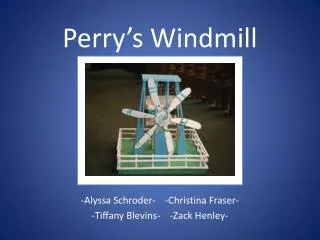
Electrical/Mechanical Aspects Generator Version 7.0 Max Voltage: 1.7 Initial designs: Cardboard Box, PVC pipe Windmill Version 2.0 Initial Design: Cans instead of Cups
Efficiency • Wind Speed = 10 m/s at 6 inch from fan • Power = 0.5 x air density x area exposed to wind x velocity cubed • Given that our area is 14 in^2, or 0.00903224 meters^2, the maximum power is 5.53 watts. • Our generator produced 0.0017 Watts, giving an efficiency of (0.0017 / 5.53) * 100 = 0.0307%
Construction Issues • Magnet alignment inside the generator • Connecting the windmill shaft to the generator shaft • Structure of the generator • Initial windmill design did not spin fast enough • General friction of moving parts