Introduction to Chordates: Diversity and Characteristics
120 likes | 217 Vues
Explore the diverse superclass Agnatha along with classes Chondrichthyes, Osteichthyes, Amphibia, Reptilia, Aves, and Mammalia. Learn about their integument, temperature control, limb structure, gas exchange, and fertilization methods. Discover the hallmarks of Phylum Chordata and the unique features of superclass Agnatha, including the classes Myxini and Petromyzones.


Introduction to Chordates: Diversity and Characteristics
E N D
Presentation Transcript
Superclass Agnatha • Integument: slimy skin • Temperature control: ectotherm • Limb Structure: no paired limbs • Gas Exchange: gills • Fertilization: external
Class Chondrichthyes • Integument: scales • Temperature control: ectotherm • Limb Structure: 2 pairs of fins • Gas Exchange: gills • Fertilization: internal
Class Osteichthyes • Integument: slimy skin and scales • Temperature control: ectotherm • Limb Structure: 2 pairs of fins • Gas Exchange: gills • Fertilization: external
Class Amphibia • Integument: thin, moist skin • Temperature control: ectotherm • Limb Structure: 2 pairs of legs • Gas Exchange: gills, lungs, skin • Fertilization: external
Class Reptilia • Integument: dry, scaly • Temperature control: ectotherm • Limb Structure: 2 pairs of legs • Gas Exchange: lungs • Fertilization: internal
Class Aves • Integument: feathers • Temperature control: endotherm • Limb Structure: wings, one pair legs • Gas Exchange: lungs • Fertilization: internal
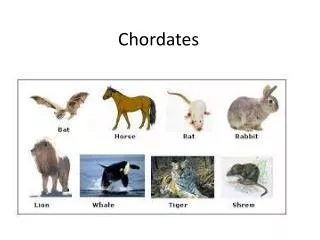
Class Mammalia • Integument: hair • Temperature control: endotherm • Limb Structure: 2 pairs of legs • Gas Exchange: lungs • Fertilization: internal
Hallmarks of Phylum Chordata • Notochord • Single, tubular, dorsal nerve cord • Pharyngeal slits • Postanal tail • Endostyle * Characteristic present at some point during development!!!
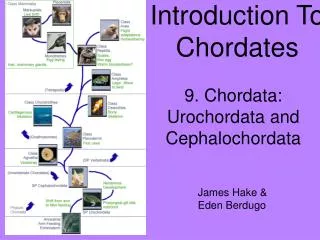
Superclass Agnathap. 287-291 • “circular mouths” • In place of jaws is an oral sucker • Most primitive of all fish • External fertilization • No stomach • Heart: 2 chambers (1 ventricle; 1 artia) • No fins • Eel body form • Poor eye development (hagfish only) • Pore-like gill openings
Class Myxini • Includes hagfish • Feed on dead or dying fish • Scavengers • Completely blind, well developed sense of smell and touch • Generate large amounts of slime for defense
Class Petromyzones • Includes lampreys • Most are parasitic, feed on blood and fluids of fish • Destructive to fisheries (ex. Great Lakes) Millions of dollars lost each year