Understanding Forest Planning Processes: Time Frames, Specificity, and Adaptive Management
This document explores the three key forest planning processes: strategic, tactical, and operational plans. It highlights their differences in terms of time frames and specificity of information. Strategic plans are long-term and broad in scope, while tactical plans are shorter and more refined. Operational plans focus on specific tasks within short time frames. Additionally, it features Weyerhaeuser’s adaptive management planning approach in Drayton Valley, Alberta, and illustrates the information flow in a timber company, showcasing how data management supports effective planning and implementation.

Understanding Forest Planning Processes: Time Frames, Specificity, and Adaptive Management
E N D
Presentation Transcript
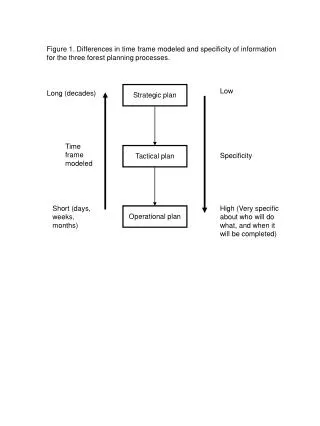
Figure 1. Differences in time frame modeled and specificity of information for the three forest planning processes. Low Strategic plan Long (decades) Time frame modeled Tactical plan Specificity Short (days, weeks, months) High (Very specific about who will do what, and when it will be completed) Operational plan
Figure 2. Adaptive management planning process used by Weyerhaeuser [12] for land managed in Drayton Valley, Alberta. Detailed management plan Strategic level adjustments Operational plan Operational level adjustments Management activities Analysis Forest response Forest monitoring
Figure 3. Flow of information in a typical timber company over the course of a year. District or Regional office Field office Develop updated databases and knowledge Assess the quality of data Incorporate data into databases Develop strategic and tactical plans Implement plans / create operational plan Analyze and select plan(s)