Exploring the Indus Valley Civilization: A Glimpse into Ancient India
The Indus Valley Civilization, lasting from 2500 B.C. to 1500 B.C., was a remarkable ancient society located in present-day India, separated from the rest of Asia by the majestic Himalaya mountains. Major cities like Harappa and Mohenjo Daro featured advanced urban planning, including intricate water systems, public baths, and brick sewers. With strong central governance, the civilization thrived through trade of cotton cloth, pottery, and jewelry. Worship practices hinted at a great god in animal form, but the reasons for its decline around 1700 B.C. remain mysterious.

Exploring the Indus Valley Civilization: A Glimpse into Ancient India
E N D
Presentation Transcript
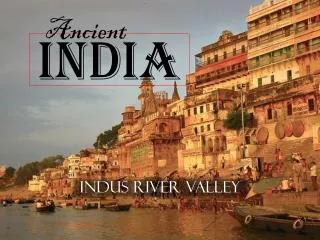
Ancient India Indus River Valley
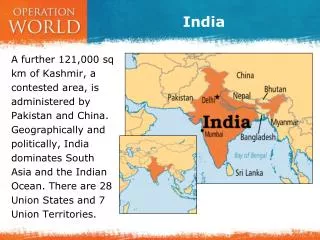
We are here India
Indus Valley Civilization • Lasted from 2,500 B.C. to 1500 B.C. • Two major cities of Harappa and Mohenjo Daro • Strong central governments • Both cities well planned, water systems, public baths, and brick sewers • Each city had a citadel- central fortress
Trade • Traded cotton cloth, pottery, bronze items, and gold and silver jewelry with the Tigris-Euphrates civilizations as early as 2,300 B.C.
Religion • No shrines or temples • Scholars believe the Harappan people worshipped a great god in animal form of a bull, buffalo, and tiger • Evidence of a fertility goddess
Decline • Reason for decline is unclear; possibly floods, invasion, or an earthquake that occurred around 1700 B.C. • Skeletons at Mohenjo Daro were discovered and indicate people leaving their homes and possessions; evidence of a disastrous event.