Cloud Calling Explained for Remote Work Models
Cloud calling supports communication without the need for on-site phone hardware. Wondercomm explains how cloud calling enables remote and hybrid teams to make and receive business calls from any location using internet-connected devices. For more information, you can explore this topic further here: https://wondercomm.net/sip-phones/

Cloud Calling Explained for Remote Work Models
E N D
Presentation Transcript
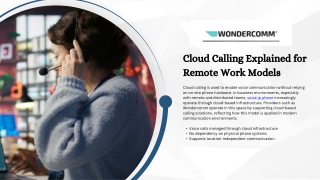
Cloud Calling Explained for Remote Work Models • Cloud calling is used to enable voice communication without relying on on-site phone hardware. In business environments, especially with remote and distributed teams, voice ip phone increasingly operate through cloud-based infrastructure. Providers such as Wondercomm operate in this space by supporting cloud-based calling solutions, reflecting how this model is applied in modern communication environments. • Voice calls managed through cloud infrastructure • No dependency on physical phone systems • Supports location-independent communication
Why Cloud Calling Is Relevant for Remote Work • Remote and hybrid work models require communication tools that function consistently across locations. Traditional phone systems are often tied to a single office or physical setup. Cloud calling exists to support teams that work from different places while remaining connected through a shared system. • Remote teams operate across locations and time zones • Physical phone systems limit flexibility • Cloud-based systems support distributed work
What Cloud Calling Is • Cloud calling refers to voice communication delivered through internet-based platforms hosted in the cloud. Calls are routed, managed, and maintained by remote servers rather than on-premise equipment. This approach allows users to make and receive calls using various internet-connected devices. • Calls handled through cloud servers • Accessible via phones, computers, or mobile devices • Not tied to a single physical location
How Cloud Calling Is Typically Used • Cloud calling is commonly used by remote teams, distributed organizations, and businesses with flexible work arrangements. It supports day-to-day communication such as internal calls, client conversations, and coordination between remote staff. Usage patterns depend on team size and operational needs. • Used by remote and hybrid teams • Supports internal and external calls • Functions across home and office environments
Conclusion • Cloud calling supports voice communication in business environments where flexibility and remote access are required. Its role isto remove location-based limitations from calling systems. Understanding how cloud calling works helps place it within the broader context of remote work infrastructure and digital communication systems. • Cloud calling removes physical constraints • Supports modern work models • Part of a larger digital communication ecosystem • For more information, you can explore this topic further here • https://wondercomm.net/