Understanding the Scientific Method: A Guide to Conducting Experiments Effectively
This guide breaks down the scientific method into key components: asking testable questions, forming hypotheses based on reasoning, designing experiments to collect data, and analyzing results. It emphasizes the importance of variables, including independent, dependent, and controlled factors, and illustrates how to present findings using graphs (line, circle, and bar). The conclusion summarizes discoveries and suggests ways to retest for improved results. Perfect for beginners looking to grasp the essentials of scientific inquiry.

Understanding the Scientific Method: A Guide to Conducting Experiments Effectively
E N D
Presentation Transcript
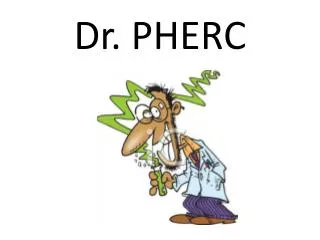
Dr. PHERC Method!
Problem The problem is when you ask a question. Questions must be testable and NOT opinion.
Hypothesis The hypothesis is your idea about the answer to the question. Include reasoning for your hypothesis.
Experiment The experiment is when you test your question with a procedure. (Collecting data) Variables: Independent: I Change Dependent: Measured Controlled: Remains the same
Results Results are your data and what you discover in your experiment. Create Graphs to display your findings.
Graphing • We will use 3 types of graphs: Line (Used to show change in ONE ITEM) Circle (Pie) (Used to show percentages) Bar (Used to compare many things) • Don’t forget TAILS And DRY MIX
Conclusion The conclusion is a summary of what you found and your next ideas to retest and improve your experiment.