Photosynthesis
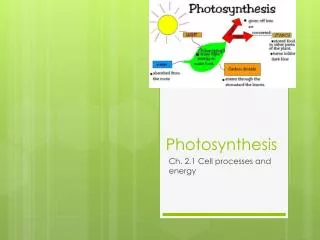
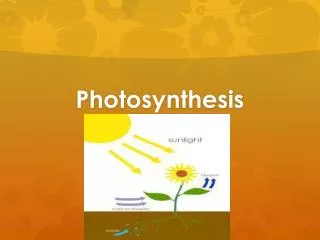
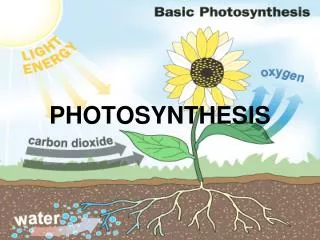
Photosynthesis is the process that converts sunlight into chemical energy, forming the basis of food for all life on Earth. This intricate mechanism involves photoautotrophs, primarily plants, which use sunlight, carbon dioxide, and water to produce glucose and oxygen through the light reactions and the Calvin cycle. Key components include leaves, mesophyll, stomata, and chloroplasts—where chlorophyll plays a vital role in capturing light. Understanding this process includes exploring the splitting of water, redox reactions, and the importance of chemiosmosis and carbon fixation.

Photosynthesis
E N D
Presentation Transcript
Photosynthesis The beginning of all food on Earth
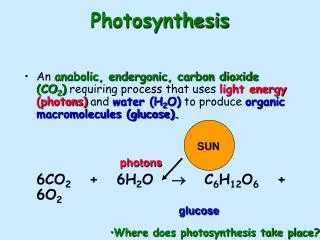
Photoautotrophs Autotrophs Heterotrophs 6CO2 + 6H2O C6H12O6 + 6O2
Location, Location, Location • Leaves • Mesophyll • Stomata • Chloroplasts • Stroma • Thylakoids • Grana
What’s Happening? • Splitting of Water • Redox • Light Reactions • Calvin Cycle
Light Reactions: Overview • Convert solar to chemical energy • NADP+ = acceptor • Source = water • Chemiosmosis • ATP formation via photophosphorylation • Chlorophyll, in thylakoids
Carbon Fixation • CO2 into CH2O (reduction) • Energy from: • NADPH • ATP • Calvin Cycle • Stroma
Light Reactions: Up Close Spectrophotometer
Light Reactions: Up Close Why leaves are green… Absorption spectrum Chlorophyll a Carotenoids
Photorespiration In light, [CO2] while [O2] ; Rubisco adds oxygen to Calvin cycle, releasing useless 2-C compounds.