
SlideServe
Menu
Préférences
© SlideServe · v2026

Sri Lanka

yachi avatar
13 diapositives · 4.9K Views · Aug 26, 2012

Sri Lanka. History:. Under British control from 1815 until independence in 1948 Name changed from Ceylon to Sri Lanka (“Sacred Land”) in 1972. Population: 21 Million Administrative capitol is Kotte. Commercial capitol is Colombo. Civil War since mid 1980s between government and Tamil Tigers.
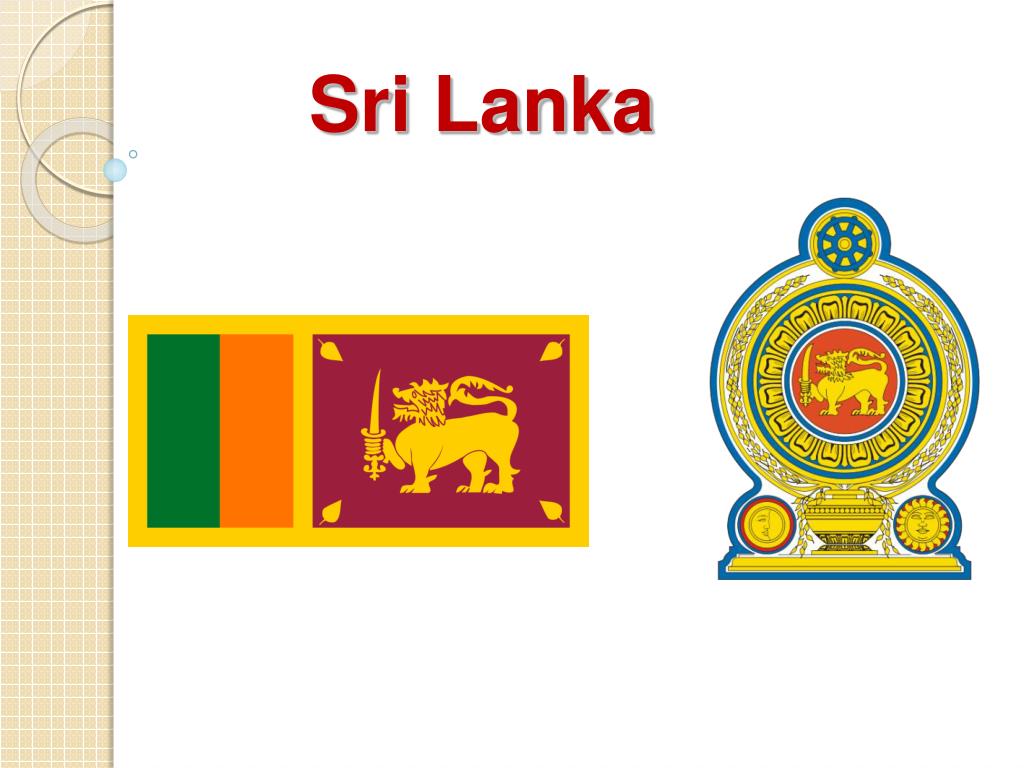
Sri Lanka - slide 1
01 / 13Sri Lanka
1 / 17

Télécharger la présentation

Sri Lanka
Une image / un lien ci-dessous est fourni (tel quel) pour télécharger la présentation

Politique de téléchargement : le contenu du site vous est fourni TEL QUEL pour votre information et votre usage personnel ; il ne peut être vendu, concédé sous licence ni partagé sur d’autres sites sans l’accord de son auteur.Le contenu vous est fourni TEL QUEL, pour votre information et votre usage personnel uniquement. Téléchargez la présentation en cliquant sur ce lien. Lors du téléchargement, si vous ne parvenez pas à télécharger une présentation, l’éditeur a peut-être supprimé le fichier de son serveur.Pendant le téléchargement, si vous ne parvenez pas à obtenir une présentation, le fichier a peut-être été supprimé par l’éditeur.

F I N

Plus de contenu associé

Transcription de la présentation
  1. Sri Lanka

  2. History: • Under British control from 1815 until independence in 1948 • Name changed from Ceylon to Sri Lanka (“Sacred Land”) in 1972. • Population: 21 Million • Administrative capitol is Kotte. Commercial capitol is Colombo. • Civil War since mid 1980s between government and Tamil Tigers. • Ethnically and Religiously Diverse. • 70% of the country is Buddhist • The Sinhalese are the ethnic majority in Sri Lanka, • Tamils are the largest ethnic minority (16%).

  3. Government: • Unitary State. • Dual Presidential / Parliamentary system. • President is the head of state, head of government, and Commander in Chief. • Elected by popular vote. • Parliament is Unicameral with 225 members. • PM serves at President’s deputy.

  4. Legal System: • Based on a combination of English common law, Roman-Dutch, Kandyan, and Jaffna Tamil law.

  5. Court Structure • Supreme Court • Court of Appeal • High Court • District Courts • Magistrate’s Courts • Primary Courts

  6. Provisional Courts • Civil cases with awards lower than 1,500 rupees • Enforces local bye-laws. • Appeals go to Provisional High Courts. • Magistrate’s Courts • Low level civil and criminal cases. • Can fine up to 1,500 rupees and give prison time of up to 2 years. • Appeals go to Provisional High Courts • District Courts • Civil cases. • Appeals go to Court of Appeals. • High Court of Sri Lanka • Serious criminal cases • Court of Appeals of Sri Lanka • Writ of habeas corpus.

  7. Judicial Effectiveness • Justice is very slow in Sri Lanka. • Many criminal cases take longer than 5 years to complete, and some civil cases take up to 20 years. • Chief Justice • Judiciary is becoming a joke. • Vigilantism. • Court of Appeals backlog. • 8-10 years.

  8. Supreme Court

  9. Supreme Court • 17th Amendment. • Justices appointed by President after getting permission from Constitutional Council. • Justice Mandatory Retirement Age: 65 • Justices can only be removed if President has support from majority of Parliament.

  10. Supreme Court • Original Jurisdiction • Constitutional Issues • Fundamental Rights • Judicial Review • Final Appellate Jurisdiction • Consultative Jurisdiction

  11. Judicial Independence • Constitutionally Guaranteed • Reality: • Executive power • Witness intimidation • Rulings ignored by government. • Prevention Against Terrorism Act (1979) • Coerced confessions • No jury trials.

  12. Judicial Independence • Recent indictment of former President Chandrika Kumaratunga (10/8/08) for corrupt deal while in office was first time executive had ever been confronted in this manner by the Judicial Branch

  13. Human Rights: • Numerous human rights violations. • Civil War used as justification for disappearances, torture, and murder. • Tamil ethnic group tends to be targeted. • U.S. Dept. of State Human Rights Report 2007: • Armed attacks against civilians, kidnapping. • few arrests and no prosecutions as a result of these abuses. • “Government security forces used the broad 2005 emergency regulations to detain civilians arbitrarily, including journalists and members of civil society.”