Download
1 / 12
120 likes | 236 Vues
Greek mythology presents a vibrant polytheistic belief system where gods embody human traits and emotions. From the chaos of creation with Gaea and Uranos to the heroic tales of Zeus and the Olympians, these myths explore the human condition through love, jealousy, and moral dilemmas. The Greeks believed in direct communication with divine deities, consulting oracles like the famous Pythia at Delphi for guidance. The afterlife was shaped by karma, with souls navigating the realms of Hades, Tartarus, and the Elysian Fields, reflecting their virtues and vices.

E N D
Greek Religious Beliefs • Polytheistic – believed in many gods • Believed they could communicate directly with the deities • Gods were anthropomorphic – possessed human characteristics • Gods experienced: conflict, joy, anxiety, love, jealousy, deceitfulness, dilemmas, passion, aggression, euphoria • In short… Greek myths represented the trials and tribulations of the human condition
Gods believed to control all aspects of human life and death • Passed down through myths and legends • Book of Orpheus • Collection of teachings of Greek priests and comes close to a sacred text • Duty of all Greeks to visit a shrine, altar, or temple to the gods and say a prayer and leave a small gift
How the World Began • Gaea (Mother Earth) rose out of chaos • She gave birth to a son, Uranos (Sky), who became her husband • They had many children – most important were the 14 Titans • Cronos led others in a rebellion against their father and deposed him
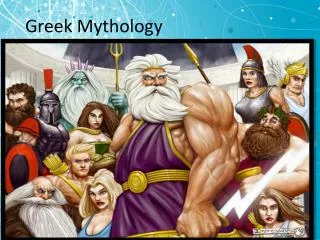
Cronos married his sister, Rhea • Their son Zeus led his siblings against the Titans; he deposed Cronos and became leader of the new gods • New rulers lived on Mount Olympus and were known as Olympians
Omens • Specially trained priests read signs to determine the will of the gods • Divining – reading the entrails (liver) of animals • Augury – reading flight patterns of birds • Soothsayers (i.e. oracles) could see into the future
Oracles • People would inquire about personal or national problems to the gods through oracles • Most famous oracle at Delphi where Apollo spoke through his priestess, the Pythia • The Pythia gave oracles once a year but Delphi became so popular that they were given every week and two priestesses were needed
Oracles to Delphi • The Pythia gave her oracles in an inner sanctuary • First she bathed in a holy fountain, drank from a sacred spring, inhaled smoke of burning laurel leaves • Temple priests posed people’s questions to the Pythia • They then interpreted her replies… often vague and could be interpreted multiple ways
Death and the Underworld (Hades) • Styx • River marking the boundary between world of the living and the underworld • Charon (Ki-Ron) • Ferryman who took dead across River Styx • Dead had to have a coin to pay for the crossing or the soul would wander lost on the riverbank • Cerberus • Three-headed guard dog at the gates of Hades • Job was to stop souls from leaving Hades and the living from entering the Underworld
Tartarus • Souls of wicked sent to Tartarus where they were condemned to eternal punishment • Worst sin to commit was to abuse the gods’ hospitality • Asphodel • Souls of common people who had not been too bad or too good were sent to this grey, lifeless, boring place to drift aimlessly for eternity • People here lost all of their memory and therefore had nothing to talk about • Elysian Fields • Souls of those who were virtuous were sent to a happy place filled with golden sunlight