Persuasive PRESENTATIONS
This comprehensive checklist outlines the fundamental concepts of persuasive presentations as discussed in Chapter 15 of our text. Although it serves as a helpful guide, it should not replace the chapter reading. Note that the information is essential for exams, so diligent note-taking is recommended. Learn about the goals of persuasive presentations, how to select an effective purpose, avoid counterproductive outcomes like the boomerang effect, and apply the Monroe Motivated Sequence. Respect for your audience and sources is crucial in crafting effective arguments.

Persuasive PRESENTATIONS
E N D
Presentation Transcript
CHECKLIST FOR SUCCESS Persuasive PRESENTATIONS
This checklist simplifies the presentation concepts found in Chapter 15 of our text. This checklist is NOT a substitute for reading the chapter. Please read it. This information IS exam material– so take notes. STUDENTS PLEASE NOTE!
WHAT ARE PERSUASIVE PRESENTATIONS? • When you want to bring about a change in your audience. For example: • Five Reasons to Quit Smoking • Why Saudi Arabia Should Become a Leader in Solar Energy.
SELECTING A PERSUASIVE PURPOSE 4 CHOICES
You can argue for CONTINUANCE
You can argue for. . . DISCONTINUANCE
Difficult to evaluate and measure EASIEST TO PRESENT, HOWEVER……. • Continuance • Deterrence
You can argue for. . DETERRENCE
You can argue for. . . ADOPTION
Challenging to present • Adoption • Discontinuance
the boomerang effect When the audience likes you less at the end of the presentation than they did at the beginning
HOW TO AVOID THE BOOMERANG • KNOW YOUR AUDIENCE (FRIENDLY, HOSTILE, NEUTRAL, A MIX?) • DO CAREFUL RESEARCH • NOT EVERYONE WILL AGREE WITH YOU— BE GRACIOUS NOT DEFENSIVE
The Difference is…… • Evidence • Examples, surveys, testimony, statistics • Proof • Evidence that is believed by the receiver • Audience has to accept the evidence to make it proof
REMEMBER EVIDENCE MUST BE TESTED TO BE VALID • KNOW THE TEN TESTS FOR EVIDENCE IDENTIFIED ON PAGE 397 OF YOUR TEXT (4th ed.).
TO ORGANIZE YOUR ARGUMENT: USE THE MONROE MOTIVATED SEQUENCE, PAGE 402
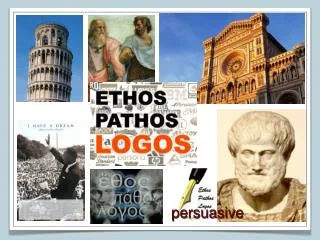
USE THE THREE PROOFS Logos Ethos Pathos
Three Forms of Proof • Logical Proof (Logos) • The use of argument and evidence to persuade • Personal Proof (Ethos) • The use of source credibility to persuade • Emotional Proof (Pathos) • The use of narrative to persuade
FINALLY, PERSUASION IS ALL ABOUT RESPECT… • ACCURATELY CITE YOUR SOURCES • RESPECT YOUR SOURCES • RESPECT YOUR AUDIENCE • RESPECT YOUR OPPONENT
TO REVIEW. . . Know your purpose Test your evidence Use the 3 proofs Respect goes a long way!