Download
1 / 3
30 likes | 140 Vues
The Battle of Little Bighorn marked a pivotal moment in American history, highlighting General Custer's ambitious but flawed tactics. Ignoring orders and dividing his command, he faced overwhelming Native American resistance led by Sitting Bull and Crazy Horse, resulting in the annihilation of his forces. While initially a victory for the Indians, this battle ultimately led to increased government action against Native Americans, including the Dawes General Allotment Act of 1887, aimed at dismantling tribal life and influence.

E N D
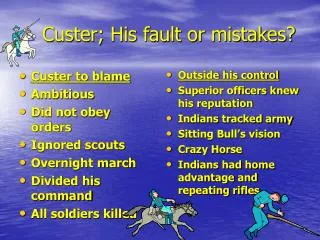
Custer to blame Ambitious Did not obey orders Ignored scouts Overnight march Divided his command All soldiers killed Outside his control Superior officers knew his reputation Indians tracked army Sitting Bull’s vision Crazy Horse Indians had home advantage and repeating rifles Custer; His fault or mistakes?
The effects of Little Big Horn • Initially, it was a great victory for the Indians and a morale booster • In the longer term, it caused the American government to decide that it had to put an end to the ‘Indian problem’ once and for all, and throw serious resources/man power to the task. • The main way of doing this was the decision to wipe out the buffalo
The Dawes General Allotment Act 1887 • This was the government’s way of breaking up tribal life and influence of the chiefs. This act gave each indian man a farm, that they could own. Now, no indian would need to approach the chief for anything as he owned his own farm.