Knowledge Connections
This overview explores the differences between the three main types of colonies established by European powers in the Americas during the mid-1700s: Trading Post Empires, Plantation Colonies, and Settler Colonies. We examine the reasons for colonization, driven by the desire for wealth (Gold), spreading religion (God), national pride (Glory), and territorial expansion (Geography). Each colony type was structured around unique economic and social frameworks, with examples from France, Spain, and England. Join us in uncovering the complexities of colonial expansion.

Knowledge Connections
E N D
Presentation Transcript
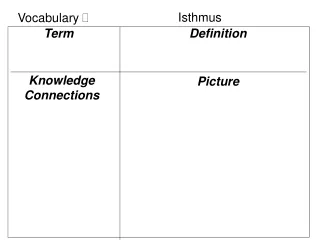
Term Definition Knowledge Connections Picture
Essential Question What were the differences between the three types of colonies created by Europeans?
Why build colonies? Colonies mean… • Gold(Wealth) • God(Spreading religion) • Glory(Power and pride) • Geography(Land) No nation wanted to be without colonies!
What types of colonies were there? Mid 1700s – France, Spain, and England claimed the most land in the Americas Each nation followed different patterns of settlement Three Types of Colonies TRADING POST EMPIRE PLANTATION COLONY SETTLER COLONY
What was a trading post empire? Colonies for the purpose of trade TRADING POST EMPIRE France established trading posts in Canada and throughout the Mississippi Valley Nickname of the French Empire – “ The Empire of Fish and Furs”
What was a plantation colony? • Locations: • Caribbean Islands • Parts of South America • Southeastern North America PLANTATION COLONY Large estates established to produce CASH CROPS Products grown in order to make a profit Many times, enslaved labor was used to work the land
What was a settler colony? SETTLER COLONY Attempted by all nations Territory governed by the homeland Goal: Attract enough people to establish a firm foothold in another land Examples: New Netherlands (NY), Jamestown (VA), and Plymouth (MA)
Essential Question What were the differences between the three types of colonies created by Europeans?