Key Concepts in Organic Chemistry: Functional Groups, Reactivity, and Polymerization
This guide provides essential insights into organic chemistry, focusing on functional group identification, general characteristics such as acidity, odor, and solubility, as well as naming branched hydrocarbons. It covers fundamental functional groups including alcohols and halogens, identifying chirality, and reactivity, particularly with C-O bonds. The document discusses key reactions, including substitution at carbonyls and addition reactions forming polymers, plus the impact of reducing agents like NaBH4 and LiAlH4 on C-O bonds.

Key Concepts in Organic Chemistry: Functional Groups, Reactivity, and Polymerization
E N D
Presentation Transcript
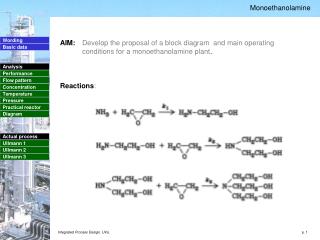
Orgo Reactions What you need to know about organic chemistry.
What to know • Functional group identification • General characteristics (acid/base, happy/bad smell, solubility in water.) • Naming branched hydrocarbons • Simple functional group (alcohol, halogens) • Identifying chirality • Reactivity • Oxidation/reduction of C-O bonds • Substitution at a carbonyl (polymers) • Addition reactions (polymers) • Halogen reactivity
Ketone Aldehyde Carboxylic acid alcohol NaBH4 or LiAlH4 decrease the number of C-O bonds. KMnO4 or Cr+6 increase the number of C-O bonds.
This molecule can be any of the following functional groups: Ester, amide, carboxylic acid, acid halide. This molecule can be any of the following functional groups: Alcohol, water, amine, carboxylic acid, metal hydroxide Substitution at a Carbonyl IF a molecule has two functional groups, this can potentially build a polymer!
Addition polymers: Addition Reactions Adding H2 requires a catalyst (Rh, Pd)
Other substitution rxns This reaction is informational only. Other classes will talk about this.
CxHyOz + excess O2 CxHyNaOz + excess O2 Combustion of Organic Molecules CxHy + excess O2 CO2 + H2O CO2 + H2O CO2 + H2O + NO2 Of course this assumes complete combustion.