Reality TV
Reality TV is a complex genre that intertwines fact and fiction, often challenging our perception of reality. Constructed narratives manipulate audience viewpoints, raising questions about the irony of the "reality" label. The genre frequently explores themes of voyeurism, symbolic violence, and celebrity culture in a media-saturated society. Audiences are drawn by transformation stories and the emotional realism of participants. The internet has further shifted our consumption of reality television, promoting a culture of exhibitionism and surveillance. Why do we remain captivated by these shows?

Reality TV
E N D
Presentation Transcript
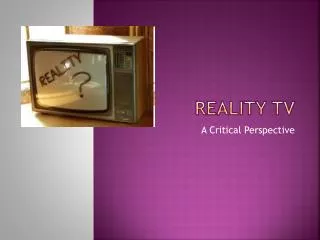
Reality TV A Critical Perspective
Realism • A genre that blurs fact, fiction and realism. • Hard to define – a hybrid genre that continues to change. • All reality shows are constructed and audience viewpoint manipulated. • Is ‘reality tv’ as a label ironic? • Inhabits a borderline territory between information and entertainment. • The genre is often used to illustrate arguments about the alleged ‘dumbing down’ of television.
Recurring elements - transformation • Typically ‘lifestyle’ self improvement/makeover programmes involving real people in real situations. • These people usually are experiencing some sort of trauma in their lives with regards to their appearance, their house/garden etc which is then transformed and improved by the experts. • Transformation...of an individual (How to look Good Naked) • Group (Supernanny, Jamie’s Kitchen, Brat Camp) • House (Changing Room, 60 minute Makeover)
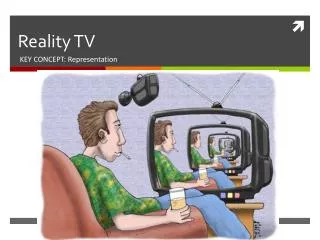
Recurring elements...Voyeurism • Voyeurism is a term used to describe the pleasure that people get from watching other people. • Much of the interest in reality TV surrounds the audience’s voyeuristic interest in people having sex in front of the cameras. • Internet has influenced how we consume TV. • It is essentially a voyeuristic medium – audience is generally anonymous but able to access a whole range of images and information about other people’s lives.
Symbolic Violence • When experts or other contestants criticise participants or the show’s format involves humiliation. • X factor/Britain’s got Talent • Big Brother • I’m a Celebrity Get me Out of Here
Celebrity • The reverse side of voyeurism is exhibitionism. • The web encourages people to behave in an exhibitionist way that they might not consider in public. • The webcam allows people to give worldwide access to the intimate details of their lives. • Celebrity status was once reserved for those who had achieved highly in their field, eg. Hollywood actors, sport stars. • Celebrity has now become central to our everyday lives.
Celebrity • In our media saturated society there is an insatiable demand for celebrity to fill TV schedules and newspaper columns. • The manufacture of celebrities is essential to fuel this demand – reality TV is one way of doing this. • The voyeurism and exhibitionism that is now central to our culture has its origins in and is a reflection of society’s fixation with surveillance. • Post modern culture has taken surveillance and turned it into an opportunity for people to become stars in their own films.
Entertainment Values • Why do we continue to watch?? • The variety of formats means there is something for everyone. • We enjoy the feeling of empowerment when we can influence the outcome – Big Brother. • We enjoy emotional realism as we recognise and perhaps empathise with the emotions (insecurity, excitement, antagonism etc).
Homework • Read pages 8-11 from textbook on ‘Celebrity’ and make notes.