Adjustable Standing Desks | Adjustable Standing Desks for Home
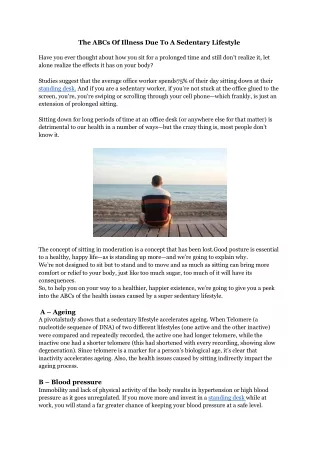
Have you ever thought about how you sit for a prolonged time and still donu2019t realize it, let alone realize the effects it has on your body? Studies suggest that the average office worker spends75% of their day sitting down at their standing desk. And if you are a sedentary worker, if youu2019re not stuck at the office glued to the screen, youu2019re, youu2019re swiping or scrolling through your cell phoneu2014which frankly, is just an extension of prolonged sitting. Sitting down for long periods of time at an office desk (or anywhere else for that matter) is detrimental to our health in a number of waysu2014but the crazy thing is, most people donu2019t know it. The concept of sitting in moderation is a concept that has been lost. Good posture is essential to a healthy, happy lifeu2014as is standing up moreu2014and weu2019re going to explain why. Weu2019re not designed to sit but to stand and to move and as much as sitting can bring more comfort or relief to your body, just like too much sugar, too much of it will have its consequences. So, to help you on your way to a healthier, happier existence, weu2019re going to give you a peek into the ABCs of the health issues caused by a super sedentary lifestyle. A u2013 Ageing A pivotal study shows that a sedentary lifestyle accelerates ageing. When Telomere (a nucleotide sequence of DNA) of two different lifestyles (one active and the other inactive) were compared and repeatedly recorded, the active one had longer telomere, while the inactive one had a shorter telomere (this had shortened with every recording, showing slow degeneration). Since telomere is a marker for a personu2019s biological age, itu2019s clear that inactivity accelerates ageing. Also, the health issues caused by sitting indirectly impact the ageing process. B u2013 Blood pressure Immobility and lack of physical activity of the body results in hypertension or high blood pressure as it goes unregulated. If you move more and invest in a standing desk while at work, you will stand a far greater chance of keeping your blood pressure at a safe level. C u2013 Cholesterol Itu2019s no secret: Too much-sitting results in weight gain, but when that weight starts showing around the hips and waist, you are at an increased risk of high cholesterol levels which can lead to serious heart conditions. D u2013 Deep Vein Thrombosis (DVT) Immobility in the body reduces blood circulation. The blood pools in certain parts of the body causing blood clots which can lead to issues like DVT. This is a serious health issue where long-term effects can result in the inability to walk properly or worse, lose the ability to walk completely. H u2013 Heart problems When we sit for a long period, our bodyu2019s fat-burning ability is drastically reduced, resulting in poor blood circulation as well as a build-up of fatty acids. When these acids have nowhere to go they settle in the arteries, blocking the entry and exit of blood to the heartu2014a recipe for disaster. I u2013 Inactivity The human bodyu2019s purpose is to move and we are structured to stand, not sit. Every time we sit for a prolonged period, we invite a new health problem that has short and long term repercussions. Inactivity does harm to your body more than you may think. By improving your posture at work and moving more, you can avoid this plethora of health issues. M u2013 Mental health issues like depression and anxiety Sitting not only causes physical but also mental health issuesu2014those that typically go unnoticed. When you sit for too long, you can lose the motivation to do anything. When you lose motivation, you tend to go outdoors less that will deprive your brain of fresh air, vitamin D or social interaction, thus creating feelings of loneliness, anxiety and depression. N u2013 Nerve damage Too much sitting can numb the whole body while creating a series of blood clusters. Similarly, sitting also numbs the nerves, which bears a lot of pressure and can lead to chronic damage. O u2013 Obesity Sitting for longer periods has strong links to weight gain. This happens as a result of decreased lipoprotein lipase activity which creates a negative impact on the bodyu2019s ability to burn fat. When the fat burning process slows down, the body burns carbohydrates instead of fat which means that weight is not lost at all. Even if you follow a low-calorie diet, sitting for extended periods will significantly reduce your bodyu2019s ability to burn fat. P u2013 Poor posture We slouch all the time and sitting elevates the effects of slouching, causing neck, back, shoulder and hip pain in the process. Poor posture often leads to a variety of chronic health and mobility problems which naturally, will have a negative impact on your quality of lifeu2014so keeping tabs on it is incredibly important. S u2013 Sugar Inactivity puts stress on the cells to produce insulin which spikes blood sugar with too much pressure. Both of these factors combined can become a big contributing factor in diabetes. T u2013 Type 2 Diabetes People with a sedentary lifestyle are at a significantly increased risk of Type 2 Diabetes.Inactivity tends to weaken the muscles that result in lower insulin sensitivity which, in turn, raises the chances of contracting diabetes. V u2013 Varicose veins When youu2019re immobile for a long time, your blood circulation slows down to the point that blood starts collecting in various parts of your body, giving rise to spiderweb-like networks called varicose veins. These result in swollen legs, calves, and ankles. Though itu2019s possible to treat this condition, ignoring varicose veins can lead to more serious conditions like blood clots and Deep Vein Thrombosis (DVT). W u2013 Weak legs and glutes/muscles Being idle stops the muscles from getting any form of workout. So, instead of making them flexible, we loosen them up. Loose muscles are unable to help us stand or support our body properly, thus weakening the legs and glutes. You might think that exercising will compensate for your continuous sitting habits, but it wonu2019t undo the damage sitting has already done to your body internally. As such, standing up at work and commitment to moving more frequently is essential if you want to avoid the health issues mentioned here. Now that you know the many hidden side effects of sitting too much, you can make a change for the better. In addition to eating and sleeping better, getting more exercise, and improving your general posture and perhaps investing in the right standing desk will improve your lifestyle tp no end. Explore our selection of specialist standing desks and make a change for the better, today.
81 views • 5 slides