Download
1 / 13
150 likes | 311 Vues
Coal mining presents significant challenges and consequences for both the environment and human health. Strip mining, prevalent in the US, involves removing layers of rock to access coal, resulting in land disruption, erosion, and acid mine drainage. Alternatively, underground mining poses risks to miners, including potential collapses, explosions, and respiratory illnesses like black lung disease. Both methods lead to detrimental impacts on land and water, such as land subsidence and loss of water sources. Understanding these effects is crucial for addressing the future of coal mining.

E N D
Easier to find than oil • Coal is solid so it does not migrate like oil • Easier to map • A LOT of coal is still there to be mined
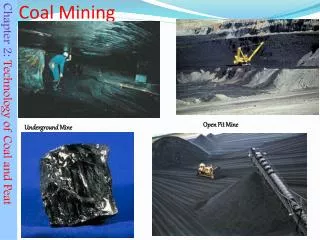
Strip mining or open pit mining • Most coal mining in US is done by STRIP MINING (Overlying layers of rock and soil is stripped off to reach the coal) • Cheaper and easier than underground mining
EFFECTS OF STRIP MINING • Disturb the land, vegetation and ecosystems • Cause erosion • Acid mine drainage
Effects on the miners • Collapse, explosion and fire hazards • Respiratory illnesses such as black lung disease from exposure to coal dust
Impacts on land Land subsidence
Impacts on water (rivers, streams, groundwater etc.) • Partial or complete loss of water (water gets diverted in tunnels and sinkholes created by the mining activities) • Wells and springs can dry out because of groundwater loss • Acid mine drainage