Exploring Ctenophores: Characteristics, Habitat, and Reproductive Strategies of Sea Walnuts and Comb Jellies
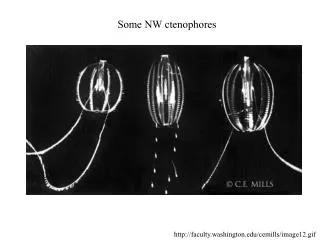
Ctenophores, commonly known as sea walnuts or comb jellies, comprise fewer than 100 species, all of which thrive in saltwater environments. Most are free-swimming and exhibit luminescent transparent bodies that are visible at night. They inhabit warm, tropical sea waters and possess two tentacles equipped with colloblasts, specialized adhesive cells used for capturing prey. Ctenophores are monoecious organisms that reproduce both sexually and asexually, with fertilization occurring either through egg-laying or development of zygotes released by a single parent.

Exploring Ctenophores: Characteristics, Habitat, and Reproductive Strategies of Sea Walnuts and Comb Jellies
E N D
Presentation Transcript
General Characteristics • Contains fewer than 100 species • All live in salt water • Common names are “sea walnuts” and “comb jellies” • Most are free-swimming • Transparent bodies are easily seen at night when they emit light
Habitat • Inhabit warm, tropical sea waters
Form and Function • 2 tentacles containing colloblasts to catch prey • Colloblasts: adhesive cells that capture food • Swim using cilia
Reproduction • Monoecious: have both sexes in one organism • Asexual reproduction • Zygote develops in the single parent and is released into the water • Sexual reproduction • Lay eggs and a male comes by and fertilizes them