Understanding HIV/AIDS: Transmission, Symptoms, and Prevention Strategies
110 likes | 256 Vues
HIV/AIDS is recognized as "the most serious disease epidemic of our time," stemming from the human immunodeficiency virus that first linked to wild chimpanzees around 1931. By 2004, the U.S. recorded 900,000 cases, with 500,000 deaths, while worldwide, approximately 5 million new cases arise annually. The virus weakens the immune system, making individuals susceptible to diseases, and currently, there is no cure. However, advancements in treatment, such as HAART, have improved outcomes. Effective prevention strategies include safe sexual practices and risk assessment.


Understanding HIV/AIDS: Transmission, Symptoms, and Prevention Strategies
E N D
Presentation Transcript
Overview • “The most serious disease epidemic of our time.” • Caused by infection with the human immunodeficiency virus • Recently tied to wild chimpanzees through contact with their blood around 1931 • Targets and destroys cells which coordinate our immune system leaving us vulnerable to diseases and cancers
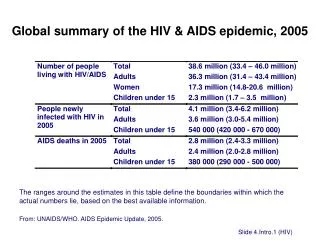
Incidence • By 2004, 900,00 cases in U.S. with 500,000 deaths • Currently, 850,000 are living with HIV • 40,000 new cases a year • Dramatic increases for teens • Worldwide 5 million new cases a year • 42 million suffer from it • Another 45 mil. by 2006?
Transmission • HIV typically enters the body through unprotected bodily fluid exchanges during oral-genital, vaginal or anal intercourse • An additional 20% contract via contaminated needles • Children can also contract from mother before or during birth or through breast feeding
Symptoms • Often it begins with a brief flulike illness a few weeks after infection • Fevers, swollen lymph glands, rashes, loss of appetite, muscle aches • Then bloody stools, repeated fevers, and especially, oral candidiasis • Eventually antibodies to the virus are detectable through blood tests
Course • As HIV spreads, the body loses its ability to defend itself • Within 8-11 years one or more severe diseases attack • Pneumonia, encephalitis, fungal infections, salmonella are all common • Now improvement in drug therapies has slowed the former rapid descent to death
Treatment • No cure • Thousands of scientists worldwide are trying to cure or prevent • In 1996 a drug which inhibits the virus’ copying abilities emerged • HAART (Highly Active Antiretroviral Therapy) has stymied the virus • Complicated regimen, toxic side-effects
Prevention • To be completely safe, no interpersonal sexual contact or a monogamous, mutually faithful relationship • Short of that: don’t share needles avoid contact with semen keep away from anuses, urine, sex workers
Preventing STD Transmission • Pleas for abstinence and dissemination of educational materials have failed to stem the tide • Perhaps advice concerning assessing risk rather than insisting on abstinence is the most practical path
Assessing Risk • Look to yourself first – get a comprehensive screening • Spend a lot of time with your prospective partner before engaging in sexual activity • Swimming against the cultural tide • Self-disclosure – but many lie
Obtain prior medical exams, costs can be controlled • Use condoms • Avoid multiple partners • Wash, inspect, inform