Key Historical Events and Cultural Developments of the Renaissance Era (1450-1600)
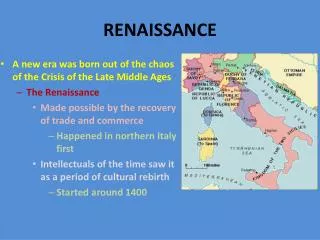
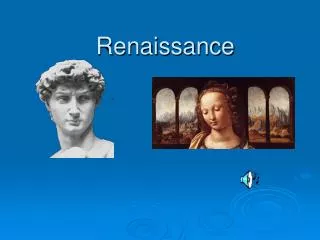
The Renaissance (1450-1600) was a pivotal cultural movement marked by significant events and innovations. Key moments include the burning of Joan of Arc (1431), the invention of the printing press by Gutenberg (1455), and the discovery of America by Columbus (1492). This era also saw the birth of iconic figures such as Michelangelo (1475) and Shakespeare (1564). Notable advancements in music included the development of instruments like the violin and lute, and the emergence of new vocal forms such as madrigals and chansons, enhancing both sacred and secular music.


Key Historical Events and Cultural Developments of the Renaissance Era (1450-1600)
E N D
Presentation Transcript
Renaissance 1450-1600
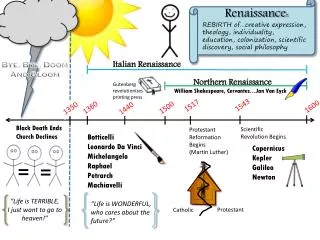
Historical Events of the Renaissance Time Period • 1431 – Joan of Arc burned at the stake • 1455 – Printing Press was invented • 1475 – Michaelangelo was born • 1492 – Columbus discovers America
Historical Events of the Renaissance Time Period • 1500 – First pencil • 1517 – Martin Luther posts 95 theses • 1553 – Violin began to develop • 1564 – Shakespeare was born
Important Facts • 1435- Gutenberg press invented • 1465 – 1st printed music appears • 1503-1506 – Mona Lisa is painted by da Vinci • 1508-1512 –Sistine Chapel is painted by Michelangelo
Important Facts • 1509 – Henry VIII becomes King of England • 1517 – Protestant reformation begins in Germany • 1519 – Cortez conquers Mexico • 1588 – Spanish Armada is defeated
General Facts • After the dark ages, the period of enlightenment • The rebirth of humanism • More artistic freedom
Instruments of the Renaissance • Violin was developed • Lute was at the height of popularity • Bagpipes were created and played on Scottish battlefields
Instruments of the Renaissance • Clavichord was developed (early piano) • Instruments were used for dance music • Instrumentalists began to improvise
Vocal Music • Chant is still used in church and by monks • Mass was created (sung part of the Eucharist) • Motets – sacred pieces • Madrigals – Italian secular pieces
Vocal Music • Chansons – French secular songs • Secular music began to sing about courtly love (new idea) • Women made music outside of church and were gradually allowed to sing in church • Men’s voices imitated women
Composers • William Byrd • Giovanni Gabrielli • Giovanni Palestrina • John Dowland
Ars Nova (New Art) • Creativity • Improvisation • Composers emphasized human emotions • Music became more lively and up beat • Polyphony was developed (canon-round)
Important Vocabulary • Renaissance period • A cappella • Lute • Sacred music • Secular music • Madrigal • Polyphony • canzona