Employee Verification: Reducing Hiring Risks Through Structured Screening
Employee Verification plays a critical role in reducing hiring risks and maintaining workplace compliance. This document, Employee Verification: Reducing Hiring Risks Through Structured Screening, explains how a structured employee verification process helps organizations prevent fraud, ensure regulatory compliance, and build a trustworthy workforce.

Employee Verification: Reducing Hiring Risks Through Structured Screening
E N D
Presentation Transcript
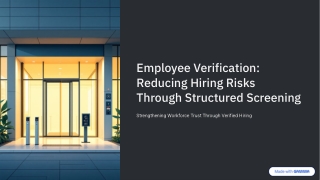
Employee Verification: Reducing Hiring Risks Through Structured Screening Strengthening Workforce Trust Through Verified Hiring
INTRODUCTION Understanding Employee Verification Employee verification is a systematic process of authenticating candidate credentials, work history, and personal information before extending a job offer. This critical HR function protects organizations from hiring risks while ensuring compliance with labor regulations. In competitive talent markets, structured verification processes distinguish professional organizations from those vulnerable to fraud, liability, and operational disruptions.
RISK AWARENESS Critical Hiring Risks Facing Organizations Fraudulent Credentials Employment History Gaps Falsified degrees, certifications, and professional licenses pose significant operational and legal risks to employers. Undisclosed employment terminations or career gaps may indicate performance issues or concealed information. Identity Fraud Insider Threats Impersonation and stolen identity documents enable unauthorized individuals to gain employment access. Unverified employees with undisclosed criminal backgrounds or conflicting interests create security vulnerabilities.
What Is Structured Employee Verification Screening Structured employee verification screening establishes standardized, repeatable processes for validating candidate information across multiple data points. This approach ensures consistency, compliance, and comprehensive risk assessment. Standardized Checks 1 Uniform verification criteria applied to all candidates equally Documentation 2 Complete audit trails and verification records maintained Traceability 3 Clear chain of verification from source to hiring decision
VERIFICATION COMPONENTS Key Components of Employee Verification Identity Verification 1 Authentication of government-issued identification documents, including passports, driver's licenses, and national ID cards to confirm candidate identity. Address Verification 2 Validation of current and previous residential addresses through utility bills, lease agreements, and local authority records. Employment Verification 3 Confirmation of previous job titles, employment dates, responsibilities, and reasons for departure with former employers. Education Verification 4 Authentication of academic degrees, certifications, and professional credentials directly with issuing institutions. Criminal Background Check 5 Screening of criminal records, court databases, and law enforcement records at local, state, and national levels. Reference Checks 6 Structured interviews with professional references to assess candidate performance, character, and work habits.
Employee Verification and HR Compliance Regulatory Requirements Organizations must navigate complex employment laws, data protection regulations, and industry-specific compliance mandates. Employee background verification in India requires adherence to Personal Data Protection Bill guidelines, while global operations must comply with GDPR and local labor laws. Consent and Data Privacy Pre employment screening processes require explicit candidate consent, secure data handling protocols, and transparent disclosure of verification scope. Proper consent management protects organizations from legal liability. Audit-Ready Hiring Process Maintaining comprehensive verification documentation creates audit trails that demonstrate due diligence during regulatory reviews, litigation, or compliance audits.
BUSINESS IMPACT Business Impact of Poor Verification Practices $15K 3x 68% Average Cost Per Bad Hire Higher Turnover Risk Resume Falsification Direct and indirect expenses from recruitment, training, productivity loss, and termination Unverified employees show significantly higher turnover rates within first year Percentage of candidates who embellish or misrepresent credentials on applications Financial Losses Legal Exposure Reputational Damage Recruitment and onboarding costs multiplied by turnover Negligent hiring claims and liability Loss of client trust and business relationships Regulatory fines for compliance violations Productivity gaps and training investments lost Negative employer brand perception Workplace safety and security incidents Decreased candidate quality in future hiring Legal fees and potential settlement costs
Role of Technology in Employee Verification Automation Benefits Automated workforce verification reduces manual effort, eliminates human error, and accelerates candidate processing through integrated systems. Faster Turnaround Digital verification platforms compress traditional 7-14 day timelines to 24-48 hours, reducing time-to-hire and candidate drop-off. Accuracy and Reporting Real-time verification status, standardized reporting formats, and centralized dashboards provide complete visibility into screening progress. Secure Data Handling Encrypted data transmission, role-based access controls, and compliance- certified infrastructure protect sensitive candidate information.
FORCE TRACK How Force Track Supports Structured Employee Verification Force Track provides compliance-focused employee background check workflows designed for HR teams managing high-volume recruitment. The platform streamlines background verification services while maintaining audit-ready documentation. Compliance-Focused Workflows Built-in consent management, data privacy controls, and regulatory compliance features ensure adherence to employment verification process requirements. Scalable Solutions Flexible verification packages adapt to organizations of all sizes, from startups to enterprises with thousands of annual hires. Reliable Reporting Comprehensive verification reports with source documentation enable confident, data-driven hiring decisions.
Best Practices for HR and Recruitment Teams 01 02 03 Establish Consistent Verification Policies Select Qualified Verification Partners Implement Proper Consent Management Document standardized verification requirements for each role level, ensuring equal application across all candidates and hiring managers. Evaluate background verification services based on compliance certifications, turnaround times, accuracy rates, and technology capabilities. Obtain written authorization before initiating employee onboarding compliance checks, clearly disclosing verification scope and data usage. 04 05 Maintain Documentation Standards Conduct Regular Policy Reviews Preserve complete verification records, candidate disclosures, and adverse action notices for regulatory compliance and legal protection. Update verification protocols annually to reflect changing regulations, emerging fraud patterns, and evolving business requirements. Final Perspective: Employee verification represents a fundamental risk control strategy that protects organizational assets, reputation, and legal standing. Structured pre employment screening transforms hiring from a vulnerability into a competitive advantage, building trustworthy workforces that drive sustainable business growth.