What Are the Firewall Functions Explained
A firewall is one of the most essential security components in any network, acting as the first line of defense between trusted internal systems and the open internet. Its primary purpose is to monitor, filter, and control incoming and outgoing network traffic based on predefined security rules. But modern firewalls go far beyond simple traffic blocking. Here are the key firewall functions explained in detail.


What Are the Firewall Functions Explained
E N D
Presentation Transcript
www.nwkings.com What Are the Firewall Functions Explained
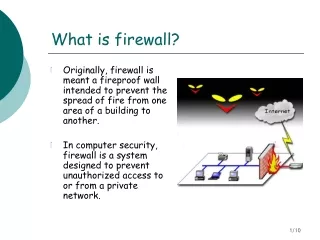
02 A firewall is one of the most essential security components in any network, acting as the first line of defense between trusted internal systems and the open internet. Its primary purpose is to monitor, filter, and control incoming and outgoing network traffic based on predefined security rules. But modern firewalls go far beyond simple traffic blocking. Here are the key firewall functions explained in detail.
03 One of the core functions of a firewall is packet filtering, where each data packet passing through the network is inspected. Based on source, destination, protocol, or port number, the firewall decides whether to allow or block the traffic. This ensures only legitimate communication reaches your network. Another important function is stateful inspection. Unlike basic filtering, stateful firewalls analyze the context of traffic—checking if the packet belongs to an existing, trusted connection. This significantly strengthens network protection by identifying suspicious or abnormal behaviors. Modern firewalls also provide proxy services, acting as intermediaries between users and the internet. This hides internal IP addresses, minimizing exposure and enhancing privacy. www.nwkings.com
04 Additionally, application-layer filtering helps analyze traffic based on specific applications, enabling granular control over services like web browsing, email, or file sharing. Firewalls can also log and report all activity, helping administrators detect threats, understand traffic patterns, and build stronger security policies. Many advanced firewalls integrate intrusion detection and prevention (IDPS) to automatically identify and block malicious attempts. In today’s cybersecurity landscape, firewalls are indispensable for protecting networks, preventing unauthorized access, and maintaining secure communication across devices.
05 Get In Touch With Us +91-8130537300 support@nwkings.com www.nwkings.com THANK YOU FOR YOUR ATTENTION