
นิตยสาร วงการผลิตชิ้นส่วนเครื่องบิน-2025-PTSC PRODUCT
u0e19u0e34u0e15u0e22u0e2au0e32u0e23u0e27u0e07u0e01u0e32u0e23u0e1cu0e25u0e34u0e15u0e0au0e34u0e49u0e19u0e2au0e48u0e27u0e19u0e40u0e04u0e23u0e37u0e48u0e2du0e07u0e1au0e34u0e19 2025 | PTSC PRODUCT u0e23u0e27u0e21u0e40u0e17u0e04u0e42u0e19u0e42u0e25u0e22u0e35 u0e40u0e04u0e23u0e37u0e48u0e2du0e07u0e21u0e37u0e2du0e2du0e38u0e15u0e2au0e32u0e2bu0e01u0e23u0e23u0e21 u0e21u0e32u0e15u0e23u0e10u0e32u0e19 Aerospace u0e42u0e17u0e23 096-6466419 / 081-8515451
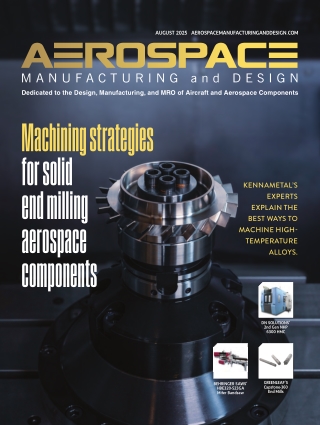

นิตยสาร วงการผลิตชิ้นส่วนเครื่องบิน-2025-PTSC PRODUCT
E N D
Presentation Transcript
AUGUST 2025 AEROSPACEMANUFACTURINGANDDESIGN.COM Dedicated to the Design, Manufacturing, and MRO of Aircraft and Aerospace Components Machining strategies for solid end milling aerospace components KENNAMETAL’S EXPERTS EXPLAIN THE BEST WAYS TO MACHINE HIGH- TEMPERATURE ALLOYS. DN SOLUTIONS’ 2nd Gen NHP 6300 HMC GREENLEAF’S Capstone-360 End Mills BEHRINGER SAWS’ HBE320-523GA Miter Bandsaw 0825-cover.indd 1 0825-cover.indd 1 7/15/2025 11:27:25 AM 7/15/2025 11:27:25 AM
0825-contents.indd 3 0825-contents.indd 3 7/16/2025 12:09:03 PM 7/16/2025 12:09:03 PM
PRECISION TOOLING SERVICES CO., LTD. @PTSC 02 370 4900 INFO@PTSC.CO.TH RENISHAWTHAI AUTOMATION ระบบพื?น pvc แบบโมดูลาร์ สินค้ารับประกัน 10 ป? CARBIDE END MILL ROBOT PALLETIZIER หุ่นยนต์จัดเรียงสินค้า WattPilote Overhual Gear Box, Motor และใบพัด Cooling Tower ฟ?ลเลอร? อะไหล? ทุกยี่ห?อ ออโตเมชั่น และ อุตสาหกรรมครบวงจร Metrology หัวโพรบ เครื่องมือวัด ออโตเมชั่น และ อุตสาหกรรมครบวงจร Metrology หัวโพรบ เครื่องมือวัด Cutting tools คัตติ้งทูลงาน กลึง กัด เจาะ Cutting tools คัตติ้งทูลงาน กลึง กัด เจาะ PRECISION TOOLING SERVICES CO., LTD. www.ptsc.co.th
AUGUST 2025 Volume 19 Issue 7 DEPARTMENTS COVER STORY 7 / FROM THE FLIGHT DECK 8 / CHECKING IN 10 / CNC INSIGHTS 11 / GAINING ALTITUDE 13 / JUST LANDED 22 / COVER SHOTS 30 / UP AND SOARING 40 / MAINTENANCE, REPAIR, & OVERHAUL 41 / NAME THAT PLANE 48 / 3D/ADDITIVE MANUFACTURING 49 / CLASSIFIEDS 49 / AD INDEX 50 / 1 LAST LOOK PHOTO COURTESY KENNAMETAL INC. 16 Kennametal HARVI IV solid end mills can be used for manufacturing components including blisks (bladed discs) for aerospace engines. 26 FEATURES COVER STORY 34 / Lean strategies for transforming digital operations A ‘data waste warrior’ shares tactics to fight costly inefficiencies in how data is created, stored, and managed. 16 / Machining strategies for solid end milling aerospace components Kennametal’s experts explain the best ways to machine high-temperature alloys. 26 / Designing secure and comfortable SCIFs Understanding the complex requirements of sensitive compartmented information facilities (SCIFs) is critical to staying ahead of evolving standards. 42 / Paris Air Show 2025 Defense grabs the most attention as commercial aircraft sales continue to be strong. 42 AEROSPACE MANUFACTURING AND DESIGN(USPS #025-557) is published semi-monthly: January/February, March, April, May, June, July, August, September, October, November/December. Copyright 2025 GIE Media Inc., 5811 Canal Road, Valley View, OH 44125. All rights reserved. No part of this publication may be reproduced or transmitted by any means without permission from the publisher. For quality article reprints of 100 or more, call GIE Media, Inc. at 800/456-0707 and ask for the Reprint Department. Subscriptions and classified advertising should be addressed to the Valley View office. Periodicals postage paid at Cleveland, Ohio, and additional mailing offices. Postmaster: Send address changes to AEROSPACE MANUFACTURING AND DESIGN 5811 Canal Road, Valley View, OH 44125. Canada Post: Publications Mail Agreement #40612608 Canada Returns to be sent to The Mail Group, P.O. Box 25542, London, ON N6C 6B2 4 |AEROSPACEMANUFACTURINGANDDESIGN.COM | AUGUST 2025 0825-contents.indd 4 0825-contents.indd 4 7/16/2025 12:09:29 PM 7/16/2025 12:09:29 PM
0825-contents.indd 5 0825-contents.indd 5 7/16/2025 12:09:42 PM 7/16/2025 12:09:42 PM
SPONSORED CONTENT 12 14 / Ask the Expert New technologies optimize the machining of aluminum, titanium, PH stainless steel, and HRSA materials. ISCAR’S national product manager for milling, Keith Carlile, explains tool advancements for milling common aerospace materials. 50 24 / Tech Tips Tom Dang, VP at Lyndex-Nikken explains how the Zero Point clamping system cuts setup time and delivers flexibility. DESIGN & AUTOMATION 32 / Strategies for Success DMG MORI’s NLX 2500|700 2. Generation: A new benchmark in universal turning. 12 / Leveraging automation in your ERP system Automate scheduling, purchasing, accounting, and inventory to cut costs, save time. 38 / Mastering Manufacturing Master aerospace manufacturing at Mazak’s DISCOVER 2025 event. 13 6 | AEROSPACEMANUFACTURINGANDDESIGN.COM | AUGUST 2025 0825-contents.indd 6 0825-contents.indd 6 7/16/2025 12:10:02 PM 7/16/2025 12:10:02 PM
from the flight deck PUBLISHER Eric Brothers // Editor // EBrothers@gie.net Aerospace mergers and acquisitions at mid-year Elizabeth Engler Modic – Group Publisher EModic@gie.net • ph: 216.393.0264 EDITORIAL Eric Brothers – Editor EBrothers@gie.net • ph: 216.393.0228 Jake Kauffman – Senior Editor JKauffman@gie.net • ph: 216.393.0217 Clare Scott –Managing Editor CScott@gie.net 216.393.0314 Eric Schwarzenbach – Contributing Columnist ESchwarzenbach@mygrinding.com Haley Dees –Editorial Intern B en/industries/industrial-products/library/ aerospace-defense-deals-outlook.html) and not surprisingly, it reveals the global trend toward increased defense spending is spurring corporations and private equity (PE) to optimize business portfolios. Other areas where companies are investing include artificial intelligence (AI), cybersecurity, space, and supply chain resiliency. Although deal volume and number were less in H1 2025 versus H2 2024, according to the report, aerospace and defense (A&D) deal value in H1 2025 is more than double the value of H1 2024 (about $20 billion vs. $9 billion), despite deals declining to half the number from the same period last year. Companies are seeking to enhance operational efficiency and profitability by concentrating on core capabilities and high-performing segments, “to determine where investments should be made and where divestitures are warranted.” Defense trends include the “Golden Dome” missile defense initiative – which could generate more than $175 billion in defense contracts during the next three years – driving demand for local produc- tion, modernization, and next-gen solu- tions. Additionally, PE is seeking divested corporate assets and struggling suppliers to assemble leaner portfolio companies capa- ble of greater performance under private management. Michelle Ritchie, PwC’s global indus- trial manufacturing deals leader, offers an update on the aerospace mergers and acqui- GRAPHICS sitions roadmap from earlier this year. “We see companies continuing to review their portfolio, and it’s been back to core capabilities and evaluating if there are things to dispose of and what strategic gaps do we need to fill,” Ritchie says. “Much of those areas are technology driven. They either must get scale because of their mar- gins, or they have to exit the market.” She explains consolidation most likely will be a mix of platform and the opportu- nity for growth. Platform in this instance is a business made up of smaller, similar firms combined into one company focused on the same capability. An example? “If you were a cybersecurity business, that would be your platform, and the roll-up would be adding companies doing the same, combining them to scale for the market,” Ritchie explains. If the growth in deal making is in defense, what technology is driving it? Whether it’s drones, hypersonics, or something else, those who can supply it are going to be in high demand. Ritchie says, “They’re going to get the contracts, the revenue, and investors wanting to spend their money.” I asked, “In what technologies are smarter companies investing to have that leverage?” Ritchie replies, “They’re taking a digital approach, combining automation, AI, plus cybersecurity.” The reason? “I’ve got to be able to auto- mate my processes faster, I’ve got to use the knowledge and leverage the value coming from AI, and I’ve got to make sure it’s secure with my cyber. That is your trifecta,” Ritchie states. – Eric usiness advisory firm PwC released its “U.S. Deals 2025 mid- year outlook for aerospace and de- fense” (https://www.pwc.com/us/ AnnMarie Vanek – Graphic Designer AVanek@gie.net • ph: 216.393.0273 COORDINATOR/SUBSCRIPTIONS Amanda Scolaro – Market Coordinator AScolaro@gie.net • ph: 216.393.0249 Nick Culver – Audience Development Associate Subscriptions@aerospacemanufacturinganddesign.com SALES/ADVERTISING Russ Warner – Sales Director RWarner@gie.net • 216.393.0293 Patrick Roberts – Regional Sales Manager PRoberts@gie.net • 216.393.0265 Andrew Nicholas – Regional Sales Manager ANicholas@gie.net • 216.393.0316 Patrick Roberts – Classified Ad Manager PRoberts@gie.net • 216.393.0265 Paul Barrett – Europe Regional Sales Manager PBarrett@gie.net • ph: 44.0.1268.711560 Simone Ciolek – Germany, Austria, & Switzerland SCiolek@gie.net / 49.9771.1779.007 Flavio Steinbach - Italy & Central Europe FSteinbach@gie.net / 49.9771.1779.007 Octavia Yeung – Hong Kong Regional Sales Manager Octavia@ringier.com.hk • ph: 85.2.236.98788 ext. 21 Sandra Su – Taiwan Regional Sales Manager SandraSu@rignier.com.hk • ph: 886.4.2329.7318 Maggie Liu – China Regional Sales Manager MaggieLiu@ringiertrade.com • ph: 86.2885.5121 CORPORATE Richard Foster Chairman Chris Foster President and CEO Dan MoorelandPublisher Emeritus James R. Keefe Executive Vice President Kelly AntalController Christina Warner Director of Data Acquisition Maria Miller Director, Conferences & Events Irene Sweeney Marketing Director Jim BlayneyGraphics Director Michelle WisniewskiProduction Manager CORPORATE/EDITORIAL/PRODUCTION/SALES 5811 Canal Road • Valley View, OH 44125 ph: 800.456.0707 / fax: 216.525.0515 INDUSTRY PARTNERS AUGUST 2025 | AEROSPACEMANUFACTURINGANDDESIGN.COM | 7 0825-flight-deck.indd 7 0825-flight-deck.indd 7 7/16/2025 12:10:36 PM 7/16/2025 12:10:36 PM
checking in Appointments, promotions, hires Tomoaki Hirano succeeds Tom Haag as president of KYOCERA SGS Precision Tools (KSPT). Hirano most recently was EVP and chief strategy officer. Haag has been an integral part of SGS Tool Co. since 1984, when his father, Jack Haag, acquired full ownership of the business. Tom was appointed president in 2000 and guided the company through substantial growth, technical innovation, and improved operational performance. Following the acquisition of SGS by KYOCERA Corp. in 2016, Haag continued his leadership as president of KSPT, guiding the integration of the two organizations and expanding KSPT’s reach into new markets. Hirano brings more than 25 years of experience within the KYOCERA Group in strategic planning, cross-border leadership, and customer-focused innovation. https://www.kyocera-sgstool.com Hirano, Haag Filisetti, Poklekowski, Horn, and Nell – Management of United Machining Solutions United Grinding Group, GF Machining Solutions become United Machining Solutions With the acquisition of the GF Machining Solutions Division of Georg Fischer AG announced in October 2024 now complete, the United Grinding Group expands its portfolio to 15 brands. The new group, United Machining Solutions, has total sales of more than $1.5 billion, about 5,000 employees, and 50+ global locations. Stephan Nell, CEO of the new group and the United Grinding Group, says, “It’s rare for two companies to complement each other as well as United Grind- ing and GF Machining Solutions. This applies not only to our product portfo- lios, our international alignment, and our understanding of quality, but also to the culture and mindset of our employees.” Ivan Filisetti, CEO of GF Machining Solutions and a member of the new group’s management board, says, “Our products do not overlap; they com- plement each other. We share the same culture with a strong commitment to innovation and digitalization.” United Grinding retains the brands Mägerle, Blohm, Jung, Studer, Schaudt, Mikrosa, Walter, EWAG, and IRPD in grinding, tool machining, and additive manufacturing. United Machining brands Agie Charmilles, Charmilles, Mikron Mill, Liechti, Step TEC, and System 3R include machines for EDM, high-speed milling, and laser technology, plus spindle production and automation solutions. The management team at United Machining Solutions consists of Nell, Filisetti, Michael Horn, and Heinz Poklekowski. Nell has spent 22 years within the group. Filisetti, affiliated with GF Machining Solutions for 23 years, remains CEO of United Machining. Horn is responsible for operations and IT. Pokle- kowski, a group member for 35 years, most recently as United Grinding Group CFO, will assume responsibility for finance and group services. https://www. gfms.com;https://www.grinding.com Cloud-based platform Pro- Shop ERP appointed Alison Hawkins as CEO. She pre- viously served as ProShop’s COO and CFO and now joins co-founders Paul Van Metre, Kelsey Heikoop, and Matt Carrico to further the company’s product innovation. https://proshoperp.com Hawkins Clinton (Clint) Reilmann joined as CFO of Wall Colmonoy USA, where he’ll work with management of all domestic divisions – Alloy Products, Oklahoma City, Aerobraze Cincinnati, and Franklin Precision Castings. https://www.wallcolmonoy.com PHOTOS COURTESY OF RESPECTIVE COMPANIES Reilmann 8 | AEROSPACEMANUFACTURINGANDDESIGN.COM | AUGUST 2025 0825-checking-in.indd 8 0825-checking-in.indd 8 7/16/2025 12:11:13 PM 7/16/2025 12:11:13 PM
CNC insights WHEEL SCRUBBING ON CNC GRINDING MACHINES typically made of carbide to withstand high pressures and feature a flat orifice producing a defined spray width. Since the grinding wheel may be wider than the orifice, the CNC control can compensate by moving the nozzle or the wheel to ensure full coverage across the wheel face. The operator is responsible for selecting the distance be- tween the nozzle and the grind- ing wheel, as well as setting the frequency and duration of the fluid blast. Currently, there are no standardized guidelines for these parameters. Instead, opti- mal settings are typically deter- mined through experience and trial-and-error. Through time, historical data can be developed to guide adjustments based on factors such as abrasive type, bond material, and workpiece material. Finally, safety must not be overlooked. A dual-channel safety system is essential to en- sure the high-pressure coolant can’t be activated while the machine doors are open. • Single-layer electroplated diamond or CBN wheels A good example of CNC O.D. grinding in aerospace is peel grinding of Inconel shafts using vitrified wheels. Other suitable applications for in-process wheel scrubbing include: • Tool grinding for carbide and HSS, particularly fluting operations requiring heavy stock removal • Creep feed grinding of superalloys or nickel-based alloys • Centerless through-feed grinding • Form grinding of gears made from tough or hard- ened alloy steels A secondary coolant sys- tem delivers oil at pressures typically ranging from 700psi to 1,500psi. This is usually achieved by feeding a piston pump from the incoming coolant line. A dedicat- ed high-pressure line then supplies the fluid to a nozzle mounted within the CNC grinder. An effective nozzle po- sition is above the workhead, allowing the grinding head to present the wheel to the spray at a controlled, predetermined distance. These nozzles are accumulates in the spaces between the abrasive grains. Scrubbing uses a dedicated high-pressure coolant circuit to blast the wheel surface to flush out debris. Wheel scrubbing is intended as an alternative to mechanical in-process condi- tioning. Grinding wheels used for in-process scrubbing must possess adequate porosity and bond strength. The porosity enables the high-pressure fluid to effectively flush out debris, while the bond must withstand the force of the coolant without degrading. Under no circum- stances should the fluid blast compromise the bond integrity or alter the wheel’s profile or geometric dimensions. The following types of grinding wheels are generally suitable for in-process scrub- bing applications: • Resin-bonded diamond and CBN wheels with ceramic or metal fillers • Vitrified-bonded diamond and CBN wheels • Resin-bonded conventional abrasive wheels • Conventional abrasive wheels with high porosity or open structures BY ERIC SCHWARZENBACH About the author: Eric Schwarzenbach, founder of MyGrinding Inc., retired as president from Rollomatic Inc. – global builder of CNC grinding and laser cutting machines. G uncommon and isn’t typically included among the standard features of CNC grinding machines. However, some machine builders may offer it as an optional upgrade or as a retrofit for existing equipment. Alternatively, users may choose to implement the retrofit themselves. During grinding, wheels can become clogged – a condi- tion known as loading – when material from the workpiece rinding wheel scrubbing is a spe- cialized in-process wheel conditioning method that remains relatively © DESTINA | ADOBE STOCK MyGrinding Inc. https://www. mygrinding.com Do you have any manufacturing challenges? Email me so I can address them in a future column: eschwarzenbach@mygrinding.com. 10 | AEROSPACEMANUFACTURINGANDDESIGN.COM | AUGUST 2025 0825-cnc-insights.indd 10 0825-cnc-insights.indd 10 7/16/2025 12:12:00 PM 7/16/2025 12:12:00 PM
AUGUST 2025 | AEROSPACEMANUFACTURINGANDDESIGN.COM | 11 0825-gaining-altitude.indd 11 0825-gaining-altitude.indd 11 7/16/2025 12:12:45 PM 7/16/2025 12:12:45 PM
DESIGN & AUTOMATION UPDATE By George Thuo LEVERAGING AUTOMATION IN YOUR ERP SYSTEM Automate scheduling, purchasing, accounting, and inventory to cut costs, save time. ERP system. • Inventory – Automated inventory processes can track material move- ment, such as picking materials and lot tracking from anywhere on the shop floor, and the transaction instantly gets recorded in inventory. F more with less. Manufacturing automation comes from three primary sources – auto fea- tures built into your enterprise resource planning (ERP) system, state-of-the-art computer-guided production machines, and third-party software programs that in- tegrate with your ERP. Each helps reduce labor costs, eliminate paper and waste, process orders faster, reduce setup and production times, and get your product out the door on time every time. All of which can be accomplished with fewer employees and with less overhead. ERP already provides many types or years, automation was consid- ered the future of manufacturing. In case you haven’t been paying attention, that future is here now, and it’s the driving force behind doing of automation, such as auto scheduling and auto purchasing. It wasn’t too long ago that scheduling required a team of planners, reams of paper, and never-end- ing spreadsheets to get the job done. With ERP, you enter the job data and requested due date into the Scheduling application, which automatically assesses labor and machine capacity and material availability in inventory and fits the job into the right place on the schedule. Want to reduce headcount in the pur- chasing department while lowering pur- chasing costs? Auto purchasing lets you buy parts and raw materials for less money in a fraction of the time by automatically importing and consolidating all work order and inventory information. No more hours spent poring over handwritten purchase orders. No more researching which materials are needed for upcoming jobs because with auto reorder you nev- er run out of frequently used parts and materials. Other ERP automa- tions include: • Accounting – ERP automates many account- ing processes, making it quicker and easier to complete daily accounts payables and receiv- ables to monthly closes. Invoices can automati- cally be scanned and Beyond ERP Using a programmable logic controller (PLC), automated CNCs can control an assembly line, robotic device, or other processes requiring high reliability. The PLC connects to the CNC machine and sends the job data directly to the ERP system. Depending on the CNC and the complexity of the part being made, manu- facturers can make parts without a human operator present or with minimal human interaction. One caution with automation: it needs to be implemented carefully and with a strategic perspective aligning with your business and operations strategies. Every automation should have a clearly defined purpose and an outcome supporting your long-term business goals. About the author – George Thuo is the director of Cloud ERP for Global Shop Solutions. Global Shop Solutions https://www. globalshopsolutions.com PHOTO COURTESY GLOBAL SHOP SOLUTIONS Read about integrations and tailored ERP: https://www. globalshopsolutions.com/3- ways-manufacturers-do- more-with-less mapped to your 12 | AEROSPACEMANUFACTURINGANDDESIGN.COM | AUGUST 2025 0825-da-feature.indd 12 0825-da-feature.indd 12 7/16/2025 12:19:49 PM 7/16/2025 12:19:49 PM
Q&A ISCAR’S national product manager for milling, Keith Carlile, explains tool advancements for milling common aerospace materials. Q aluminum? A speed milling of aluminum alloys. These tools feature super-positive rake angles and polished cutting edges that minimize cutting forces and enhance chip evacuation. Designed to withstand high spindle speeds which can now exceed 30,000rpm, HeliAlu cutters deliver exceptional surface finishes and high metal removal rates. The insert, HSM90S APCR series, is designed to resist centrifugal forces, making it ideal for roughing and semi-finishing operations while operating at extreme rpms to maximize productivity. Q designed for milling HRSA materials? A of heat-resistant superalloys (HRSAs) such as Inconel and Hastelloy. These indexable endmills feature ceramic round inserts (grades IS14, IS15, and SPONSORED CONTENT ASK THE EXPERT NEW TECHNOLOGIES OPTIMIZE THE machining of aluminum, titanium, PH stainless steel, and HRSA materials Q what recent cutting tool advancements should aerospace manufacturers seek for making overall process improvements? A advancements designed to address the challenges of difficult to machine materials and part features, while leveraging/optimizing other manufacturing technologies in play, such as modern machine tools offering more power, speed, and options like high-pressure/volume coolant capabilities. ISCAR has specific product lines – for solid carbide and indexable milling – designed for productively machining aerospace materials (titanium, Inconel, PH stainless steels, aluminum). Improvements to carbide grades (substrate, coating), better designs/geometries, and implementing 3D printing to create indexable cutter bodies that optimize coolant flow/ pressure, are just a few of the innovations that ISCAR has recently released to the market. What’s the latest innovation related to milling In machining/ milling operations, IS45) that withstand extreme temperatures and enable cutting speeds far beyond the capabilities of carbide tools. A unique and rigid clamping mechanism allows for increased flute count, boosting metal removal rates and productivity. CerMill tools excel in rough and semi-finishing operations and offer a cost-effective alternative due to massive cycle time reductions. The CerMill design ensures fast insert indexing and reliable performance. Q related to milling titanium? A solid carbide and indexable type tooling are ongoing. Iscar’s TiTurbo line of solid carbide end mills designed specifically for titanium deliver high performance with excellent wear resistance due to advanced coatings and geometries tailored for roughing and finishing. ISCAR’s latest indexable cutting tools for rough milling titanium are engineered to tackle the material’s notorious machining challenges. These tools feature robust geometries, advanced carbide grades, and specialized coatings (grades IC882, IC5820, and IC716), that withstand extreme heat and reduce tool wear. Problem- solving insert geometry (chip splitters, full wave) and cutter bodies 3D printed to optimize through-coolant capabilities enhance chip evacuation and control heat, ensuring consistent performance under high loads. Q machine stainless steels (13-8 PH, 15-5 PH, Super Duplex, etc.)? A HELIMILL line with 15mm IC inserts has been upgraded with the new IC882 insert grades that include all common aerospace radii (0.030", 0.060", 0.090", 0.125", 0.187", 0.250"), as well as 3D-printed cutter bodies to optimize coolant flow and insert tool life. These inserts are also well suited for rough milling of titanium, making them the perfect go-to solution for companies machining titanium and stainless-steel components. ISCAR’s HeliAlu product lines are engineered for high- erospace companies should look for cutting tool What are the new technologies for milling difficult to Are there any recent advancements For difficult stainless- steel materials, ISCAR’s longstanding Yes. Grade and geometry advancements for What cutting tools are specifically ISCAR’s CerMill line is purpose-built for high efficiency milling PHOTO COURTESY ISCAR FOR MORE INFORMATION https://www.iscar.com 14 | AEROSPACEMANUFACTURINGANDDESIGN.COM | AUGUST 2025 0825-ate-iscar.indd 14 0825-ate-iscar.indd 14 7/16/2025 12:20:58 PM 7/16/2025 12:20:58 PM
Q&A ตัวแทนจําหนายคัตติ้งทูล YG-1 ในประเทศไทยอยางเปนทางการกวา 20 ป 0825-ate-iscar.indd 15 0825-ate-iscar.indd 15 7/16/2025 12:21:13 PM 7/16/2025 12:21:13 PM
cover story Machining strategies for solid end milling aerospace components Kennametal’s experts explain the best ways to machine high- temperature alloys. Edited by Eric Brothers HARVI III AERO (KCSM15A) I chinability. Achieving optimal tool life, surface finish, and cutting efficiency requires a comprehensive strategy to avoid problems hindering solid end milling. Effective strategies include optimizing cutting parameters, us- ing advanced tool materials and coatings, and employing efficient cooling and lubrication techniques. Additionally, implementing precise toolpath planning and chip evacuation methods can significantly enhance machining performance. “The biggest issue when machining high-temp alloys is going to be heat,” says Danny Davis, senior staff engineer, solutions at Kennametal. “We need to take special care in managing the heat, and we do that by using the correct speeds, coolants, coatings, and substrates.” nconel and titanium alloys are ideal for turbine blades, exhaust ducts, landing gear, and other high-stress aerospace compo- nents due to their strength and heat resistance. However, their high strength and low thermal conductivity make for poor ma- What creates the heat? Heat generated by the cutting process doesn’t dissipate as easily into the workpiece or chips for high-temp alloys compared to other materials, leaving the tool and sometimes the part carrying the thermal burden. Every machining operation is essentially a thermal system. Electrical energy entering the spindle is converted into kinetic energy (tool rotation and movement) and heat (due to friction and plastic deformation), affecting chip momentum PHOTOS COURTESY KENNAMETAL INC. 16 | AEROSPACEMANUFACTURINGANDDESIGN.COM | AUGUST 2025 0825-feature-kennametal.indd 16 0825-feature-kennametal.indd 16 7/16/2025 12:25:18 PM 7/16/2025 12:25:18 PM
cover story (material removal). Chip formation has three distinct phases: • Rubbing (friction) converts nearly 100% of the energy into heat • Plowing (plastic deformation) turns approximately 90% of the energy into heat • Shearing (actual chip separation) generates significant heat “We know thermal energy is the biggest factor damaging the cut- ting edge, leading to poor tool life and performance,” says Steve George, senior manager, product design engineering at Kenna- metal. “It also affects structural concerns like the formation of a white layer from phase changes due to heat. We need to figure out how to lower it, and there are ways we can go about it.” FBX drill HU8X Managing heat in high-temp alloys • Use tools designed to cut more efficiently by reducing the specific cutting energy, which measures how much energy is required to remove a unit volume of material. The HARVI I or HARVI II tools are engineered to reduce cutting energy through optimized geometries and coatings. Lower energy equals less thermal stress on the tool. • With advanced coatings such as Kennametal’s KCSM15A grade engineered specifically for high-temp alloys. With its smoother, thinner layer, it retains a sharper cutting edge, and its enhanced abrasion resistance mitigates the aggressive con- ditions found in nickel-based alloys. Combined with the right coolant strategy – one with high lubricity – these coatings can significantly extend tool life by reducing material adhesion and heat generation. • Increasing lubrication with high-pressure coolant systems or minimum quantity lubrication (MQL) can significantly reduce thermal loads, particularly with high cutting speeds. Lubrication doesn’t just cool, it separates contact surfaces, directly reducing energy converted into heat during rubbing and plowing stages. • In a perfect situation, most heat would exit with the chip. But high-temp alloys have poor thermal conductivity, keeping the heat near the tool. If the cutting tool conducts heat better than the workpiece or chip, it ends up absorbing more of it and wears out faster. By using tools made of materials that in- sulate rather than conduct, such as ceramics or certain coated carbide, more heat is forced into the chip rather than the tool. • Time is crucial in heat transfer during chip formation. The longer the tool remains in contact with the material, the more heat can transfer into it. Traditional milling, which involves longer engagement and constant contact, tends to increase heat due to the extended machining time. In contrast, dynam- ic milling uses smaller radial engagement and keeps the cutter in motion with less surface contact, reducing heat buildup and improving chip evacuation. Adjusting feeds and speeds also plays a significant role. Lower cutting speeds can reduce heat generation, while higher feed rates prevent rubbing and encourage clean shearing, moving the process away from the plowing zone. Coolant and lubrication best practices High-temp alloys generate significant heat during cutting, requir- ing clever coolant strategies: AUGUST 2025 | AEROSPACEMANUFACTURINGANDDESIGN.COM | 17 0825-feature-kennametal.indd 17 0825-feature-kennametal.indd 17 7/16/2025 12:25:40 PM 7/16/2025 12:25:40 PM
cover story oils offer top-tier lubrication but are typically reserved for extreme cases due to mess and maintenance. It’s not just about volume, it’s also about placement. Ensure the coolant hits the cutting zone directly. Unsuccessfully aimed • Water offers excellent heat transfer but poor lubrication. Use a coolant with a rich concentration of extreme pressure (EP) additives to fight abrasion. • Air can help with chip evacuation when coolant isn’t an option. Neat Kennametal’s reliable and versatile tools nozzles waste coolant and leave tools vulnerable. Tools like the HARVI IV series offer through-tool coolant delivery, flushing chips directly from tight pockets or corners while reducing thermal load on the tool. “Using higher concentrations of cool- ant helps reduce abrasive wear and manage heat when machining high-temp alloys,” says Katie Myers, product manager, marketing at Kennametal. “High-pressure through-tool coolant ensures effective heat removal and chip evacuation, which is cru- cial for tool life and part quality.” Using ceramic tools in a dry-cutting environment Ceramic tools offer unique advantages when machining high-temp aerospace alloys. Their ability to withstand extreme temperatures makes them well-suited for dry cutting environments where tradition- al carbide tools would struggle. “When we talk about ceramic tools, we’re almost always talking about a dry cut- ting environment,” George explains. “You need to be very careful with your setup be- cause ceramic tools are much more sensitive to tool path and workpiece geometry.” PHOTOS COURTESY KENNAMETAL INC. 18 | AM&D | AUGUST 2025 0825-feature-kennametal.indd 18 0825-feature-kennametal.indd 18 7/16/2025 12:25:56 PM 7/16/2025 12:25:56 PM
cover story al like a drill. It requires a tool capable of withstanding the axial loads and offering stability during the initial entry. “Pocketing is one of the most common operations in aerospace, but it can be tricky when you’re dealing with high-temp especially in materials prone to work-hard- ening and thermal stress. Optimizing pocketing for high-temp alloys is crucial. Plunging is often the most direct method of entering a pocket. This strategy involves dropping the tool straight into the materi- A key strategy with ceramics is man- aging heat without using coolant. George notes, “When we’re machining high-temp alloys, heat is a big concern. But ceramic likes heat. So, we want to generate the heat and get rid of it quickly.” George advises avoiding re-cutting and ensuring good chip evacuation to prevent premature wear or tool failure. He also suggests specific motion strategies: “Step the walls of the pockets. As you step down, move away from the wall with each pass. That keeps the tool away from the heat zone and helps prevent excessive burr formation.” These careful toolpath decisions are vital when coolant can’t be used. By managing heat through cutting strategy rather than fluid application, machinists can maximize tool life and avoid sudden ceramic failure. Effective approaches for solid end milling aerospace components Pocketing techniques and methods of entry: Many aerospace parts are designed with deep, complex pockets. Proper entry strat- egy and cutter selection make a difference, AUGUST 2025 | AM&D | 19 0825-feature-kennametal.indd 19 0825-feature-kennametal.indd 19 7/16/2025 12:26:11 PM 7/16/2025 12:26:11 PM
cover story are designed to plunge directly into the material, offering high flexibility for tight spaces. However, it’s important to ensure the cutting forces don’t exceed the machine’s capabilities. • Ramp entry is great for deeper pockets alloys,” George says. “Choosing the right strategy can make all the difference in re- ducing cycle time and preserving tool life.” • Plunge entry works best for small pockets with limited space. HARVI I TE or HARVI II TE solid end mills and allows for more aggressive cutting. Straight-angle ramping can significant- ly reduce cycle times but requires a machine with the rigidity to withstand higher forces. • Helical interpolation is the most stable and efficient pocketing strategy due to lighter depth of cuts. Corner geometry is another major con- sideration. Oversized tools can cause ex- cessive radial engagement in tight corners, increasing wear and chatter. “If you have a 1/2" radius in the corner, then I’d use a 3/4" diameter tool, maybe even 5/8". You need to use a small enough tool to follow the arc of the corner without gouging or over-engagement,” George adds. Tool selection, depth, and the required rigidity must be balanced carefully. In large pockets with tight corners, a smart method is to start roughing with a larger, more rigid tool, then switch to a smaller tool to finish detailed areas. Minimizing chatter and maintaining rigidity: Chatter often comes from the ma- chine-tool interface with high-temp alloys. Even the best tool can fail if the spindle or machine lacks the rigidity to absorb cutting forces. “Chatter occurs when there’s too much movement between the tool and the part, which leads to inconsistent cuts and tool wear,” Myers explains. “The best way to re- duce chatter is by ensuring your machine has enough rigidity.” Chatter can stem from excessive tool stick-out, weak spindles, or incorrect chip thickness. Reducing axial or radial depth of cut, rather than slowing down the entire process, can help with machining. Additionally, selecting the right tool and tool holder will help reduce vibration and prevent chatter. Make sure your tool selection matches the pocket size you’re machining. Using a strong spindle with a good connection to the tool holder can help reduce vibrations. The key is balanc- ing rigidity with the feed and speed to minimize cutting forces. 20 | AM&D | AUGUST 2025 0825-feature-kennametal.indd 20 0825-feature-kennametal.indd 20 7/16/2025 12:26:28 PM 7/16/2025 12:26:28 PM
cover story the right strategies, you can stay ahead of the solid end milling curve in machining complex aerospace parts. Conclusion Machining aerospace components from high-temp alloys demands more than just the right tools, it requires a comprehensive strategy that addresses heat, rigidity, tool- path planning, and part geometry. By using If chatter persists despite adjusting stick-out and tool selection, reduce the depth of cut to lessen cutting forces in- stead of slowing down feeds and speeds. This will keep vibrations in check with- out impacting overall cycle time. “Even if you have a robust machine, the combination of a long stick-out and a weak spindle can lead to chatter,” George says. “It’s all about balancing tool size, rigidity, and cutting force.” Cutting parameters and tool life: Tool longevity is directly tied to cutting parameters. Running tools at the right speeds, feeds, and chip loads ensures maximum tool life while preventing premature wear. Speed is crucial when machining high-temp alloys. A speed too fast will burn through a tool much quicker. It’s about finding that sweet spot. Just as important is chip thickness. Too light a radial engagement without proper feed compensation leads to rub- bing, not cutting, generating excess heat and accelerating wear. Always account for chip thinning in your calculations, especially during dynamic toolpaths or finishing passes. Wall stiffness and support geometry: When machining features like blisks, iso- grids, or blades, geometry plays a critical role in maintaining part stability and minimizing deflection. In many cases, adjacent or curved walls help reinforce a feature, offering opportunities to push past standard roughing rules. “The curvature of the blade actually adds more stiffness into that part,” Davis says. “So, these rules can be a guideline. If the wall has a curvature, or if it has an adjacent wall or a corner or radiuses down at the bottom – all that adds more stiffness.” The classic 13:1 height-to-width rule for machining high-temp alloys such as Inconel still applies, but features like ad- jacent walls and internal radii can safely stretch those limits during roughing – especially before the final finishing passes. Kennametal Inc. https://kennametal.com AUGUST 2025 | AM&D | 21 0825-feature-kennametal.indd 21 0825-feature-kennametal.indd 21 7/16/2025 12:26:45 PM 7/16/2025 12:26:45 PM
cover shots 0825-cover-shots.indd 22 0825-cover-shots.indd 22 7/16/2025 12:27:26 PM 7/16/2025 12:27:26 PM
0825-cover-shots.indd 23 0825-cover-shots.indd 23 7/16/2025 12:27:42 PM 7/16/2025 12:27:42 PM
SPONSORED CONTENT TECH TIPS Zero Point clamping system: Cut setup time and gain flexibility By Tom Dang, VP at Lyndex-Nikken In manufacturing, time is money – especially in shops do- ing high-mix, low-volume machining where frequent setups are the norm. If you’re still spending too much time on setups, alignments, or fixture changes, a Zero Point clamping system offers a transfor- mative solution your shop needs to be competitive. • Dramatic reduction in setup times Traditional setups are time-consuming, often requiring man- ual alignment and multiple adjustments. Zero Point clamping systems streamline the process, cutting setup times by up to 90% – resulting in more spindle time and faster job turnaround. • Flexibility across operations Whether you’re milling, turning, EDMing, or measuring, Zero Point systems adapt easily. They integrate with tombstones, subplates, pallets, or directly onto machine tables. That flexibility allows shops to create a modular setup that can handle diverse projects and materials. • Enhanced precision and repeatability With positioning repeatability of less than 2.5µm, Zero Point clamping ensures each workpiece is clamped in the exact location every time. Once a fixture is dialed in and locked into position, it can be removed and reinstalled without losing zero. That con- sistency not only ensures better part quality but also eliminates costly errors due to misalignment. • Increased machine uptime Faster part changes mean less machine idle time. Zero Point clamping maximizes machine utilization, improving throughput and ROI on equipment investments. • Lean, scalable, and operator friendly Zero Point clamping systems support lean manufacturing principles by minimizing machine downtime and standardizing workflows. Simplified setups also reduce the need for highly skilled operators – allowing less-experienced operators to deliver consistent results. WHAT IS ZERO POINT CLAMPING? The Zero Point clamping system is a modern alternative to the conventional T-slot table, designed for precision, repeatability, and speed. Its quick-change capability supports lean manufacturing by reducing setup time and enabling flexible workflows across a wide range of applications. Unlike traditional workholding methods that require manual alignment, a Zero Point system locks and locates workpieces or fixtures quickly and precisely by referencing a defined zero point – making part changeover nearly instantaneous. CONCLUSION For manufacturers aiming to improve efficiency and precision, a Zero Point clamping system is a smart investment to achieve quality parts on time. It delivers faster setups, repeatable accuracy, and increased machine uptime – resulting in measurable produc- tivity gains and cost savings. Its modular, scalable design is built to meet the demands of high-mix machining and to future-proof your operations, giving your shop the flexibility to compete, grow, and adapt with confidence. Compensation for thermal expansion always symmetrical about the center axis. Fixed Zero point in the center of the table: Pitch errors can be compensated up to ±0.05mm per clamping pot. PHOTOS COURTESY OF LYNDEX NIKKEN WHY IT MATTERS FOR SHOPS For shops running a variety of parts on tight deadlines, Zero Point systems deliver clear advantages: MORE INFO: lyndexnikken.com 24 | AEROSPACEMANUFACTURINGANDDESIGN.COM | AUGUST 2025 0825_TechTips_Lyndex.indd 24 0825_TechTips_Lyndex.indd 24 7/16/2025 12:23:58 PM 7/16/2025 12:23:58 PM
0825_TechTips_Lyndex.indd 25 0825_TechTips_Lyndex.indd 25 7/16/2025 1:49:40 PM 7/16/2025 1:49:40 PM
standards DESIGNING SECURE AND COMFORTABLE SCIFS Understanding the complex requirements of sensitive compartmented information facilities (SCIFs) is critical to staying ahead of evolving standards. considered acceptable may no longer pass today’s more rigorous accreditation pro- cess. This shift is especially evident in the enforcement of radio frequency telecom- munications electronics material protected from emanating spurious transmissions (RF TEMPEST), a security standard fo- cused on protecting sensitive information from being compromised by unintended electromagnetic emissions. Requirements have moved beyond simply enclosing a space on six sides – now, fully coated shielding and even stricter compliance measures are becoming the norm. For organizations new to SCIF devel- opment, these changes can be daunting. It’s no longer enough to follow the written guidelines; understanding how agencies interpret and apply these rules in real-world scenarios is crucial. Working with experi- enced designers and security consultants can mean the difference between a smooth approval process and costly redesigns. A recent example of stricter enforce- ment occurred when an organization was required to reevaluate an existing SCIF. While the space had been constructed to meet older guidelines, updated inspec- tions deemed additional shielding and accreditation testing were necessary to maintain compliance. This underscores why organizations must remain proactive, fu- ture-proofing their designs to withstand the inevitable tightening of regulations. Navi- gating these heightened security measures requires technical expertise and seamless collaboration among all stakeholders to ensure compliance without costly setbacks. B Y N I C K M C C O R M I C K A N D A R I E L M A D L A M B AYA N A information facilities (SCIFs) continues to grow. Traditionally, these spaces were stark, windowless rooms designed purely for security. However, organizations recognize that while security remains paramount, SCIFs must also be functional, engaging workplaces. Striking this balance is no small feat, requiring a deep understanding of evolving security enforcement, architectural integration, and human-centric design. The key to a successful SCIF is plan- ning. Early-stage design decisions signifi- cantly impact the ease of compliance with stringent regulations such as Intelligence Community Directive 705 (ICD 705) gov- erning the construction and accreditation of these spaces. Organizations must consid- er multiple layers of security – acoustic, vi- sual, and RF shielding – to ensure classified s governmental agencies, aerospace firms, and private industries seek to protect their most sensitive information, the demand for sensitive compartmented information remains protected. A common misconception is that a SCIF is simply a more secure office. In reality, the level of control required extends into every detail, down to seemingly minor elements such as conduit grounding, which, if mishandled, can become an unintended listening device. As SCIF use expands beyond defense and intelligence agencies into corporate sectors, understanding these complex requirements is more critical than ever. A well-designed SCIF is not just about securing information; it must also support productivity, collaboration, and employ- ee well-being. Organizations must also stay ahead of evolving security standards and enforcement to meet these complex requirements, which have become increas- ingly stringent in recent years. Adapting to stricter security enforcement SCIF security requirements have remained unchanged for years, but enforcement has tightened considerably. What was once Ensuring effective stakeholder collaboration Designing a SCIF is not just an archi- tectural challenge – it’s an exercise in collaboration. The specialized nature of these spaces means misalignment among stakeholders can lead to costly mistakes, security vulnerabilities, and significant project delays. A successful SCIF project PHOTOS COURTESY TREANOR A well-designed SCIF is not just about securing information; it must also support productivity, collaboration, and employee well-being. 26 | AEROSPACEMANUFACTURINGANDDESIGN.COM | AUGUST 2025 0825-feature-treanor.indd 26 0825-feature-treanor.indd 26 7/16/2025 12:28:15 PM 7/16/2025 12:28:15 PM
standards One recent SCIF design incorporated colored hexagon acoustic ceiling panels, a different color for each room, echoed in the color of the carpet. Organizations must consider multiple layers of security – acoustic, visual, and RF shielding – to ensure classified information remains protected. presents unique challenges, organizations must also consider the human element – ensuring these high-security spaces remain functional and comfortable for employees. tions but retrofits within existing build- ings. Adapting office spaces to meet SCIF requirements presents distinct challenges: outdated infrastructure, spatial constraints, and conflicting security needs. These factors make it even more essential to approach each project flexibly and creatively. One major challenge in renovations is balancing security compliance with cost-ef- fective modifications. Many older buildings lack the necessary physical and RF security elements, requiring substantial upgrades. To navigate these limitations, organizations can employ targeted solutions including: • Structural modifications – Reinforcing walls and floors without excessive demolition • Adapting existing systems – Upgrading HVAC, electrical, and fire suppression systems to meet security requirements • Program optimization – Ensuring programs housed in RF-shielded areas require that level of protection A recent SCIF renovation for a leading technology company showcased how thoughtful planning can transform an outdated space into a secure yet inviting workplace. The client needed a classified environment but also wanted access to daylight and a sense of openness – two aspects rarely associated with SCIFs. The solution? RF-shielded windows, carefully controlled lighting, and modular acoustic treatments preserved security and em- ployee comfort. While retrofitting SCIFs requires a structured order of operations, ensuring security, design, and construction teams are aligned from the start. Key stages of SCIF development include: 1. Initial security assessment – Establish- ing the project’s security parameters and identifying potential vulnerabil- ities early 2. Conceptual design – Developing a layout meeting security requirements while accommodating operational needs 3. Regulatory collaboration – Engaging with accrediting agencies early to set expectations and avoid last-minute changes A common pitfall is assuming a general contractor who has built secure facilities before can handle a SCIF without addi- tional education. SCIFs involve unique construction techniques, from RF shielding integration to acoustic controls. Without specialized knowledge, even well-inten- tioned contractors can introduce vulnera- bilities. The best approach is collaborative, where architects, security experts, and contractors work in lockstep from day one. This collaborative approach is particularly critical when SCIFs are integrated into existing buildings, where infrastructure limitations add another layer of complexity. Balancing security and employee comfort Historically, SCIFs have been dimly lit, enclosed spaces designed with security as the only priority. However, as organiza- tions recognize the importance of employ- ee well-being, SCIF designs are evolving to become more human-centric. Today’s SCIFs must compete with tech giants such as Google and X, where employees enjoy amenities designed to foster creativity and retention. Companies failing to modernize risk losing talent to more appealing work- places. Innovative solutions now allow SCIFs to integrate features to enhance employee well-being without compromis- ing security: • RF-shielded windows – Enabling day- light access while maintaining classified security • Tunable LED lighting – Simulating natural daylight cycles to boost mood and productivity • Ergonomic workspaces – Incorporating comfortable furniture and designated wellness areas • Enhanced architectural details – stimu- lating interest and energy via visually striking components in floor, walls, and ceilings One recent SCIF design incorporated Building SCIFs in existing infrastructure Most SCIF projects are not new construc- AUGUST 2025 | AEROSPACEMANUFACTURINGANDDESIGN.COM | 27 0825-feature-treanor.indd 27 0825-feature-treanor.indd 27 7/16/2025 12:28:31 PM 7/16/2025 12:28:31 PM
standards the colors also injected a spirit of recreation and innovation not found in the typical stark white industrial workspace. colored hexagon acoustic ceiling panels, a different color for each room, echoed in the color of the carpet. In addition to creating vivid distinctions between the different pro- grams housed in each room – each with its own independent working requirements – and in redefining them as holistic work- place environments supporting mission success and workforce satisfaction: 1. Security enforcement vs. standards – While core SCIF requirements remain the same, enforcement has become significantly stricter 2. Retrofitting vs. new construction – Most SCIFs are built within existing infrastructure, requiring innovative, cost-effective solutions 3. Employee-centric design – Modern SCIFs must prioritize comfort to attract and retain top talent 4. Future-proofing for compliance – Or- ganizations must anticipate stricter enforcement in the future 5. Collaboration is key – Engaging all stakeholders early prevents costly missteps and ensures a smoother accreditation process Key takeaways for investing in SCIFs The future of SCIFs lies in robust security Beyond security SCIF design is not solely about securing classified information but also creating environments supporting security and employee well-being. With increasing enforcement, shifting workplace expec- tations, and advancements in security technology, organizations must rethink how these spaces function in a modern professional landscape. By integrating strategic planning, innovative design, and effective collaboration, SCIFs can evolve from sterile, bunker-like environments into secure, inviting workplaces. This transfor- mation ensures classified workspaces remain protected and are places where employees thrive. In an era where security and func- tionality must coexist, the future of SCIFs lies in balancing ingenuity and foresight. Treanor https://treanor.design About the authors: Nick McCormick, Assoc. AIA, is Principal with Treanor. He can be reached at NMcCormick@treanor.design. Ariel Madlambayan, AIA, NCARB is Principal with Treanor. He can be reached at AMadlambayan@treanor.design. 28 | AM&D | AUGUST 2025 0825-feature-treanor.indd 28 0825-feature-treanor.indd 28 7/16/2025 12:28:51 PM 7/16/2025 12:28:51 PM
0825-feature-treanor.indd 29 0825-feature-treanor.indd 29 7/16/2025 12:29:07 PM 7/16/2025 12:29:07 PM
up and soaring US Navy tests Northrop Grumman’s latest MQ-4C Northern Plains UAS test site offers aerial searches following tornadoes In response to June tornadoes, The Northern Plains UAS Test Site (NPUASTS), Grand Forks, North Dakota, sent a team to fly drones and assist with aerial searches for scattered belongings and debris. Uncrewed aircraft systems (UAS) helped commu- nity members locate displaced items across fields and farmland, a task that is difficult and time-con- suming by ground alone. Using Vantis, North Dakota’s beyond visual line of sight (BVLOS) system, NPUASTS provided safer and more efficient flights assisting the aerial search. “In the aftermath of disaster, every small piece of normalcy matters. If our drones can help a fami- ly recover their lost items or just bring clarity to the chaos, they’ve done their job,” says Erin Roesler, NPUASTS’ deputy executive director. https:// www.npuasts.com; https://www.vantisuas.com Northrop Grumman Corp.’s newest MQ-4C Triton uncrewed multi-intel- ligence aircraft is undergoing tests with the U.S. Navy’s Naval Air Systems Command. The aircraft will go through calibration and other testing prior to being transferred to the Navy’s operational unit. Built for the U.S. Navy and Royal Australian Air Force at Northrop Grumman’s Palm- dale, California facility, Triton sup- ports a wide range of missions, includ- ing maritime patrol, signals intelligence, and search and rescue. To date, 20 Tritons have been produced for the U.S. Navy. https:// www.northrop- grumman.com The U.S. Navy’s newest MQ-4C Triton undergoes flight testing over Northrop Grumman’s Palmdale, California facility. PHOTO CREDIT: NORTHROP GRUMMAN 30 | AEROSPACEMANUFACTURINGANDDESIGN.COM | AUGUST 2025 0825-uas.indd 30 0825-uas.indd 30 7/16/2025 12:29:59 PM 7/16/2025 12:29:59 PM
0825-uas.indd 31 0825-uas.indd 31 7/16/2025 12:30:12 PM 7/16/2025 12:30:12 PM
STRATEGIES SUCCESS SUCCESS I as a reliable and future-ready solution for universal turning. The NLX 2500|700 2. Generation builds on this legacy with substantial improvements in structure, control, and functionality – redefining performance benchmarks for modern ma- chining. This next-generation model will be featured at DMG MORI’s National Tech Days USA 2025, where visitors will have the opportunity to experience its capabilities firsthand. Whether used as a stand-alone unit or integrated into an automated production cell, this machine offers the flexibility and performance needed to keep pace with the demands of modern manufacturing. Its combination of heavy-duty machining capability, thermal stability, intelligent measuring systems, and high-speed tooling options positions it as a leading solution for universal turning applications. Designed for maximum flexibility and autonomy, the NLX 2500|700 2. Generation enhances the series’ hallmark qualities of stability and precision. It is equipped with DMG MORI’s powerful turnMASTER spindle, delivering up to 1,273 Nm of torque on the left spindle and 577 Nm on the right, making it an ideal choice for demanding applications including heavy-duty machining. This capability is supported by a reinforced machine bed, 55 mm-wide box guideways, and ball screws with double-anchored bearings, which collectively ensure maxi- mum rigidity and vibration dampening. a bar diameter of 105 mm. These speci- SPONSORED CONTENT STRATEGIES FOR SUCCESS STRATEGIES for NLX 2500|700 2. Generation: A new benchmark in universal turning FOR n the ever-evolving world of manufac- turing, where productivity, precision, and adaptability are essential for long- term competitiveness, DMG MORI’s NLX series has earned a strong reputation Another standout feature is the ad- vanced temperature control system, which includes cooling of heat sources such as direct drive and servo motors, internally cooled ball screws, machine structural temperature balancing, and the optional coolant chiller. These innovations reduce thermal displacement and ensure consis- tent part quality, even during extended machining cycles. To deliver high-speed, high-torque per- formance, the NLX 2500|700 2. Genera- tion comes with a highly dynamic BMT turret, available in BMT 60, BMT 40, or VDI 40 configurations. Users can choose up to 20 tool positions, and driven tools reach speeds up to 12,000 rpm and torque up to 100 Nm, enabling efficient complete machining – with turning, milling, and much more in one setup. An extended Y-axis further expands the machine’s capa- bilities, allowing users to perform milling operations with greater flexibility. In workpiece capacity, the machine can accommodate a turning diameter of 366 mm, a turning length up to 708 mm, and fications make it well suited for a wide range of industries where part complexity and precision are increasingly critical. To ensure long-term process reliabil- ity, the machine can be equipped with smartSCALE direct measuring systems, which deliver precise drive accuracy and long-term stability. New self-calibrating Magnescale rotary encoders on left and right spindles offer increased C-axis ac- curacy for precise milling results. Register now to see the NLX 2500|700 2. Generation live at National Tech Days USA 2025, taking place from September to October in cities across the country. DMG MORI USA looks forward to welcoming you and showcasing the future of manufacturing to you! MORE INFORMATION https://us.dmgmori.com 32 | AEROSPACEMANUFACTURINGANDDESIGN.COM | AUGUST 2025 0825-s4s-dmg-mori.indd 32 0825-s4s-dmg-mori.indd 32 7/16/2025 12:23:00 PM 7/16/2025 12:23:00 PM
0825-s4s-dmg-mori.indd 33 0825-s4s-dmg-mori.indd 33 7/16/2025 12:23:16 PM 7/16/2025 12:23:16 PM
operations for transforming digital operations By Chelsea morgan D there’s a catch: much of it is useless. And worse, it’s expensive. Every jet, satellite, and weapons system built today depends on an intricate web of digital systems generating staggering volumes of data. From early-stage design to final assembly and long-term sustainment, data is supposed to accelerate innovation and sharpen decision-making. But for many A&D manufacturers, it’s doing the opposite. The uncomfortable truth? Most orga- nizations are drowning in data they don’t need that clogs workflows, derails timelines, and drains budgets. This isn’t just an IT problem. It’s a strategic failure with real consequences: missed opportunities, higher risk, and a creeping drag on competitive- ness. It’s time for senior leaders to take a hard look at the hidden cost of data waste and what it will take to fix it. ata is the lifeblood of today’s aerospace and defense (A&D) operations – es- sential, omnipresent, and constantly expanding. But PHOTO COURTESY IBASE-T The author – a data waste warrior 34 | AEROSPACEMANUFACTURINGANDDESIGN.COM | AUGUST 2025 0825-feature-ibase-t.indd 34 0825-feature-ibase-t.indd 34 7/16/2025 12:39:34 PM 7/16/2025 12:39:34 PM
operations The rising cost of data waste is real…and accelerating Data waste drives up costs in ways that may not be immediately apparent. But when you start looking for it, you realize it’s everywhere in the form of unnecessary hard costs, labor costs, and opportunity costs. It only takes some back-of-the-nap- kin math to make the scale of it start to come into focus. Consider this real-world example: a respected design consultancy serving mul- tiple A&D clients. Despite having several digital tools in place, the organization still leans heavily on paper – something all too common in our industry. Each year, this firm generates an astonishing 37,000 documents tied to client work. These doc- uments – filled with data, specifications, and test results – vary in length from 10 to 200 pages. But here’s the problem: the company treats every single page as equally important because they have no reliable way to identify what’s truly valuable. As a result, they default to saving ev- erything – physically printing, boxing, and shipping more than 1,000 banker boxes of documentation annually to long-term storage. When issues come up – as they inevitably do – entire batches are shipped back, forcing engineers and project man- agers to sift through thousands of pages to find the handful of insights they actually need. And this cycle repeats itself several times a year. The cost? Around $500,000 annually in storage and retrieval alone, not account- ing for wasted time, delayed decisions, frustrated teams, and an ever-growing mountain of data adding no real value. Factor in the time senior engineers spend buried in boxes instead of solving prob- lems, innovating, or supporting customers and the opportunity cost is staggering – and completely avoidable. This is the hidden toll of data waste. It’s a wake-up call for any A&D leader who thinks inefficiencies are just the cost of doing business. They’re not. They’re a drag on performance, and they’re costing you – big time. A ‘data waste warrior’ shares tactics to fight costly inefficiencies in how data is creAted, stored, and managed. AUGUST 2025 | AEROSPACEMANUFACTURINGANDDESIGN.COM | 35 0825-feature-ibase-t.indd 35 0825-feature-ibase-t.indd 35 7/16/2025 12:39:50 PM 7/16/2025 12:39:50 PM
operations to boost efficiency, cut costs, and improve outcomes in manufacturing. But what if those same principles could unlock similar gains in your digital operations? By applying Lean methodologies to how data is created, stored, and managed – especially within digital engineering, manufacturing engineering, and config- uration management – your teams can become data waste warriors eliminating unnecessary complexity and accelerating decision-making. The result? Less digital clutter, faster investigations, fewer rework cycles, and significant cost savings across the enterprise. It’s time to bring the same discipline that transformed your production lines to the data driving your programs. To accomplish this, there are steps A&D manufacturers can take to reduce existing data waste and prevent it before it’s created: • Data intake – Applying Lean practices at the point of data intake is a direct lever companies can use to eliminate waste at the source. When teams bring in data without a clear plan for how it will be used or maintained, complexity grows fast. Using a Lean mindset to set purpose, ownership, and expected use upfront helps keep the system clean and focused. • Reporting processes – Reporting is a significant driver of data propagation and other inefficient uses of datasets. Dashboards and metrics should earn their place. Otherwise, they risk becom- ing ongoing sources of data waste that steadily accumulate over time, causing inefficiencies that reverberate through- out the organization. If a report no lon- ger supports decisions or improvements, it may not need to be maintained. Reviewing reporting outputs regularly helps teams focus on what still drives action. • Data decommissioning – An effective way to slow the growth of data waste is to apply Lean principles and decommission data when it reaches the end of its life cycle. Tying decommissioning to life cycle milestones or system transitions When data becomes a liability Data waste isn’t just a paper problem. In fact, most inefficiencies today stem from digital data – massive volumes of data stored across disconnected systems rarely curated or filtered for value. Those ineffi- ciencies come with a staggering price tag. In one example, a turbine engine blade liberation incident triggered a formal inves- tigation. Routine enough, until you realize analyzing the data required 31 people working full-time for 30 days. That’s one issue, on one system, in one aircraft. The es- timated cost? Around $750,000 in labor. If this were a military aircraft, the cost could easily double due to higher engineering rates, pushing the total to $1.5 million. Imagine the same incident occurring across multiple platforms, multiple systems, or aircraft. How many more months, how many more engineers, how much more cost would you absorb just to dig through disorganized data? And while you’re burn- ing through resources on data triage, what’s the opportunity cost? What high-value engineering, innovation, or customer-facing work is being delayed or missed entirely? Reducing data waste doesn’t just prevent delays – it can slash costs 50% to 75% in complex investigations like this. In time, that can translate to millions – even tens of millions – of dollars in annual savings depending on the size of your organization. That’s just the start. Ask yourself: 1. How much time is your team wasting reconciling conflicting data inputs? 2. How many rework cycles are caused by outdated or inaccurate data? 3. How much effort goes into manually assembling accurate reports or compli- ance packages? 4. How often is digital transformation stalled because your data foundation is a mess? Data waste isn’t just a nuisance, it’s a silent drain on operational performance, proj- ect timelines, and financial health. But it doesn’t have to be. Fighting data waste with Lean practices A&D teams know Lean as a proven way 36 | AEROSPACEMANUFACTURINGANDDESIGN.COM | AUGUST 2025 0825-feature-ibase-t.indd 36 0825-feature-ibase-t.indd 36 7/16/2025 12:40:05 PM 7/16/2025 12:40:05 PM
operations We’re working as part of the sixth-gen fighter ecosystem, and one of the compet- itive differentiators against our adversaries is the way the A&D industry is leveraging digital processes to build better and faster. This is a vital way our industry is helping to ensure military readiness for the U.S. and its allies. Effective data strategies are a major asset for achieving our mission to secure the future, and fighting data waste is critical to remove roadblocks slowing work across the ecosystem. This is one key way engineers can contribute to a safer and more secure world. already exists, they rebuild it, adding du- plication and delay. One way to improve trust is to observe how data is validated in practice. In Lean, this is called genba – the place where the work happens. Spending time with data validators can reveal which checks take time, where delays occur, and what could be automated or simplified. These insights are often hard to find in reports alone. But using data waste warrior tactics provides a framework for success- fully combating data waste. helps ensure it happens at the right time when ownership and relevance are already under review. • Ensuring system fit – Another source of data propagation and waste is when teams use tools not aligned with their roles or needs. This lack of system fit often forces employees to create application workarounds, requiring them to repeatedly copy and move data to complete tasks they need to perform. This is a significant source of inefficiency for employees and can create substantial amounts of duplicate data. It can introduce errors or gaps in the data when used in applications for which it was never intended. Taking these steps reduces data waste and helps build trust in the data – and building trust is invaluable for prevent- ing waste. When teams don’t trust what Fighting data waste for a secure future Reducing waste and lowering costs are important outcomes of taking the steps outlined above, but there’s a larger benefit. I firmly believe fighting data waste is a critical way for A&D manufacturing engi- neers to support our overarching mission to secure the future. iBase-t https://www.ibaset.com About the author: Chelsea Morgan is director of customer success at cloud software for the Aero- space and Defense industry company iBase-t. AUGUST 2025 | AEROSPACEMANUFACTURINGANDDESIGN.COM | 37 0825-feature-ibase-t.indd 37 0825-feature-ibase-t.indd 37 7/16/2025 12:40:31 PM 7/16/2025 12:40:31 PM
SPONSORED CONTENT MASTERING MANUFACTURING Mastering MANUFACTURING A vironment. To succeed, they must balance performance with precision, innovation with compliance, and agility with quality. Those that over- come these challenges and continue to maintain their leadership in a demanding industry do so with invest- ments in the latest machine tool and manufacturing technologies. As a key source for those technologies and more, Mazak’s DISCOVER 2025 event offers today’s aerospace manufacturers the opportu- nity to experience first-hand some of the industry’s most advanced machine tools, automation, and digital solu- tions. With these technolo- gies, aerospace manufacturers achieve critical part tolerances while reducing cycle times, maintaining consistency, and boosting overall output. for aerospace shops to integrate various CAM solutions with a Mazak CNC. Master aerospace manufacturing at DISCOVER 2025 tooling and setup for maximiz- ing part accessibility. At DIS- COVER 2025, Mazak removes the guesswork with expert-led sessions, machine compari- sons, and turnkey solutions. Whether you’re new to 5-axis or looking to expand, see how Mazak helps you master the technology with confidence – across materials, part sizes, and operator skill levels. erospace manufac- turers operate in a highly complex, high-stakes en- manufacturing. Designed for high-speed machining alumi- num alloys, the VORTEX 160 HP is ideal for large structural components and airfoils. At DISCOVER 2025, see live demonstrations showcasing the machine’s massive worktable that positions horizontally for easy part loading and set up, then moves to a vertical orientation for high-speed machining. – combine milling, turning, and advanced automation to deliver true DONE IN ONE performance. This approach is a game-changer for aerospace manufacturers producing complex jet engine compo- nents such as blisks, blade discs, turbine rings and hous- ings, shafts, and fittings. By machining parts complete in a single setup, DONE IN ONE reduces lead times, improves accuracy, and eliminates secondary operations. At DIS- COVER 2025, see live dem- onstrations highlighting how Multi-Tasking technology increases precision, efficiency, and profitability in demand- ing aerospace applications. Discover the broadest display of aerospace- ready machines in the U.S. With more than 30 machines under power – including horizontal, vertical, multi- tasking and 5-axis systems – DISCOVER 2025 is the most comprehensive showcase of aerospace-capable machining solutions in one U.S. loca- tion this year. Whether you’re producing large structural parts or precision jet engine components, there’s a Mazak solution tailored to your needs, along with experts on hand to discuss how to optimize it for your unique production goals. Explore CAM solutions that streamline aero- space workflows DISCOVER will feature a wide range of CAD/CAM integrations simplifying the transition from design to pro- duction, critical for aerospace programs with demanding quality and documentation requirements. From 5-axis toolpath generation to auto- mated post-processing and simulation, see how simple it is Remove the barri- ers to 5-axis ma- chining – Training, tooling, and tech support Aerospace manufacturing demands precision, and full 5-axis machining is often the only way to achieve it ef- ficiently. But adoption comes with considerations. You need to choose the correct machine for your applications to achieve the lowest cost of ownership, ensure the machine’s control has the program lookahead ca- pability to handle the extreme- ly fast 5-axis movements, and make sure you have the right See the VORTEX 160 HP in action – Built for large, complex aero- space parts Experience the VORTEX 160 HP as it tackles high speed metal removal and complex ge- ometries that define aerospace Maximize through- put with multi- tasking for com- plex components Mazak’s industry-leading Multi-Tasking machines – like the INTEGREX series Mazak USA https://dis- covermore- withmazak. com/ 38 | AEROSPACEMANUFACTURINGANDDESIGN.COM | AUGUST 2025 0825-mastering-mfg-mazak.indd 38 0825-mastering-mfg-mazak.indd 38 7/16/2025 12:22:09 PM 7/16/2025 12:22:09 PM
0825-mastering-mfg-mazak.indd 39 0825-mastering-mfg-mazak.indd 39 7/16/2025 12:22:29 PM 7/16/2025 12:22:29 PM
maintenance, repair, & overhaul FDH Aero unifies legacy hardware brands Independent aerospace and defense supply chain company FDH Aero has formed FDH Hardware, unifying five legacy brands (Société AHE, Blue Sky Industries, and Madison Aerospace currently, with Calco Aerospace and Aircraft Fasteners Int’l joining by the end of 2025). Matt Lacki has been named president. FDH Hardware will offer simplified access to inventory, expertise, and support with regional teams able to provide faster service without customers needing to manage multiple vendors. https://fdhaero.com Embraer signs maintenance contract with CommuteAir United Express partner CommuteAir will receive maintenance, repair, and overhaul for its ERJ145 fleet from Embraer’s commercial aviation facilities at Perot Field Alliance Airport in Fort Worth, Texas. Embraer started operations in an existing hangar while building a second hangar to be completed in 2027. With the new facilities, Embraer’s capacity to serve customers is expected to increase 53% across the United States. https://www.commuteair.com; https://embraer.com BILT awarded contract to support US Air Force maintainers Through AFWERX, the U.S. Air Force awarded a $15 million multi-year contract to BILT Inc. to expand interactive training and maintenance capabilities across Air Force operations. The contract builds on BILT’s ability to transform traditional manuals into 3D guides. The mobile platform allows airmen to access interactive instructions and immersive procedures enhancing readiness, safety, and standardization so they can complete complex tasks faster, more accurately, and with greater confidence. https://afwerx.com; https://biltapp.com PHOTO COURTESY EMBRAER 40 | AEROSPACEMANUFACTURINGANDDESIGN.COM | AUGUST 2025 0825-mro.indd 40 0825-mro.indd 40 7/16/2025 12:41:18 PM 7/16/2025 12:41:18 PM
NAME NAME PLANE PLANE Brought to you by Aerospace Manufacturing and Design welcomes all aircraft enthusiasts to join the fun and NAME THAT PLANE! Each issue, a new aircraft will be featured. Given a photo and a clue box, readers are encouraged to guess what plane is being described and submit their answers to www.AerospaceManufacturingAndDesign.com/Form/NameThatPlane. RAPID-FIRE FACTS • Role: Basic Trainer • First flight: March 1939 • Number built: 9,525 • Primary users: United States Army Air Forces, United States Navy SPECIFICATIONS • Wingspan: 42ft 0" (12.8m) • Length: 28ft 10" (8.8m) • Height: 11ft 6" (3.5m) • Max. speed: 180mph (290km/h) • Engine: Pratt & Whitney R-985-AN-1 air-cooled radial June 2025 answer: Short Sunderland JUNE 2025 WINNER: RUNNERS-UP: Tom Walinski, Project Development Engineer, Gosiger West Coast, Cypress, California Adam Swiecichowski Facilities Engineering Intern ATI Forged Products Cudahy, Wisconsin Deed PenDell Owner 19Lima Manufacturing Elkhart, Indiana How long have you been in the aerospace business? I started machining in 1977 in the garage/machine shop of a guy who had retired from Lockheed. The first aircraft parts I made were for Bill Bennett’s Delta Wing hang gliders. Years later, I was making parts for the F-35, Apache, Mars rover(s), and the ISS. SUBMISSION PROCEDURE To enter the contest, visit http://www.AerospaceManu- facturingAndDesign.com/Form/NameThatPlane and fill out the provided entry form. Only completed forms will qualify. A full set of rules is provided. PHOTO CREDIT: SMITHSONIAN NATIONAL AIR AND SPACE MUSEUM How did you become interested in aircraft? When I was a kid, my brother and I were all about the X-15. Then we started going to air shows and seeing the planes up close. The entry deadline for this issue’s contest is September 1, 2025. Winners will be announced in the October 2025 issue. What is your favorite aircraft and why? The F-14 Tomcat. I just loved the shape of it and the variable wing positions (plus the ‘Tom’). Have fun, and good luck! Look what Tom won! Enter today to win your own high-quality desktop aircraft replica! http://www.AerospaceManufacturingAndDesign.com/Form/NameThatPlane Brought to you by: JANUARY/FEBRUARY 2012|ONLINEAMD.COM| 41 0825-name-that-plane.indd 41 0825-name-that-plane.indd 41 7/16/2025 12:47:00 PM 7/16/2025 12:47:00 PM
paris air show 2025 Unmistakable, an Airbus A350-1000 XWB performs. PARIS AIR SHOW 2025 T India’s Ahmedabad Airport claimed the lives of 241 passengers and crew plus 19 people on the ground. Boeing officials cancelled their Paris press conferences and deferred commercial aircraft sales announcements. However, on the eve of the show, the company re- leased its 20-year forecast showing steady demand for 43,600 new airplanes. About 80% of jetliners now in service will be replaced during that time with more than 21,000 new aircraft offering improved fleet efficiency and greater capability. In line with previous forecasts, Boeing’s 2025 Commercial Mar- ket Outlook (CMO) states emerging markets are driving air travel growth, fueled by consumers, competition, and investment. The forecast also predicts “airplane supply will catch up with market de- mand around the end of the decade, enabling carriers to increasingly renew and grow their fleets” – a tacit acknowledgment of supply chain stress and the company’s slow progress forward after problems with its 737 MAX aircraft and delays from the machinists’ strike. The global fleet will nearly double to more than 49,600 com- mercial airplanes as airlines add capacity to meet travel demand, which is more than doubling in size as it continues to outpace global economic growth. While demand for single-aisle jets has grown six percentage points from last year to 33,285 units, the global passenger widebody fleet is expected to increase to approx- he 55th edition of the International Paris Air Show 2025 at Le Bourget Parc des Expositions started on a somber note due to the crash of Air India Flight 171 just a few days before the show’s opening. The Boeing 787-8 accident near DEFENSE GRABS THE MOST ATTENTION AS COMMERCIAL AIRCRAFT SALES CONTINUE TO BE STRONG. PHOTO CREDIT: ERIC BROTHERS BY ERIC BROTHERS 42 | AEROSPACEMANUFACTURINGANDDESIGN.COM | AUGUST 2025 0825-feature-paris-air-show.indd 42 0825-feature-paris-air-show.indd 42 7/16/2025 12:14:09 PM 7/16/2025 12:14:09 PM
paris air show 2025 imately 8,320 airplanes, up substantially from last year’s prediction for about 4,400 aircraft. This growth is driven by carriers in emerging markets expanding their long-haul fleets. New deliveries of widebody jet through 2044 are predicted to reach 7,815, with regional jets at 1,545 and freighters numbering 955. Despite Boeing’s muted presence, pending investiga- tion of the cause of the Air India disaster, Airbus and Em- braer made noteworthy announcements for commercial aircraft at the show. Airbus announced 148 firm orders including six previously unpublicized, plus 102 provision- al orders, for a total value estimated at $21 billion. Airbus received orders from AviLease for 77 aircraft, including A350 freighters and A320neos, Riyadh Air or- dered 25 A350-1000 aircraft with an option for 25 more, and Taiwan’s STARLUX Airlines placed a firm order of 10 additional A350-1000 aircraft to 20 Airbus aircraft already on order, and Polish airline LOT purchased 20 A220-100 and 20 A220-300 regional jets. Embraer inked 79 firm orders and 60 options. A 60-aircraft firm order for the E175 jets (with options for 50 more) came from SkyWest Airlines, which operates Delta, American, and United regional brands. By the show’s close, 601 commercial aircraft transac- tions were tallied across firm orders, options, letters of intent, and memoranda of understanding – according to aviation intelligence and advisory company IBA. This number surpasses last year’s Farnborough Air Show total of 447, but is far fewer than the 1,338 commitments announced at the 2023 Paris Air Show. Hexagon’s Aziz Tahiri demonstrates robotic quality inspection using the PRESTO system Beyond the announcements While the aircraft orders get a lot of attention, the Paris Air Show features five large trade exhibit halls, an ex- pansive static aircraft display area, and numerous venues focused on aerospace’s future. SIAE, a subsidiary of the French Aerospace Industries Association (GIFAS) orga- nizing the show, reports there were 2,400 exhibitors from 48 countries, 400 official delegations, 136 start-ups, 155 aircraft in 173 flying displays, 305,200 unique visitors, and 70 hectares (173 acres) of exhibit space. Le Bourget is also home to France’s Museum of Air and Space. Paris Air Lab showcases future aerospace technolo- gies, including digitalization, artificial intelligence (AI,) cybersecurity, and quantum technologies; Paris Space Hub highlights advancements and innovations in space technology; Start-Me Up offers a launchpad for business start-ups and innovative solutions. Women in Aerospace and Aerospace Careers exhibits are informative for trade attendees as well as the public at large who attend the show later in the week. A booth visit with DuPont allowed an interview with Whit Brown, aerospace and defense (A&D) business lead; Matt Manelis, application engineer; and Olga Shtyka, R&D engineer. Brown notes there are roughly 1,200 vari- ants of Kapton, the company’s gold-colored foil thermal management system. The ability to customize the polyim- ide film’s recipe makes it adaptable to future needs. “The megatrend we’re seeing is the need for reliability in extreme environments – hotter, colder, higher voltages, better insulation – without adding weight,” Brown says. He points to the company’s global tech and application centers’ ability to partner with customers to verify designs and generate small sample quantities within weeks instead of months. New uses for the material include film heaters for wing deicing, and tube and spiral wraps for wire insulation. Hexagon showcased how it’s helping the aerospace indus- Flight demos draw eyes and cellphones upward. AUGUST 2025 | AEROSPACEMANUFACTURINGANDDESIGN.COM | 43 0825-feature-paris-air-show.indd 43 0825-feature-paris-air-show.indd 43 7/16/2025 12:14:30 PM 7/16/2025 12:14:30 PM
paris air show 2025 space & industry, demonstrated the Leica Absolute Tracker ATS800 that can scan with 50µm precision large surfaces – such as aircraft fuselages – up to 40m away. Tahiri also discussed the ability to catalog machines in a factory as a service, covering try solve some of its challenges by automat- ing large-scale assembly, using tactile 3D measurement to boost inspection speed and accuracy, and make measurements across the factory or shop floor. Aziz Tahiri, Hexagon’s global VP aero- up to 2,000m2 in less than 2 hours, mak- ing digital twins with millimeter accuracy, simplifying floor planning, identifying machine location, or tracking facility modifications. Another item shown was the MAESTRO coordinate measurement machine (CMM). Ten years in develop- ment, its Autonomous Metrology Suite software allows almost anyone to program a CMM, acquire data across multiple CMMs, and create and share reports. Featured among the startups, Dessi- aTechnologies is a French company pro- viding AI-powered solutions to make design processes more reliable and efficient. CEO Jean- Pierre Roux explains Dessia Technologies’ Jean-Pierre Roux AI creates more simulations from data to let engineers make better decisions – and make them much faster. One example is managing the algo- rithms for routing wiring harnesses and ducting in an aircraft fuselage – including tube radius and bending parameters – to generate multiple solutions in days rather than months previously needed. The AI can cross-check its solutions against mate- rial constraints and integrate with product lifecycle management (PLM) software. In a case study, Safran Tech and Dessia developed an AI framework to automati- cally generate and optimize hybrid aircraft propulsion architectures. Using deci- sion-tree algorithms, the system explored more than 2,600 validated electric-hy- drogen configurations in less than a day – instead of weeks of trial-and-error design. The AI enforces safety constraints and engineering rules while evaluating each architecture for performance, emissions, and reliability. PHOTO CREDIT: ERIC BROTHERS Insights John Schmidt, Accenture’s senior man- aging director – Aerospace & Defense, Global, shared some of his observations 44 | AM&D | AUGUST 2025 0825-feature-paris-air-show.indd 44 0825-feature-paris-air-show.indd 44 7/16/2025 12:14:46 PM 7/16/2025 12:14:46 PM
0825-feature-paris-air-show.indd 45 0825-feature-paris-air-show.indd 45 7/16/2025 12:15:03 PM 7/16/2025 12:15:03 PM
paris air show 2025 rate (7.9% vs. 3.6%). He says American companies are already partnering with European companies on defense projects and he expects to see more of that. Another trend Schmidt sees in defense is movement from the “exquisite to the from the show. He confirmed his pre-show assessment of Europe rapidly developing as a key global defense market, adding the compound annual growth rate for defense acquisitions in Europe during the next five years will more than double the U.S. expendable.” Rather than spending on a few highly capable, complex, long lead time, do-everything platforms, coun- tries are looking to obtain quantities of inexpensive systems Accenture’s John Schmidt available on short timelines that can do one thing well – weaponized drones being one example. Ajay Chavali, Deloitte’s commercial A&D and advanced air mobility market leader, says three top- ics driving the global economy are “Tariffs, AI, and Taylor Swift.” On the latter, he Deloitte’s Ajay Chavali notes “if you read about the singer’s impact on the local economy, wherever she’s had a concert it’s about a billion-dollar impact on the local economy and that’s impressive.” On tariffs, he sees manufacturers responding first by optimizing claw back on the fees, next by sourcing optimally, and then optimizing product design to match the most cost-effective material supply. Changing the bill of materials would likely require costly recertification, however. He notes reshoring manufactur- ing “can take years.” AI for data analytics is a well-known use. Generative AI is creative, as in using ChatGPT to write an email. The challenge is it can suggest a new answer every time, which can result in hallucinations. Chavali emphasizes it needs human monitoring of what it suggests. He explains agentic AI will perform actions on your behalf – such as changing a cancelled flight and updat- ing hotel reservations. It, too, requires supervision and strict rules of operation. PHOTO CREDIT: ERIC BROTHERS About the author: Eric Brothers is editor of GIE Media’s Manufacturing Group publications. He can be reached at EBrothers@gie.net or 216.393.0228. 46 | AM&D | AUGUST 2025 0825-feature-paris-air-show.indd 46 0825-feature-paris-air-show.indd 46 7/16/2025 12:15:25 PM 7/16/2025 12:15:25 PM
02 370 4900 @PTSC INFO@PTSC.CO.TH WWW.PTSC.CO.TH RENISHAWTHAI ชุดใบพัดประหยัดพลังงาน COOLING TOWER FAN แผ?นระบายความร?อน ตอบสนองความต?องการที่ หลากหลาย รับผลิตแบบ MASS PRODUCTION วัสดุ ชีวภาพ ชิ?นส่วน รถยนต์ อิเลคทรอนิกส์ เลนส์ บริษัทเพรสซิชั?นทูลลิ?งเซอร์วิสจํากัด เลขที? 88 อาคารนิมิตกุลชั?น 3 ซอยพระรามเก้า 57/1 (วิเศษสุข2) แขวงสวนหลวงเขตสวนหลวงกรุงเทพฯ 10250 AUTO 10 LINES 02 370 4900 PRECISION TOOLING SERVICES CO., LTD PRECISION TOOLING SERVICES CO., LTD



















![[PDF] DOWNLOAD Pittsburg Press Authors Magazine August 2023](https://cdn7.slideserve.com/12487515/slide1-dt.jpg)