Simplifying Audits With Cloud Accounting Platforms
One of the significant advantages of these platforms is their ability to automate data collection. Traditional methods of gathering financial data can be time-consuming and error-prone. However, these platforms automatically pull in data from various sources, ensuring that all financial information is up-to-date and accurate.

Simplifying Audits With Cloud Accounting Platforms
E N D
Presentation Transcript
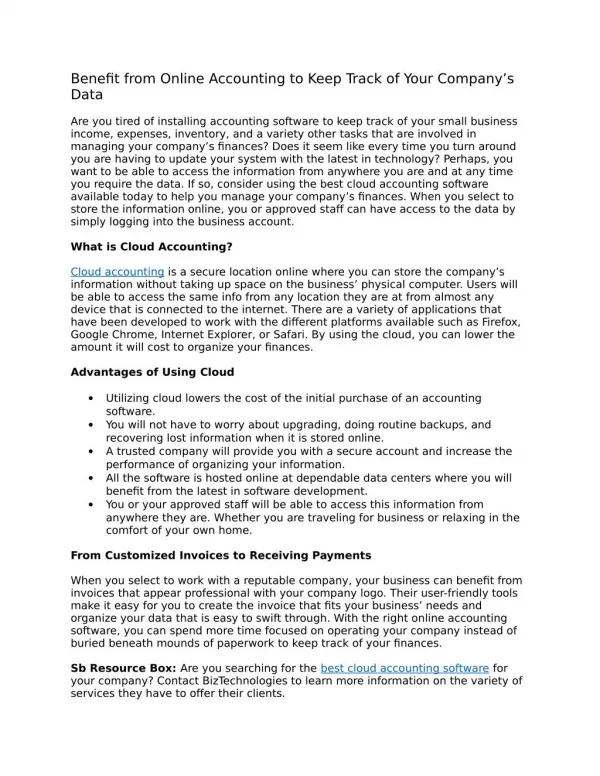
Simplifying Audits with Cloud Accounting Platforms In today's fast-paced business world, the ability to streamline financial processes is crucial. Cloud accounting platforms are emerging as essential tools for simplifying audits and reporting, offering enhanced efficiency, accuracy, and accessibility. Here’s how these platforms are transforming the landscape of financial management. 1. Automated Data Collection One of the significant advantages of these platforms is their ability to automate data collection. Traditional methods of gathering financial data can be time-consuming and error-prone. However, these platforms automatically pull in data from various sources, ensuring that all financial information is up-to- date and accurate. This automation reduces the risk of human error and allows auditors to focus on analyzing data rather than collecting it. 2. Real-Time Financial Reporting Cloud accounting softwares provide real-time financial reporting, giving businesses immediate access to their financial status. This instant access is invaluable during audits, as it allows auditors to quickly verify transactions and balances. Real-time reporting also enables businesses to identify and address discrepancies as they occur, rather than at the end of a reporting period. 3. Enhanced Data Security Data security is a top priority in financial management. These accounting softwares offer robust security features to protect sensitive financial information. These platforms use advanced encryption, multi-factor authentication, and regular security updates to ensure that data remains secure. This level of security not only protects against data breaches but also provides peace of mind during audits, knowing that the financial information is safeguarded. 4. Streamlined Compliance Maintaining compliance with financial regulations is a critical aspect of business operations. Cloud accounting platforms simplify compliance by automatically updating regulatory requirements and ensuring that financial practices align with current laws. This automation reduces the risk of non- compliance and the associated penalties, making audits smoother and more efficient. 5. Collaboration and Accessibility Cloud accounting platforms enable seamless collaboration among team members and auditors. With cloud-based access, multiple users can view and work on financial data simultaneously from different locations. This accessibility is particularly beneficial during audits, as it allows auditors to access necessary information without the need for physical presence. Additionally, businesses can easily share specific data sets with auditors, streamlining the audit process.
6. Customized Reporting Every business has unique reporting needs, and cloud accounting platforms offer customizable reporting features to meet these demands. Businesses can generate tailored reports that focus on specific financial metrics relevant to their operations. This customization ensures that audits are thorough and focused on the most critical aspects of the business’s financial health. Audit Trails Cloud accounting softwares maintain detailed audit trails, recording every transaction and modification. These audit trails are essential for transparency and accountability, allowing auditors to trace the history of financial data accurately. This transparency simplifies the audit process, making it easier to identify and rectify any issues. Conclusion Cloud accounting platforms are revolutionizing the way businesses handle audits and reporting. By automating data collection, providing real-time reporting, enhancing security, streamlining compliance, and offering customizable reporting, and these platforms simplify financial management. As businesses continue to adopt these accounting solutions, they can expect more efficient, accurate, and secure audits, ultimately leading to better financial oversight and decision-making.