

SlideServe
Menu
Préférences
© SlideServe · v2026

The Muscular System

Roberta avatar
17 diapositives · 771 Views · Dec 25, 2010

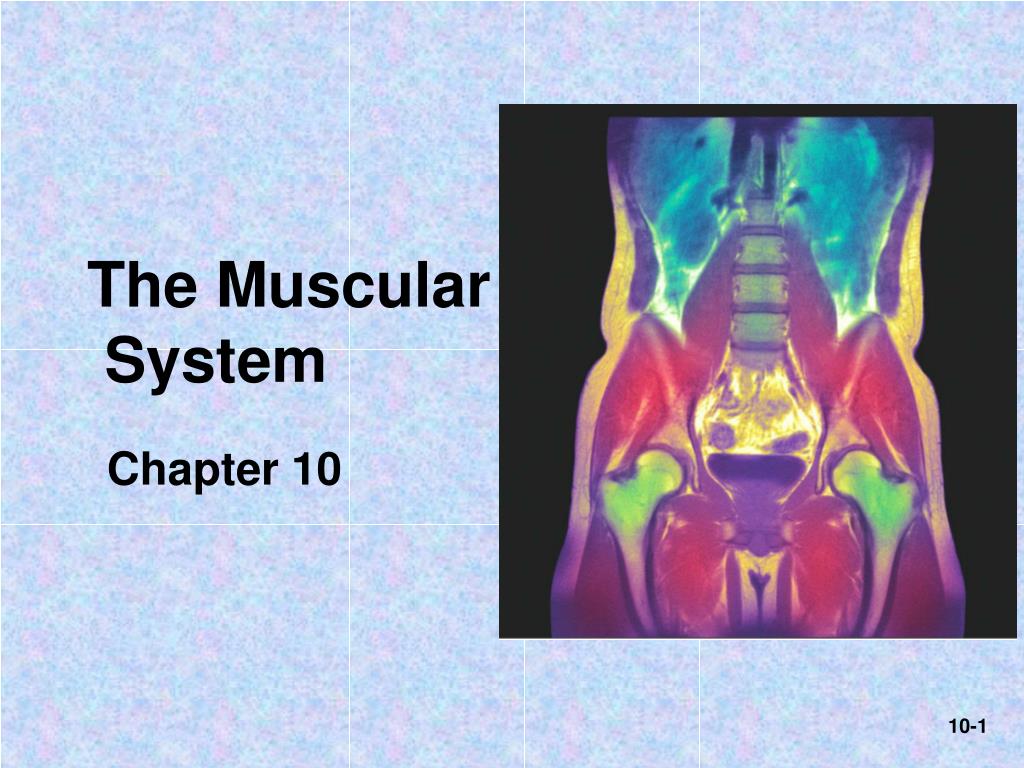
The Muscular System. Chapter 10. The Muscular System. Structure/function of muscles. Organization of Muscles. 600 Human skeletal muscles General structural and functional topics _____________________________ connective tissues of muscle coordinated actions of muscle groups
The Muscular System - slide 1
01 / 17The Muscular System
1 / 17

Télécharger la présentation

The Muscular System
Une image / un lien ci-dessous est fourni (tel quel) pour télécharger la présentation

Politique de téléchargement : le contenu du site vous est fourni TEL QUEL pour votre information et votre usage personnel ; il ne peut être vendu, concédé sous licence ni partagé sur d’autres sites sans l’accord de son auteur.Le contenu vous est fourni TEL QUEL, pour votre information et votre usage personnel uniquement. Téléchargez la présentation en cliquant sur ce lien. Lors du téléchargement, si vous ne parvenez pas à télécharger une présentation, l’éditeur a peut-être supprimé le fichier de son serveur.Pendant le téléchargement, si vous ne parvenez pas à obtenir une présentation, le fichier a peut-être été supprimé par l’éditeur.

F I N

Plus de contenu associé

Transcription de la présentation
  1. The Muscular System Chapter 10

  2. The Muscular System • Structure/function of muscles

  3. Organization of Muscles • 600 Human skeletal muscles • General structural and functional topics • _____________________________ • connective tissues of muscle • coordinated actions of muscle groups • _____________________________

  4. The Functions of Muscles • Movement of body parts and organ contents • ____________________________________ • ___________________ - speech, expression and writing • Control of openings and passageways • ____________________

  5. Connective Tissues of a Muscle • Terms: • _______________ • _______________ • Endomysium • Fasicle • ______________ • ______________ • Deep fascia

  6. Location of Fascia • Deep fascia • ____________________________ • ______________________________ • adipose between skin and muscles

  7. Parts of a Skeletal Muscle • ______________ • attachment to stationary end of muscle • Belly • _______________ _______________ • _______________ • attachment to mobile end of muscle

  8. Skeletal Muscle Shapes • _____________________________ (biceps brachii m.) • thick in middle and tapered at ends • Parallel muscles have parallel fascicles • rectus abdominis m. • Convergent muscle • broad at origin and tapering to a narrower insertion • ________________ muscles (rectus femoris and deltoid) • fascicles insert obliquely on a tendon • _________________________________________________ • ________________ (orbicularis oculi) • ring around body opening

  9. Muscle Actions • Prime mover or agonist • __________________________ • ______________________ aids the prime mover • stabilizes the nearby joint • modifies the direction of movement • Antagonist • ___________________________ • preventing excessive movement and injury • _________________________ • prevents movement of bone

  10. Muscle Actions during Elbow Flexion • Prime mover (agonist) = brachialis • Synergist = biceps brachii • Antagonist = triceps brachii • Fixator = muscle that holds scapula firmly in place • rhomboideus m.

  11. Bipennate parallel circular convergent multipennate fusiform unipennate

  12. fiber • Fibril • perimysium • Fasicle • endomysium • Epimysium • Deep fascia

  13. Intrinsic and Extrinsic Muscles • ___________ are contained within a region such as the hand. • ______________ move the fingers but are found outside the region.

  14. Skeletal Muscle Innervation • _____________ arising from the brain • exit the skull through foramina • numbered I to XII • ____________________ arising from the spinal cord • exit the vertebral column through intervertebral foramina

  15. How Muscles are Named • English names for muscles are modifications of the Latin names. • Table 10.1 = terms used to name muscles • _______________ = elevates a body part • profundus = deepest • _____________________ = having 4 heads

  16. Athletic Injuries • Vulnerable to sudden and intense stress • Proper conditioning and warm-up needed • Common injuries • _____________________ • pulled hamstrings • _____________________ • Treat with rest, ice, compression and elevation • “No pain, no gain” is a dangerous misconception