Endoscopy - Types and Conditions it Detects
0 likes | 36 Vues
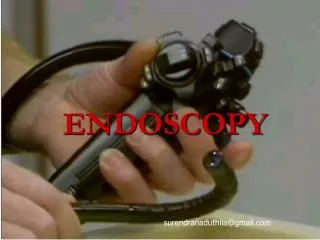
Endoscopy is a medical procedure that examines the internal structures of the human body using a thin tube with a camera and light. The method is utilized for diagnosing, screening, and treating the conditions above. You can explore various types of endoscopy and conditions it can detect, aiming to make informed decisions for undergoing the best endoscopy in Ahmedabad. Some types include anoscopy, cystoscopy, colonoscopy, and bronchoscopy, in which a tube passes through the nose or mouth to check for lungs and windpipe and many more types. Read here to know more!


Endoscopy - Types and Conditions it Detects
E N D
Presentation Transcript
Endoscopy: Types and Conditions it Detects Endoscopy is a medical procedure performed to examine the internal structures of the human body. The procedure includes inserting a thin tube featuring a camera and light to capture videos or images and display pictures on the big screen. The procedure is used to diagnose, screen, and treat the conditions. In this blog, we will look into different types of endoscopy and conditions the procedure can detect. This will help you make informed decisions while undergoing thebest endoscopy in Ahmedabad. Types of Endoscopy There are different types of endoscopy, but the procedure works primarily in the same way. The types include: •Anoscopy: The endoscope passes through the butthole and examines the rectum and anus. •Arthroscopy: The endoscope passes through an incision above the joint to check for conditions such as arthritis. •Bronchoscopy: The tiny tube passes through the nostril or mouth to check for lungs and windpipe. •Cystoscopy: The instrument passes through the urethra to examine the bladder. •Colonoscopy: The tube passes through the anus to check color/large intestine. •Esophagogastroduodenoscopy (EGD) or upper endoscopy: The tiny tube passes through the mouth to examine the stomach, esophagus, and the upper small intestine. •Enteroscopy: The tube passes through the anus and mouth to examine the small intestine. •Hysteroscopy: The endoscope passes through the vagina to examine the uterus. sunflowerhospital.in
•Laryngoscopy: The tiny tube goes through the nostril or mouth to look at the larynx (your voice box). •Laparoscopy: The scope passes through a small cut in the abdomen to examine the reproductive and abdominal organs. •Mediastinoscopy: The tiny tube passes through a cut above the breast bone to examine the oesophagus, heart, and windpipe. Other Types Include: •Neuroendoscopy •Proctoscopy (rigid sigmoidoscopy) •Sigmoidoscopy (flexible sigmoidoscopy) •Thoracoscopy •Ureteroscopy What does an Endoscopy Detect? Theendoscopy as a medical procedurecan detect concerns affecting your: •Head and neck, including laryngitis and swallowing disorders •Digestive system, including colon polyps, gastrointestinal disease, and colon cancer •Nervous system, including brain tumors •Joints including dislocations, tears, and arthritis •Urinary system, including kidney stones and UTIs •Reproductive system, including endometriosis, abnormal uterine bleeding, and fertility issues Overall, the procedure allows healthcare providers to inject medications, seal wounds, remove damaged tumors or tissue, stop internal bleeding, drain fluid, fix blockages or widen narrow organs, place stents, and perform surgeries. Conclusion Endoscopy, as a medical procedure, is used to examine the internal organs of your body. It also helps in treating certain conditions. But make sure to undergo endoscopy at thebest IVF center in India. Source - Endoscopy: Types and Conditions it Detects sunflowerhospital.in