Understanding the Digestive System: Functions, Structures, and Processes
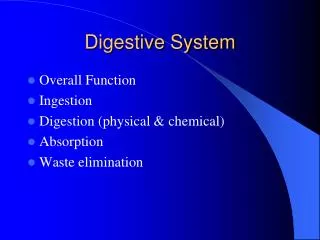
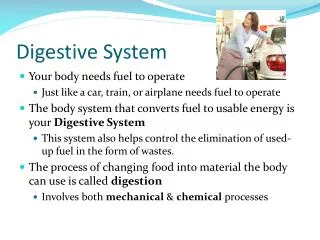
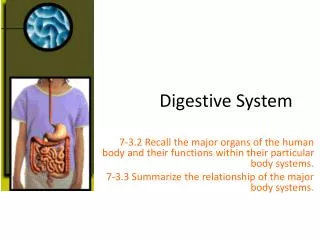
The digestive system plays a crucial role in processing food and eliminating waste. It begins with ingestion in the mouth, where mechanical processing occurs via the tongue and teeth. Chemical breakdown follows, aided by secretions from the digestive tract and accessory organs, including enzymes and acids. Absorption of vital nutrients, water, and electrolytes takes place primarily in the small intestine, while the large intestine focuses on dehydration and waste compaction. Finally, excretion removes undigested materials from the body through the anus.

Understanding the Digestive System: Functions, Structures, and Processes
E N D
Presentation Transcript
Functions • Ingestion • Food enters digestive tract through mouth • Mechanical Processing • Physical manipulation of solid food (by t0ngue and teeth) • Digestive • Chemical breakdown of food into small organic fragments that can be absorbed by the digestive epithelium • Secretion • Release of water, acids, enzymes, and buffers by the digestive tract and accessory organs • Absorption • Movement of molecules (organic, water, electrolytes, vitamins) across the digestive epithelium and into the interstitial fluid of the digestive tract • Excretion • Removal of waste products from the body (feces)
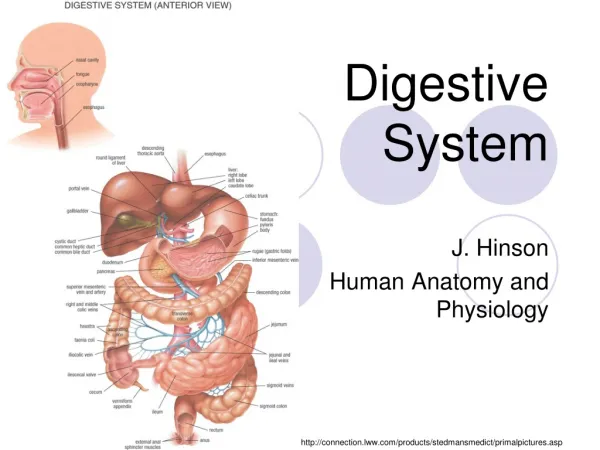
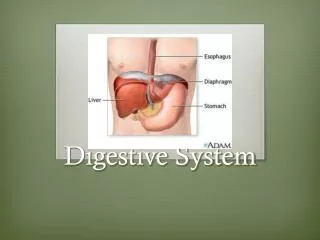
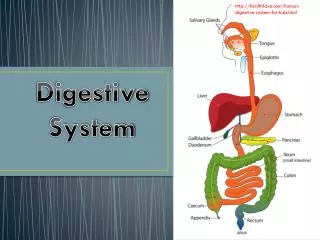
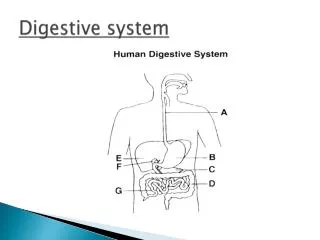
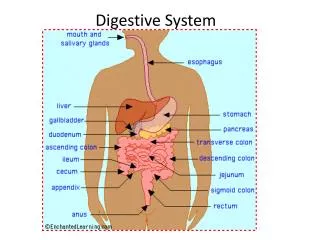
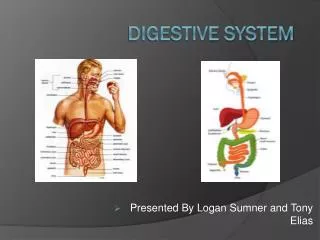
Structures • Oral cavity, Teeth, Tongue • Mechanical processing • Moistening • Mixing with salivary secretions • Salivary Glands • Secretion of lubricating fluid containing enzymes that break down carbohydrates • Pharynx • Muscular propulsion of materials into the esophagus • Esophagus • Transport of materials to the stomach (peristalsis)
Structures • Stomach • Chemical breakdown of materials by acid and enzymes • Mechanical processing through muscular contractions • Liver • Secretion of bile • Important for lipid digestion • Storage of nutrients • Gallbladder • Storage and concentration of bile • Pancreas • Exocrine cells secrete buffers and digestive enzymes • Endocrine cells secrete hormones
Structures • Small Intestine • Enzymatic digestion and absorption of water, organic substrates, vitamins and ions • Large Intestine • Dehydration and compaction of undigestible materials in preparation for elimination • Anus