Ultimate Guide to Plant Pruning for Healthy Growth
Learn the art of pruning, its methods, tools, and benefits, enhancing plant growth and appearance. Discover key tips and timings for various plant types.

Ultimate Guide to Plant Pruning for Healthy Growth
E N D
Presentation Transcript
Terms • pruning - removal of parts of the top or root systems of plants • fruit spur - stubby, fruit bearing twig
Terms • translocation - movement of water and soluble minerals from one part of the plant to another
Terms • inhibit - prohibit or slow action • hormones - chemical compounds produced by plant. Regulate plant functions
Terms • twig - very small branch of a tree • cane - stem of various fruits. Ex: raspberry
Terms • shoot - small outgrowth on a bush
Facts • generally has no specific season • continuous process • serves a purpose for the plant
Facts • enhances ornamental value • generally prune with natural form of the plant, not against it
Purposes • remove diseased, dead, or damaged limbs • restrict or promote growth • develop certain forms of growth
Methods of pruning • root • shoot or stem
Stem pruning • reduces amount of growth • influences vegetative reproductive balance of the plant • reduces plant size, yield, and total amount of growth
Stem pruning • Increases supply of essential elements to the points of growth that remain
Stem pruning • promotes the making of cells and the utilization of carbohydrates • stimulates vegetative phase, retards reproductive phase
Root pruning • affects total amount of growth made • reduces amount of available essential elements - causes dwarfing
Root pruning • influences vegetative reproductive balance of plant • promotes root growth
Root pruning • favors reproduction, retards vegetative phase • used to prepare plants for transplanting
Top Pruning • heading back • thinning out
Heading back • terminal - top portion is removed • stimulates development of more points of growth
Heading back • induces compact, dense, or branched type of growth • removes hormones that inhibit branching
Thinning out • entire twig, cane, or shoot is removed • does not prevent development of lateral buds • induces open type of growth
General rules • use correct tools for the job • prune back to existing bud or to a side branch • never leave a stub!!!!!!!!!!
General rules • cut larger limbs in three steps • draw the illustration on the board silly teacher! :)
General Rules • pruning in summer results in greater dwarfing than pruning in late winter months
General Rules • buy and plant trees and shrubs that have the characteristics and shape that you want
Pruning tools • thumb and forefinger • pinch off shoots • pinch off unwanted buds, long stems, and fruit spurs • snap off faded blooms or seed pods
Edgers • enable user to stand and cut the edges of lawns • also used on ground covers
Grass Shear • used to cut grass around sidewalks, driveways and planting beds
Lopping Shears • use when added leverage is needed • used for reaching into trees • small branches or twigs
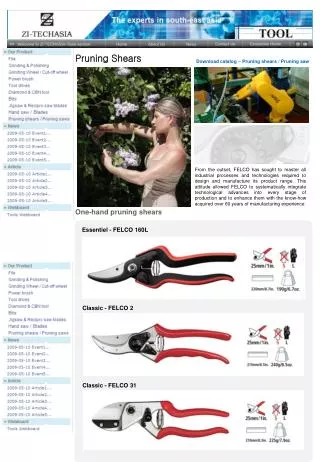
Pruning Shears • many types
Hedge Shears • hand operated • electric or gas powered
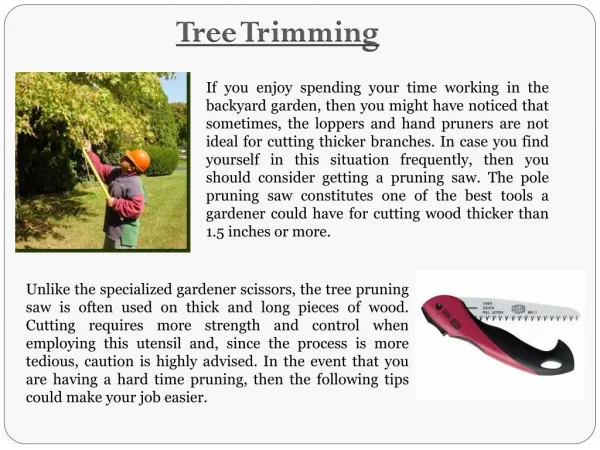
Pruning Saws • cut quickly • useful in overhead work • straight or curved
Pole Pruners & Saws • used to cut or saw branches high overhead • telescoping - go up to 18 feet
How and When • Deciduous Shade Trees • when - dormant - early spring before leafing out • exception - bleeder trees - Mid June
Bleeder trees • Sugar Maple
What to look for • Central Leader - single leader • multiple leaders - narrow crotch angles in time will break
What to Look for • scaffold branches • crotch angle 45-90 degrees • limbs spirally arranged • prune off lower limbs 8-10 feet high
What to Look for • distance vertically between scaffold branches • lowest branch on SW side • remove suckers - weak wood • remove hangers
What to Look for • remove water sprouts • remove parts growing in toward center of trees
Fruit Tree Pruning • spurs - majority of fruit production is borne on spurs • open tree up to let light into spurs • spurs bear fruit every other year
Evergreens • don’t respond well to pruning • broadleaf - like deciduous flowering shrubs
Evergreens • needle types - pines, spruce, fir, juniper, yews, respond better • spruce or fir - single needle prune back to 1/4 inch above axillary bud
Junipers & Yews • awl shaped needles • prune spring to mid summer • when temperature is above freezing
Pine • candle growth - new growth from tip of branches, milky green color • remove 1/3 to 1/2 of candle growth in the spring
Deciduous shrubs • spring flowering - lilac, honeysuckle • set flower buds during previous year • prune after flowering
Summer flowering • roses, hydrangia • set flower buds same year that they flower in spring • prune before bud set
Deciduous shrubs • avoid August and September pruning for all deciduous material