Download
1 / 8
80 likes | 186 Vues
Understand the intricate processes of carbohydrate metabolism, including glycolysis, gluconeogenesis, glycogenolysis, and glycogenesis. Learn about the roles of glucose and glycogen in cellular energy production and regulation through insulin and glucagon.

E N D
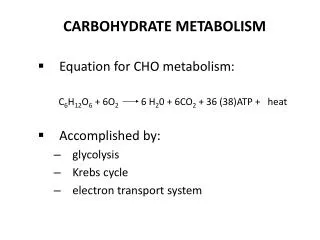
Glucose • The most important monosaccharide in animal nutrition • Cellular uptake of this hexose is regulated by insulin; blood levels are regulated by insulin and glucagon • Broken down to two trioses (pyruvate) during glycolysis, ultimately generating over 30 ATP if fully oxidized
Glycolysis • The process in cell metabolism by which carbohydrates and sugars, especially glucose, are broken down, producing two ATP and two pyruvate molecules
Gluconeogenesis • The formation of glucose from non-carbohydrate sources, such as amino acids, lactate, glycerol, pyruvate and propionate • Never uses fatty acids to generate glucose • Occurs primarily in the liver
Glycogen • A storage form of glucose in animals • Animal starch • Breakdown stimulated by (among other things) glucagon
Glycogenesis • The formation of glycogen from monosaccharides in the body, esp. glucose • Glucose molecules connected by alpha 1,4 linkages and numerous alpha 1,6 branch points
Glycogenolysis • The biochemical breakdown of glycogen to glucose • Stimulated by glucagon (among other things)
Glucagon • A hormone secreted by the pancreas in response to low blood glucose • Stimulates breakdown of glycogen to glucose • Stimulates gluconeogenesis