The Etruscans: Origins, Culture, and Influence on Ancient Rome
270 likes | 370 Vues
Explore the fascinating history of the Etruscans, a civilization that thrived between 900 and 500 BCE in Etruria, present-day Italy. Known as the Rasenna, they were formidable warriors who dominated much of the Italian peninsula, including Rome. Their independent city-states boasted a unique political system, rich artistic expressions, and a polytheistic religion. With over 10,000 inscriptions, the Etruscan writing system provides insight into their culture. Discover their vibrant tomb art, religious practices, and significant contributions to ancient art and architecture.


The Etruscans: Origins, Culture, and Influence on Ancient Rome
E N D
Presentation Transcript
The Etruscans Ms. Susan M. PojerHorace Greeley H. S. Chappaqua, NY
Origin of the Etruscans • Between 900 and 500 BCE • Called themselves theRasenna, the Greeks called them Tyrrhenioi; the Romans called them the Etruscans. • Came from eastern Mediterranean, possibly Asia Minor. • Their land was called Etruria.
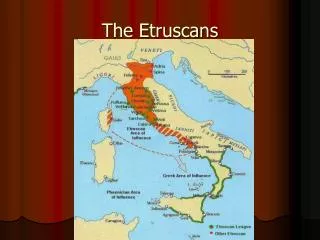
The Land of the Etruscans
Etruscan Political System • Independent, fortified city-states. • Formed small confederacies. • Had a strong military that dominated all the surrounding peoples. • By 6c BCE, the Etruscan military had conquered much of the Italian peninsula,including Rome and the island of Corsica.
Etruscan Military 6c BCE Chariot Bronze Warrior
Etruscan Writing • Most inscriptions found on tombs and monuments and mirrors. • We can pronounce Etruscanwords, because they use analphabet similar to Greek, but wehave no clue about their meaning. • Over 10,000 Etruscan inscriptions.
Etruscan Religion • Polytheistic. • Believed that the destiny of manwas determined by the whims of the gods. • Believed in prophecy and readingthe signs of nature by augurs. • Believed in predestination.
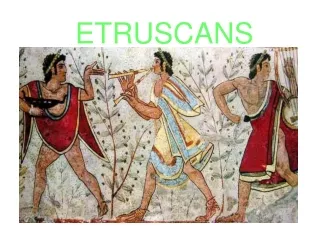
Etruscan Art • Art created for religious or utilitarianpurposes. • Most famous pieces created out ofterracotta. • Many murals and frescoes on tomb walls. • Lively depictions of life—dancing, games,music, and feasting. • Pottery at first copies of Greek works. Later, created their own bronze pottery. • Bronze crafts [mirrors, bowls, candelabra].
Dance, Dance, Spin ! Double Flutist