The Fourth Amendment (1791): Protection Against Unreasonable Searches and Seizures
The Fourth Amendment, ratified in 1791, safeguards individuals from unreasonable searches and seizures. It ensures that the government cannot violate citizens' privacy without probable cause, supported by an oath or affirmation. Warrants must specify the place to be searched and the items or individuals to be seized. This critical amendment embodies the principle of personal security and serves as a cornerstone of the American legal system, protecting citizens' rights against arbitrary governmental intrusion.

The Fourth Amendment (1791): Protection Against Unreasonable Searches and Seizures
E N D
Presentation Transcript
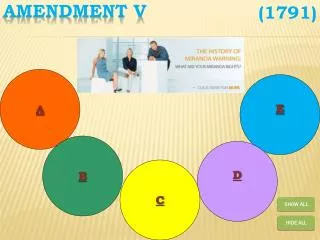
(1791) Amendment IV A E B D C SHOW ALL HIDE ALL
AmendmentIV (1791) The right of the people to be secure in their: E B D C SHOW ALL HIDE ALL
(1791) Amendment IV Persons E Papers Houses Effects B D C SHOW ALL HIDE ALL
(1791) Amendment IV A E Unreasonable searches and seizures D C SHOW ALL HIDE ALL
(1791) Amendment IV A E B D No Warrants shall issue, but upon probable cause SHOW ALL HIDE ALL
(1791) Amendment IV A E B Must be supported by by Oath or affirmation C SHOW ALL HIDE ALL
(1791) Amendment IV A Particularly describing the place to be searched, and the persons or things to be seized B D C SHOW ALL HIDE ALL
(1791) Persons Amendment IV Houses Papers Effects The Right of the people to be secure in their: Particularly describing the place to be searched, and the persons or things to be seized Unreasonable Searches And seizures Must be supported by Oath or affirmation No warrants shall issue, but upon probable cause SHOW ALL HIDE ALL