Chemistry Success: Keys to Mastery and Degree Requirements with Mr. Sandoy
Join Mr. Sandoy, a seasoned educator with advanced degrees in physical science and IT management, as he guides students through the essentials of chemistry. Designed for high schoolers under the Kansas Regents Curriculum, this guide emphasizes the importance of math skills, effort, and prior knowledge in predicting academic success. Understanding the structure of the course, preparing with key concepts, and mastering practical skills will lead to achieving college lab science credits. Discover effective study strategies, classroom conduct, and more for a successful chemistry experience!

Chemistry Success: Keys to Mastery and Degree Requirements with Mr. Sandoy
E N D
Presentation Transcript
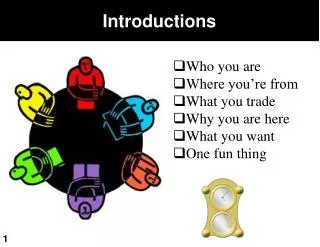
Introductions (who) • Mr Sandoy • 3 Degrees: BS physical science, MS IT systems management, MS applied military history • Retired Army officer (2000) • You: • Chem Study Buddy: • fill out, turn one in
Why Chemistry • Graduate SME HS • Need 3 Lab Science credits • KS Regents Curriculum • Need CM1 or PH1 • College • Most degrees require College CM1 or PH1 • College CM1= High School CM1 + CM2 • OR Twice as much, half the time, less help • Career • Health Care = College CM1 + CM2 • Engineering or Chemistry • Note DNA/medicine revolution
What predicts Success? College • #1= Math Skills • HS Calculus • Conversions (mile-ft etc) • #2=Effort • #3= Prior Knowledge • Note: professors don’t do 1 or 2; but do #3 • *Survey of 20,000 students & another survey of every physics/ chemistry professor in KS High School • #1 Effort/Attend • IA students get As • #2 Math Skills • Alg2 preferred • Text written for Alg2 • Avg stdt in ALG2/PC • #3 Prior Knowledge • PS can help if struggling • PS can hinder if lazy
Success 0910 Hard Test 10 • A: 3 • B: 17 • C: 11 • D: 2 • F: 6 • FF: 5 Normal Test 13/14 • A: 4 • B: 15 • C: 14 • D: 7 • F: 2 2nd Semester • A: 4 • B: 20 • C: 13 • D: 5
What Predicts Test Failure? Effort to learn < Desire for grade • Harder test questions not attempted • In class or homework on these not done • E.G. calculating excess reagent • Easy test questions missed • In class or homework on these seen as busywork • E.g. mol- mol conversion • Not listening or using work time in class • Talking, texting etc • Waiting to learn it all from your tutor
How is SME Chemistry different? • College text • concepts • Source of • Chem 1 • Knowledge • Skills from • practice • Concepts from text • 1Q 2Q 3Q 4Q
SME Chem1 difference • More taught during course • - Can be better prep for college • But reinforcing sections of text not taught, treated as redundant - e.g. chapter 9, much of chapter 12/17 • Some students may comprehend less • College text • concepts • Skills from • practice • Concepts from text
SME Chem1 difference • 2nd semester labs summarize unit • - Links theory to reality • But can be too complex - must tie together entire chapter and master new lab techniques • Some students may comprehend less • College text • concepts • Skills from • practice • Concepts from text
How to adjust? • More taught • Less reinforcement • Complex labs • College text • concepts #1: Master knowledge, not just enough to do well on the test - You will use knowledge later, with limited review #2:Get help early, if you struggle (students, teacher, tutor) - Chapters 5, 8, and 10 on are much harder. If you wait to get help you will probably never recover - There are plenty of additional worksheets to do #3: Do the worksheets, they are repetitious - So are drills in any sport, practice makes perfect #4: Read the labs before you do them, in 2nd semester they are too complex to comprehend if you just show up and do them - If you understand the 2nd semester labs, you have learned • Skills from • practice • Concepts from text
So What are Class Goals • Learn life skills (effort) • Prepare, try, finish, cooperate, be considerate… • Prepare for college (math) • Work chemistry math problems • Apply dimensional analysis/conversions • Learn basic Chemistry (knowledge) • Apply theory in word problems & labs • Relate theory to real world BE SAFE
Rules “do the right thing” I dismiss; no throw; use near restroom • Prepare…e.g. on time, ready for quiz/ work • “Fortune favors the prepared” • Try…………………e.g. be here, work most tasks • “Half of life is just showing up” • Finish……e.g. complete tasks on own, extra effort • “Winners never quit … copiers fail tests” • Cooperate ………….…e.g. allow teaching,be safe, • “Silence is golden” • “You can hear a lot just by listening” • Be considerate……e.g. allow learning, helpful, neat, discrete: “Do unto others…” Stay in seat, 2/table,less A Lose restroom, pass, longer wait for all Take answer key, no keys
How- Discipline • Cell Phones • 1= No purse/ • bag on table • 2= Suspect = warn • 3= See/hear= office referral • Tardy • 1= warn ; 2= call home • 3= 15min t detention • 4= 30 min t detention • 5= office referral • Disrupt • 1= warn • 2= hall, talk • 3= move • 4= hall, call home, 15 min detention • 5= hall, 30 min detention, • 6= office referral
knowledge more reps= more skill How-Grades Semester=18% final + Qtr grades • 50% Tests ………………… no notes, ~1 page guide • Test/final grade is minimum grade, if ~all work done • More time case by case basis • 10% Daily Quizzes……… open notes • ~12 questions from work/labs; even or odd by seat • 15% Work • 5%: in class, 5% homework, 5% on task/ listening • Must show work > correct; late 50%, > 2-30 days late 10% • 25% Labs • Lab report + safety; insight >> accuracy >> completion • Extra creditscored at 5 problems= 1 regular problem • Exceptional job … early work … neat ..more/harder problems Can make up @ 50% before/ after school for 30 days Neatness counts For detailed progress report, provide e mail address
Test Quiz Grading Criteria • 1. Algebra problem(5 point) • 5= apply concept, fully correct, work shown • 4= know concept, minor error (sf, units calc …), work shown • 3= general understanding, 1 conceptual error, work shown • 2= some understanding of concept, 2+ concept errors, plausible answer with work shown • 1-2= correct, no work shown (2=easy) • 1= show effort, facts set up; 0=else • 2. Short Answer(3 points) • 3= correct • 2= general understanding of concept • 1= some understanding of concept; 0= else • 3. Simple one step problem or mc/tf(2 points) • 2= correct, 1= minor error, 0= else • +1= exceptional answer, +2 exceptional and unique answer
Homework & In Class Grading • 9 = max, times weight, generally one point per question • 10 … E (in day early) or + (100%) • 9 …. 90%; 8 …. 80% etc • 5 ….. Late (correct), OR NS (not stapled) • 3 ….. SW (show work for 2+ step problems) • 1 ….. TL (too late) • 0 … not turned in • Extra credit (XC) = 1pt/5 problems • Late Work • Write absent, date work due, reason absence excused • Note, not required to make up quiz/ most labs
When (Normal Schedule) • Questions 0-5 min • Quiz 10-15 min • Less test, review, short day… • Demo/Lesson1 5-15 min • Group Practice 1 (#) 5-15 min • In class/homework 1 10-30 min • Activity 2 20-45 • Bright & diligent finish in class • Conclusion 1 min
EASIER: w some review Solve: scientific method Matter: describe Measure*: precision/error, 10+2=10, 20*22=400 Atom: structure/ mass Electrons**: quantum Periodic table: element trends* Ionic Bonds: Salt: Na+Cl-; Memorize name/ formula** Covalent Bonds**: sugar, 3d sketch/ models *= New, not in PS; **=Hard HARDER: almost all new Mole(#)**: conversions, 1st hard lab Reactions: balance chemical equation Stoichiometry**: calculate product etc Energy*:math/graphs States/Gases*: fractions, hard lab Aqueous/Solutions*: conversions Equilibrium**: much college chem 2 Acid/Base*: 1st Semester 2nd Semester
Conclusion • Today HW: • ReadSafety Handout • Sign Safety Contract (Test) • Wednesday • Quiz + Math/Physical Science Pretest • Thursday/Friday • Textbooks; CuCl2 lab • Monday: • H2O2 Lab; Chapter 1 ends