SlideServe
Menu
Préférences
© SlideServe · v2026

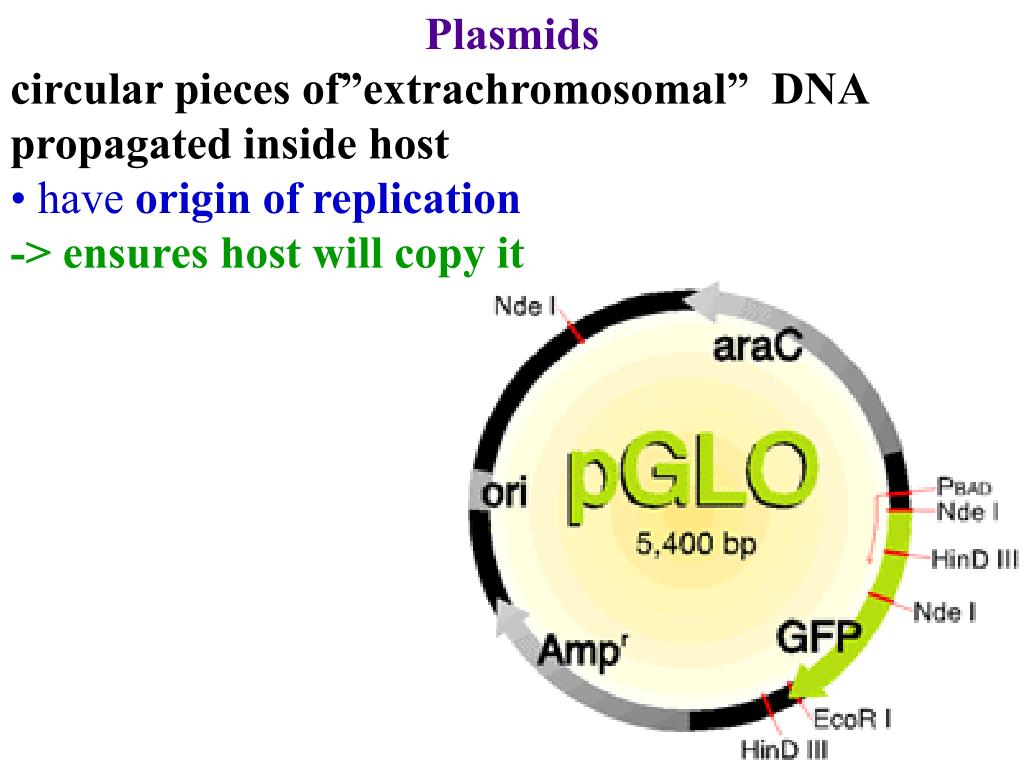
Plasmids circular pieces of”extrachromosomal” DNA propagated inside host

agatha avatar
25 diapositives · 482 Views · Sep 19, 2014

Plasmids circular pieces of”extrachromosomal” DNA propagated inside host have origin of replication -> ensures host will copy it. Plasmids circular pieces of”extrachromosomal” DNA propagated inside host have origin of replication -> ensures host will copy it Have selectable marker
Plasmids circular pieces of”extrachromosomal” DNA propagated inside host - slide 1
01 / 25Plasmids circular pieces of”extrachromosomal” DNA propagated inside host
1 / 17

Télécharger la présentation

Plasmids circular pieces of”extrachromosomal” DNA propagated inside host
Une image / un lien ci-dessous est fourni (tel quel) pour télécharger la présentation

Politique de téléchargement : le contenu du site vous est fourni TEL QUEL pour votre information et votre usage personnel ; il ne peut être vendu, concédé sous licence ni partagé sur d’autres sites sans l’accord de son auteur.Le contenu vous est fourni TEL QUEL, pour votre information et votre usage personnel uniquement. Téléchargez la présentation en cliquant sur ce lien. Lors du téléchargement, si vous ne parvenez pas à télécharger une présentation, l’éditeur a peut-être supprimé le fichier de son serveur.Pendant le téléchargement, si vous ne parvenez pas à obtenir une présentation, le fichier a peut-être été supprimé par l’éditeur.

F I N

Plus de contenu associé

Transcription de la présentation
  1. Plasmids • circular pieces of”extrachromosomal” DNA propagated inside host • have origin of replication • -> ensures host will copy it

  2. Plasmids • circular pieces of”extrachromosomal” DNA propagated inside host • have origin of replication • -> ensures host will copy it • Have selectable marker • (usually a drug-resistance • gene) • -> ensures cell won’t • “lose” it

  3. Plasmids • circular pieces of”extrachromosomal” DNA propagated inside host • have origin of replication • -> ensures host will copy it • Have selectable marker • (usually a drug-resistance • gene) • -> ensures cell won’t • “lose” it • pGLO also carries • gene for Jellyfish • Green Fluorescent Protein

  4. Restriction Enzymes • enzymes which cut DNA • at specific sites

  5. Restriction Enzymes • enzymes which cut DNA • at specific sites • called "restriction enzymes" • because restrict host range for • certain bacteriophage

  6. Restriction Enzymes • enzymes which cut DNA • at specific sites • called "restriction enzymes" • because restrict host range for • certain bacteriophage • bacterial” immune system”: • destroy any “non-self” DNA

  7. Restriction Enzymes • bacterial” immune system” destroy “non-self”DNA • -> methylase recognizes same sequence in host DNA and protects it by methylating it

  8. Restriction Enzymes enzymes which cut DNA at specific sites Useful for fingerprinting: each cuts a particular DNA into a distinctive set of fragments

  9. Restriction Enzymes enzymes which cut DNA at specific sites Useful for fingerprinting: each cuts a particular DNA into a distinctive set of fragments

  10. Restriction Enzymes enzymes which cut DNA at specific sites Useful for fingerprinting: each cuts a particular DNA into a distinctive set of fragments can map each site by double digests

  11. Restriction Enzymes Restriction enzymes create unpaired "sticky ends” which anneal with anycomplementary sequence

  12. Restriction Enzymes • Restriction enzymes • create unpaired "sticky • ends” which anneal with • anycomplementary • sequence • make “recombinant • DNA” by mixing 2 • different fragments • digested with same • enzyme and gluing • them together with ligase

  13. Restriction Enzymes • Restriction enzymes • create unpaired "sticky • ends” which anneal with • anycomplementary • sequence • make “recombinant • DNA” by mixing 2 • different fragments • digested with same • enzyme and gluing • them together with ligase • Genetic Engineering

  14. Restriction mapping

  15. Restriction mapping

  16. Transformation Physical transfer of new DNA into cell 1. Preincubation: chills cells, allows cations to neutralize negative charges on plasma membrane.

  17. Transformation 1. Preincubation: chills cells, allows cations to neutralize negative charges on plasma membrane. 2. Incubation: allows DNA to diffuse through cell wall to contact plasma membrane.

  18. Transformation 2. Incubation: allows DNA to diffuse through cell wall to contact plasma membrane. 3. Heat shock: opens holes in plasma membrane, allows plasmid to enter by diffusion.

  19. Transformation 3. Heat shock: opens holes in plasma membrane, allows plasmid to enter by diffusion. 4. Recovery: cells must make proteins encoded by new DNA molecule before they can be plated.

  20. Transformation 5. Selecting transformants: cells which have taken up the plasmid are only ones which can grow in the presence of ampicillin. Form colony at place they landed on plate

  21. DNA fingerprinting Use DNA sequences that vary between individuals

  22. DNA fingerprinting Use DNA sequences that vary between individuals

  23. DNA fingerprinting Use DNA sequences that vary between individuals Microsatellites short sequences 2-5 bases long repeated multiple times

  24. DNA fingerprinting • Microsatellites • short sequences 2-5 bases long repeated multiple times • vary between families but not within families

  25. DNA fingerprinting • STRs (simple tandem repeats) • vary between families but not within families • Detect by PCR with primers that bind outside repeat