Download

1 / 17
170 likes | 285 Vues
A house is a shelter or dwelling for human habitation that varies from simple huts to high-rise buildings. The term encompasses various types of dwellings and can refer to both the physical structure and the social unit living within, known as a household. Historical evidence shows the oldest house dates back to 10,000 B.C. Houses are designed to meet the needs of their inhabitants, often incorporating specialized rooms for sleeping, cooking, and leisure. Recent trends emphasize energy-efficient designs. Additionally, humans build homes for animals, showcasing a broader understanding of "house."

E N D
House • A house generally refers to a shelter or building that is a dwelling or place for habitation by human beings. • The term includes many kinds of dwellings ranging from rudimentaryhuts of nomadic tribes to high-rise apartment buildings. • Shelter – úkryt, útočiště • Dwelling – obydlí, příbytek • Habitation – bydlení, obývání • Rudimentary – základní • Hut – chata, chatrč, bouda • Tribes – kmeny (též domorodé) • High-rise – výšková budova
House • However, the word can also be used as a verb ("to house"), and can have adjectival formations as well. • In some contexts, "house" may mean the same as dwelling, residence, home, abode, accommodation, housing, lodging, among other meanings. • Dwelling – obydlí, příbytek • Abode - příbytek
House • The social unit that lives in a house is known as a household. • Most commonly, a household is a family unit of some kind, though households can be other social groups, such as single persons, or groups of unrelated individuals. • Household – domácnost • Unrelated - nepříbuzný
House • English-speaking people generally call any building they routinely occupy "home". • Many people leave their houses during the day for work and recreation but typically return to them to sleep or for other activities. • Routinely – stále, běžně
History • The oldest house in the world is approximately from 10,000 B.C and was made of mammoth bones, found at Mezhirich near Kiev in Ukraine. • It was probably covered with mammoth hides. • The house was discovered in 1965 by a farmer digging a new basement six feet below the ground. • Mammoth – mamut, ohromný • hides – kůže
Layout • Ideally, architects of houses design rooms to meet the needs of the people who will live in the house. • Such designing, known as "interior design", has become a popular subject in universities. • Layout – rozvržení • Ideally – teoreticky, v zásadě
Layout • Feng shui, originally a Chinese method of situating houses according to such factors as sunlight and micro-climates, has recently expanded its scope to address the design of interior spaces with a view to promoting harmonious effects on the people living inside the house. • Promoting – podporující • Effect – dojem, provedení
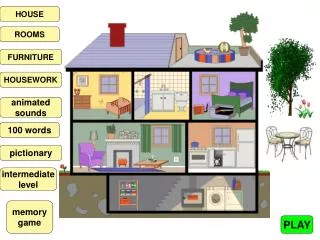
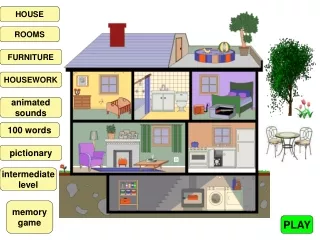
Parts • Many houses have several rooms with specialized functions. • These may include a living/eating area, a sleeping area, and (if suitable facilities and services exist) washing and lavatory areas. • Facility – příslušenství, zařízení
Parts • In traditional agriculture-oriented societies, domestic animals such as chickens or larger livestock (like cattle) often share part of the house with human beings. • Most conventional modern houses will at least contain a bedroom, bathroom, kitchen (or kitchen area), and a living room. • Livestock – dobytek, skot
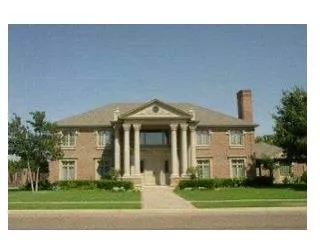
Parts • A typical "foursquare house" (as pictured) occurred commonly in the early history of the United States of America, with a staircase in the center of the house, surrounded by four rooms, and connected to other sections of the house. • Foursquare – čtyřhranný • Staircase - schodiště
Construction • More generally, people often build houses out of the nearest available material, and often tradition and/or culture govern construction-materials, so whole towns, areas, counties or even states/countries may be built out of one main type of material. • For example, a large fraction of American houses use wood, while most British and many European houses utilize stone or brick. • Fraction – zlomek, část celku
Construction • Lesser-used construction methods have gained (or regained) popularity in recent years. • Though not in wide use, these methods frequently appeal to homeowners who may become actively involved in the construction process.
Energy-efficiency • In the developed world, energy-conservation has grown in importance in house-design. • Housing produces a major proportion of carbon emissions (30% of the total in the UK) • Development of a number of low-energy building types and techniques continues. • They include the zero-energy house and the passive solar house.
Animal houses • Humans often build "houses" for domestic or wild animals, often resembling smaller versions of human domiciles. • Familiar animal houses built by humans include bird-houses, hen-houses/chicken-coops and doghouses (kennels); while housed agricultural animals more often live in barns and stables. • Domicile - domov • Chicken-coop - kurník • Barn – stodola • Stable – stáj
Animal houses • However, human interest in building houses for animals does not stop at the domestic pet. • People build bat-houses, nesting-sites for wild ducks and other birds, bee houses, giraffe houses, kangaroo houses, worm houses, hermit crab houses, as well as shelters for many other animals. • Hermit – poustevník