HUMAN BODY
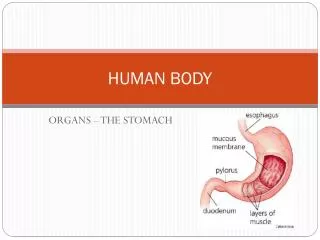
The stomach is a remarkable organ capable of functioning even when removed due to disease. It plays a crucial role in digestion, using hydrochloric acid to kill bacteria and create conditions for the enzyme protease. Food is typically emptied into the small intestine within 2-6 hours. Surprisingly, when we blush, the stomach lining also turns red. Additionally, swallowing air while eating can lead to gas, which is best released through burping. An adult's stomach can hold about 1.5 liters of material and produces a new mucus layer every two weeks to prevent self-digestion.

HUMAN BODY
E N D
Presentation Transcript
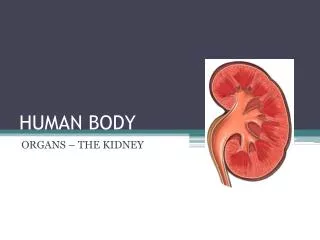
HUMAN BODY ORGANS – THE STOMACH
People can, and have lived without a stomach if it has been removed because of disease! • Inside the stomach there is hydrochloric acid which kills bacteria and provides acidic conditions to the enzyme protease. • Within 2-6 hours, all food is emptied into the small intestine. • When you blush, the lining of your stomach also turns red. • When we swallow our food, we also swallow air. This air causes most of the gas in your stomach and intestinal tract. The best way to get rid of this air is to burp! • An adults stomach can hold approximately 1.5 litres of material. • Your stomach produces a new layer of mucus every two weeks so it doesn’t digest itself.