Download
1 / 27
270 likes | 376 Vues
Today, we venture into the world of exploration while enhancing our language skills. We will learn about high-frequency words, amazing vocabulary, and predicates essential for sentence structure. Understanding characters and setting elevates our reading comprehension, while grammar lessons on predicates reveal what subjects do in sentences. We will also explore book parts, including tables of contents and glossaries, to help locate information. Join us for an engaging discussion to discover how exploration can enrich our understanding of stories and language.

E N D
Today we will learn about: • High-Frequency Words • Amazing Words • Vocabulary Words • Predicates • Parts of a Book • Character and Setting
Character and Setting • Characters are the people or animals in stories. • Authors describe their characters. They tell what the characters look like, how they act, and how they think. They also tell about the setting, or where the story takes place. • Knowing about characters and setting can help a reader better understand a story.
Grammar: Predicates Predicates tell what the subject of the sentence did. Every sentence must have a predicate. • We hiked up a mountain. • We hiked up a mountain. • The trail was hard. • The trail was hard. • It climbed up and up. • Itclimbed up and up.
Grammar: Predicates • My dad helped me a little. • My dad helped me a little. • The view at the top was great. • The view at the top was great. • I enjoyed that hike. • I enjoyed that hike. • My dad carried a backpack. • My dad carried a backpack. • He gave me a snack. • He gave me a snack.
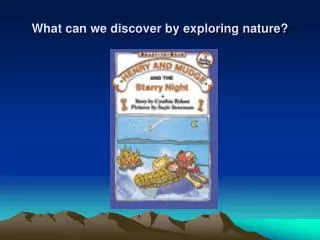
Grammar: Predicates Predicates tell what the subject of the sentence did. Every sentence must have a predicate. • Henry and Mudge went camping. • Henry and Mudge went camping. • The girl • The girl rides her bike. • The two boys • The two boys play catch.
Grammar: PredicatesPredicates tell what the subject of the sentence did. • One day I found a baby bird on the sidewalk. • One day I found a baby bird on the sidewalk. • I looked up and saw the bird’s nest in a tree. • I looked up and saw the bird’s nest in a tree. • The baby must have fallen out of the nest. • The baby must have fallen out of the nest.
Grammar: PredicatesPredicates tell what the subject of the sentence did. • Jim and Jen liked to ride their bikes. • Jim and Jen liked to ride their bikes. • They wanted to explore nature. • They wanted to explore nature. • They rode their bikes to the park. • They rode their bikes to the park.
Grammar: PredicatesPredicates tell what the subject of the sentence did. • Both of them looked for living things. • Both of them looked for living things. • They found trees, insects, and birds. • They found trees, insects, and birds.
Be a Good Speaker A good speaker does several things as he or she is in a classroom discussion. • Speak slowly and carefully. • Stand or sit up straight. • Raise your hand and ask to speak. • Speak loudly enough to be heard. • Take turns.
Parts of a Book If you need to locate information about something in a book, you can use parts of the book to help you. • Use the table of contents to find out what the book is about. It shows the chapters in the book and what page they start on. • The index lists topics in alphabetical order. • The glossary tells you the meanings of words in the book.
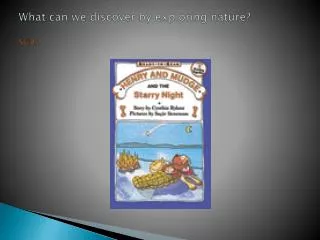
Wrap Up Your Week! Let’s Talk About Exploration
Review Games Vocabulary & Amazing Words: • Jigword Spelling Words: • Quia Games • Spelling City High Frequency Words: • Hot Potatoes (fill-in-the-blank)