Risk Stratification and Management of Acute Upper GI Bleeding: Blatchford Score and Transfusion Strategies
The British Society of Gastroenterology guidelines recommend the Blatchford Score for risk stratification in patients with acute upper gastrointestinal (GI) bleeding. A score of 0 indicates low risk, while a score of 1 or higher is high risk. Early endoscopy is vital in managing significant bleeding cases. This article reviews transfusion strategies, highlighting restrictive (threshold at 7 g/dL) versus liberal approaches (threshold at 9 g/dL), and their outcomes on mortality and morbidity. Understanding these guidelines is essential for effective treatment.

Risk Stratification and Management of Acute Upper GI Bleeding: Blatchford Score and Transfusion Strategies
E N D
Presentation Transcript
Upper GI Bleeds; what’s your threshold? HEFT EMCAST
Guidelines The British Society of Gastroenterology guidelines on Acute GI bleeding recommends the use of the Blatchford Score for Risk stratifying patients; Score of 0 equates to low risk Score of ≥1 equates to high risk
The Blatchford score Systolic blood pressure Urea Comrobidities/other markers Haemoglobin
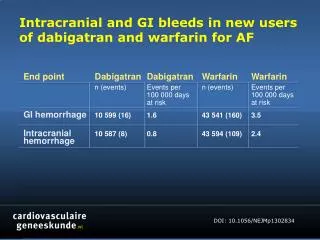
The paper Transfusion strategies for acute upper gastrointestinal bleeding N Engl J Med. 2013
Score • Blatchford score of 0 equates to low risk • Approx 25% of ED patients are low risk • British society for gastroenterology recommends; ‘for those with significant bleeding, early endoscopy plays a central role in management’ • SIGN guideline UGIB - recommends endoscopy within 24 hours of presentation
Inclusion criteria >18 years of age Experiencing either haematemesis (NG bloody aspirate), malaena or both as confirmed by hospital staff
Exclusion criteria Patients declining to undergo transfusion Masiveexsanguinating bleeding ACS Lower GI bleeding Rockallscore of 0 with an HB of > 12 g/dl And others…….
Intervention Restrictive strategy (RS) • Threshold for transfusion was 7 g per dl • Target of transfusion 7 – 9 g per dl Liberal-strategy (LS) • Threshold for transfusion 9 g per dl • Target range for transfusion of 9-11 g per dl
Outcomes Primary • mortality within 45 days Secondary • Further bleeding • In hospital complications
Results Primary outcome – mortality at 45 days • RS 5% • LS 9% p value 0.02
Results Secondary outcomes Rate of further bleeding (after adjustment for baseline risk factors) lower in the RS Hazard ratio 0.68 95 % CI 0.47-0.98 Complication rate RS 40% LS 48%
Referneces British Society of Gastroenterology guidelines on Acute GI bleeding Villanueva, C., Colomo, A., Bosch, A., Concepción, M., Hernandez-Gea, V., Aracil, C. et al. Transfusion strategies for acute upper gastrointestinal bleeding. N Engl J Med. 2013; 368: 11–21