High-Redshift Clumpy Disks and Bulges in Cosmological Simulations
170 likes | 295 Vues
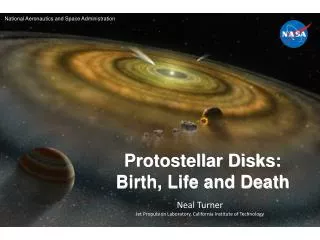
This work by Daniel Ceverino et al. explores the formation and evolution of high-redshift clumpy disks and bulges through cosmological simulations. Focusing on gas dynamics in galaxies at z=2.3, the study investigates the interplay between cold and hot gas phases and their gravitational instability leading to clump formation. It discusses star formation rates, stellar density, and clump migration over time scales of 400 Myr. The results aim to elucidate how large clumpy structures evolve into bulges, contributing to our understanding of galaxy evolution in the early universe.


High-Redshift Clumpy Disks and Bulges in Cosmological Simulations
E N D
Presentation Transcript
High-Redshift Clumpy Disks & Bulges in Cosmological Simulations Daniel Ceverino (HU) Potsdam, 2009 AvishaiDekel (HU) , ReemSari(HU), Tobias Goerdt(HU), Anatoly Klypin (NMSU)
From Disks to Bulges Rest-frame visible Rest-frame UV Genzel et al. 2008 Elmegreen et al. 2009
Cold Streams & Hot halosat z=2.3 2Rvir=140 kpc Mvir=4 1011 M Rvir Streams Disk Cold Gas (T<105.5 K) Hot Gas (T>105.5 K)
Gravitationally UnstableDisks Gas Surface Density Clumps !! log (M/pc2) 15 kpc
More Clumpy Galaxies Gas Surface Density 10 kpc Face-on view Edge-on view
Star Formation Maps in log(M/yr/kpc2) 10 kpc Face-on view Edge-on view
A Massive Bulge Stellar Surface Density 10 kpc Face-on view Edge-on view
More Clumpy Disks Gas Surface Density 10 kpc
SINSand Simulations SFR vs Stellar Mass Stellar Mass vs Max. Velocity Data (Red circles) from Forster Schreiber et al. 2009 Data (Red circles) from Cresci et al. 2009
Clump Formation 8 kpc
Clump Migration 8 kpc
Steady-State Regime z=1.9 z=1.6 z=1.3