Cellular Respiration Process and ATP Synthesis
160 likes | 181 Vues
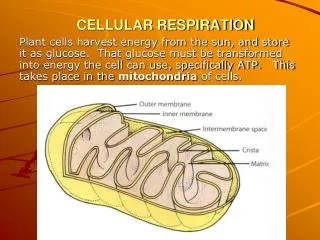
Learn about cellular respiration, ATP production, and the role of mitochondria. Explore glycolysis, Kreb’s Cycle, and Electron Transport Chain in converting glucose into energy.


Cellular Respiration Process and ATP Synthesis
E N D
Presentation Transcript
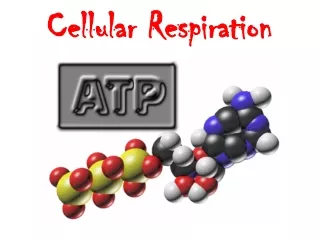
Adenosine Triphosphate • Universal energy carrier of the cell • Active transport • Reproduction • Movement • Muscle contractions • Protein synthesis • Hydrolysis of ATP ATP + H2O ADP + Pi + Energy • Energy used to produce heat & drive processes
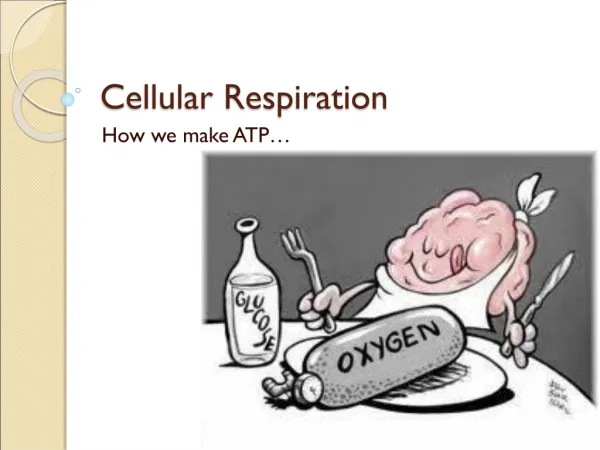
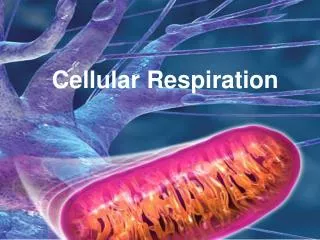
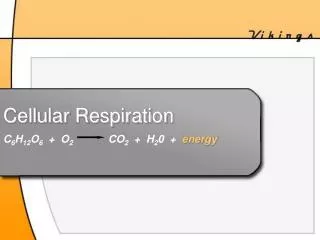
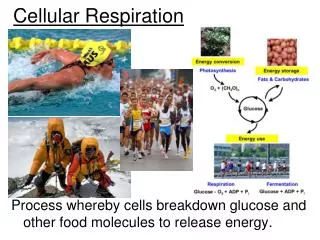
Cellular Respiration C6H12O6 + 6O2 6CO2 + 6H2O + 36 ATP • Primarily in mitochondria • Chemical energy in glucose converted to ATP • Necessary for both consumers (heterotrophs) and producers (autotrophs)
Glycolysis • Start: Glucose (6-carbon molecule) • 2ATP energizes the glucose • Phosphate breaks from ATP • Glucose (6C) broken into two Pyruvates (3C) • Finish: Two pyruvates 4 ATPs NADH (H carriers)
Kreb’s Cycle (Citric Acid Cycle) • Step 1: Pyruvate broken down • Pyruvate (3C) is split into Acetic Acid (2C) and CO2 • More NADH created
Step 2: Coenzyme A • Acetic Acid (2C) combines with coenzyme A to create Acetyl-CoA (2C)
Step 3: Citric Acid formed • Acetyl-CoA (2C) binds with 4C molecule (from previous Kreb’s cycle) • Citric Acid (6C) created
Step 4: Citric Acid broken down • Citric Acid (6C) broken into 5C molecule • CO2 waste created • More NADH created
Step 5: 5C molecule broken down • 5C molecule broken down into 4C molecule • CO2 waste created • More NADH created • ATP created
Step 6: 4C molecule rearranged • Enzymes rearrange the 4C molecule • More NADH, FADH2 created
Kreb’s Summary • 2 Pyruvate molecules (from glycolysis) create: • 6CO2, 2ATP, 8NADH, 2FADH2
Electron Transport Chain • Step 1: Electrons removed • Electrons removed from NADH and FADH2
Step 2: Hydrogen Ions Transported • Proteins pump H+ ions across inner membrane of mitochondria • H+ ions accumulate
Step 3: ATP produced • H+ ions diffuse through protein channels to bind ADP + Pi • 34 ATP created
Step 4: Water created • Oxygen binds with H+ ions to create 6H2O as a waste