Download
1 / 2
20 likes | 36 Vues
18:13<br>Cavities 101 occurs when the hard, protective layer of your teeth called tooth enamel gets worn out. The symptoms of cavities include toothache, pain while eating, visible pits or holes in teeth, and much more. Contact your dentist on time for the treatment of cavities.

E N D
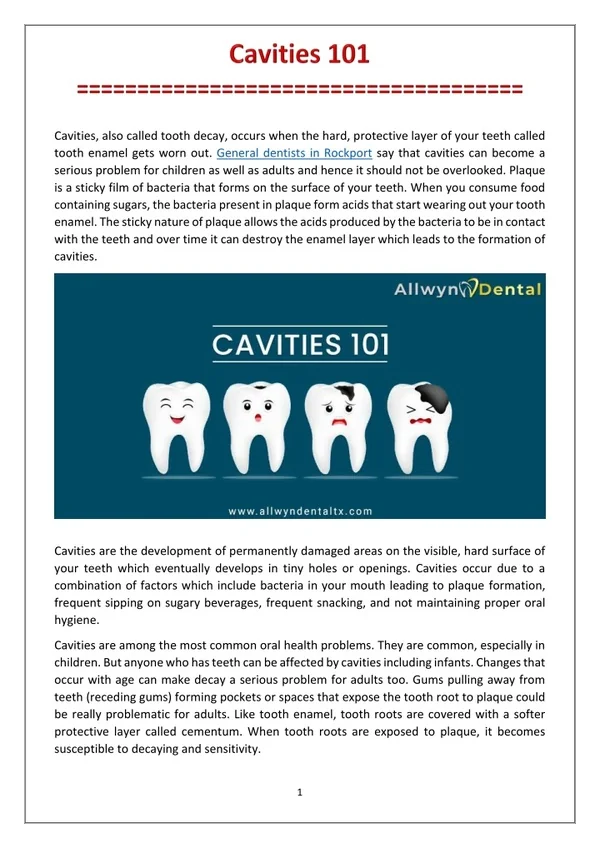
Cavities, also called tooth decay, occurs when the hard, protective layer of your teeth called tooth enamel gets worn out. General dentists in Rockport say that cavities can become a serious problem for children as well as adults and hence it should not be overlooked. Plaque is a sticky film of bacteria that forms on the surface of your teeth. When you consume food containing sugars, the bacteria present in plaque form acids that start wearing out your tooth enamel. The sticky nature of plaque allows the acids produced by the bacteria to be in contact with the teeth and over time it can destroy the enamel layer which leads to the formation of cavities. Cavities are the development of permanently damaged areas on the visible, hard surface of your teeth which eventually develops in tiny holes or openings. Cavities occur due to a combination of factors which include bacteria in your mouth leading to plaque formation, frequent sipping on sugary beverages, frequent snacking, and not maintaining proper oral hygiene. Cavities are among the most common oral health problems. They are common, especially in children. But anyone who has teeth can be affected by cavities including infants. Changes that occur with age can make decay a serious problem for adults too. Gums pulling away from teeth (receding gums) forming pockets or spaces that expose the tooth root to plaque could be really problematic for adults. Like tooth enamel, tooth roots are covered with a softer protective layer called cementum. When tooth roots are exposed to plaque, it becomes susceptible to decaying and sensitivity. 1
Decay around the margin or edges of fillings can be a problem for adults. Many adults lack fluoride benefits and preventive dental care while they were growing up which might lead to them having a several dental fillings. Over time, these fillings could weaken and tend to leak or fracture. Bacteria may accumulate in these cracks or crevices leading to further decay If not paid attention to, cavities can affect deeper layers of your tooth leading to problems like toothache, tooth sensitivity, infection, and even tooth loss. SYMPTOMS The signs of decay or cavities may vary depending on the location and extent of the damage. In the beginning phase of a cavity, you may not experience any symptoms. But as decay becomes larger, you may start seeing symptoms and signs such as: Toothache or spontaneous tooth pain occurring without any apparent cause Mild or sharp pain when eating something hot, cold, or sweet (tooth sensitivity) Visible pits or holes in teeth Brown or black staining on the tooth surface Pain while eating Prevention According to general dentists in Rockport, TX, you could prevent tooth decay through these basic oral care habits: Brush properly twice a day with a fluoride-containing toothpaste Floss daily to thoroughly clean between your teeth Eat healthy, balanced, and nutritious meals daily. Limit sugar intake and frequent snacking. Pay a visit to your dentist regularly for oral examination and professional cleanings. Ask your dentist about supplemental fluoride and the application of preventive dental sealants on the back of your teeth to prevent them from decay. Follow us on: Facebook |Twitter |Instagram |LinkedIn |Website 2