Circulatory System
Explore the intricate parts of the circulatory system, focusing on the heart's structure, including vital components like the left and right atrium, ventricles, valves, and great vessels. Learn how oxygen-rich and oxygen-poor blood circulates through the body, and the role of hemoglobin and plasma in transporting nutrients. This section also covers health tips for maintaining heart health, the significance of pulse rate, and true or false statements about blood vessels and circulation.

Circulatory System
E N D
Presentation Transcript
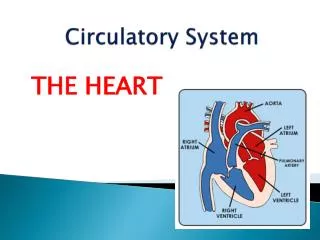
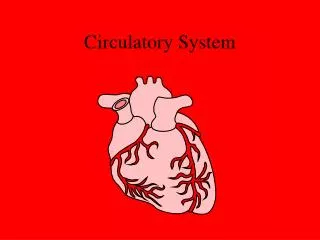
7. Heart Parts Pulmonary Valve Pulmonary Artery Aorta Aortic Valve Left Atrium Right Atrium Mitral Valve Left ventricle Right Ventricle Tricuspid Valve O NO NO -No Oxygen Septum O - Oxygen
Part 2: Matching B. D. E. A. C.
True or False • 13. Capillaries is where oxygen, nutrients and waste are exchanged • 14. Hemoglobin carries the oxygen for the red blood cells • 15. Plasma is 95% water • 16. There are miles and miles of blood vessels in your body. • 17. Your lungs give your body oxygen • 18. Blood enters the heart at either the right or left atrium True True True True True True
Multiple Choice • 19. Yellowish liquid that carries oxygen, nutrients and hormones is called: a. oxygen b. plasma c. red blood cell d. aorta • 20. Circulation is a. daily delivery of magazines b.movement of the blood in body c. heart beats per minute d. none of these • 21. Blood travels around the entire body in… a. minutes b. hours c. days d. weeks
Multiple Choice • 22. The heart has how many chambers: a. five b. six c. four d. none • 23. The aorta is on the ______ of the heart: a. bottom b. top • 24. Your pulse increases with: a. exercise b. rest c. sleep
Short Answer • 25. List four ways to keep your heart healthy • 26. Find your resting pulse and write it down. • 27. Explain what exercise does to your pulse.