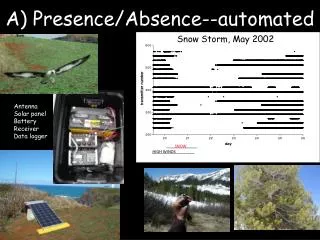
A) Presence/Absence--automated
60 likes | 187 Vues
This document examines the effects of the May 2002 snow storm on various telemetry and localization techniques used in wildlife studies, particularly focusing on CORT implants in sparrows and Weddell seals in the Antarctic. We explore automated and manual localization methods, the significance of antenna and telemetry technology, and the challenges posed by harsh weather conditions. The integration of satellite telemetry and biotelemetry in tracking animal movements and physiological data is discussed, highlighting the trade-offs between cost and data richness.


A) Presence/Absence--automated
E N D
Presentation Transcript
Snow Storm, May 2002 SNOW HIGH WINDS A) Presence/Absence--automated Antenna Solar panel Battery Receiver Data logger
900 700 % change in activity range 500 300 100 0 -100 CORT implant blank implant treatment B) Manual Localization Example: CORT in sparrows
localization C) Multi-tower localization--automated overview antenna Heart rate
Biotelemetry Weddell Seal Work in the Antarctic
Telemetry • Radiotelemetry: • transmitter size can be quite small (<1 g) • Transmission distance limited by geography • Relatively inexpensive ($150 per transmitter) • Can transmit location, movement, some physiological data • Satellite Telemetry (GPS): • Larger transmitters (>30 g) • No limitation on transmission distance • Extraordinarily expensive ($10,000 per trans) • Can transmit location, movement, or physiological data • Biotelemetry • Can record heart rate, depth, movement, speed • Usually the unit on the animal must be retrieved to download the data