Medieval Europe
Medieval Europe. Merovingian and Carolingian Family Tree. Merovingians – Clovis Carolingians Charles Martel (“the Hammer”) Pippin the Short Carloman Charles the Great (Charlemagne) Louis the Pious Lothair Louis the German Charles the Bald Charles the Fat. economic. Manorialism

Medieval Europe
E N D
Presentation Transcript
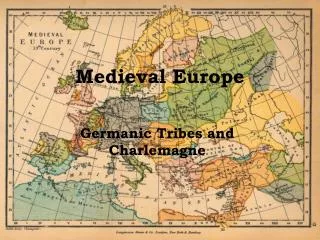
Merovingian and Carolingian Family Tree • Merovingians – Clovis • Carolingians • Charles Martel (“the Hammer”) • Pippin the Short • Carloman • Charles the Great (Charlemagne) • Louis the Pious • Lothair • Louis the German • Charles the Bald • Charles the Fat
economic • Manorialism • System of economic and political relations between landlords and their peasant laborers • (Feudalism is social structure) • Taille • A tax levied upon the people to be paid to the king • Corvee • Labor owed by a serf to his landowner • Three field system • System of crop rotation. Prior to this there was a TWO field system. Now only one their of the fields lie fallow
religious • Roman church/Pope • Clovis and the Franks • Monastic orders-Benedictine • Monastic schools
Carolingian • Charles Martel • Charlemagne • 800AD • Palace schools • Empire • Treaty of Verdun
814CE-Charlemagne’s death • No universal language • Impact • HRE • Italy =city-states
New Technology • Horse Collar (Harness) • Stirrups • 3 field system • Plow • Moldboard
Trade • New crops • Durum • Alfalfa Towns appear Carnivals University of Paris Learning reintroduced
Feudalism • Charlemagne’s Role • Land = wealth • Fief=land grant • Lord/vassal • Subinfeudation • Taille/corvee • Vassals with horses=knights • System of combined responsibility • Christianity frowned on trade for profit
“Business is in itself an evil, for it turns men from seeking true rest, which is in God” St Augustine
Feudal monarchy • King of France (Capetain family) • France power evolved to point that the king taxed the church • Norman dynasty in England was abrupt • 1066 • Sheriffs to help administer • Royal courts • Centralizes power • Why would monarchs prefer middle class for bureaucratic positions?
Limitations on monarchs • Religious • Magna Carta 1215 AD • Parliament (1265) House of Lords/House of Commons • Parliaments on the continent-3 estates • Estates-general
Was limited monarchy a democracy? • Born into an estate • representation
CRUSADES • Holy wars-why? • Arabs captured Jerusalem in 638 but allowed pilgrimages, allowed Jews to return • Battle of Manzikert • Pope’s opportunity to unite Europe against a common enemy • 1099-Christians captured and killed all Muslim residents, turned Dome into a church • Turned al-Aqsa mosque into residence
Effect of advancement • Crusades • Urban II (1095) • Military outlet, religious, salvation • Germans to the east • Reconquista • 11th c • 1492: Granada
Cont’d • Muslim leadership divided until Saladin • Recaptured Jerusalem 1187 • 3rd Crusade Richard “the lionhearted” captured Acre and massacred men, women and children • 1291 Acre recaptured
Feudal allegiance, responsibility? • 100 Years war: France vs. England
What is the impact of this contact? • New products • New architecture • Revival of learning • Italy gains significance
Growth of power • Ferdinand and Isabella • Vikings to Iceland • Spanish and Italians into the Mediterranean
Church reform • Roman Catholic Church showed signs of corruption • New monastic orders • Gregory VII • Celibacy • Investiture • Heresy • Church and state separation
What drove intellectualism? • Debates • Universities • Desire to combine science and philosophy with faith • crusades • Thomas Aquinas: scholasticism • Summa Theologica
Aristolean-Ptolemaic system • Geocentric • No knowledge of gravity • How did this support the church?
Roger Bacon • Inspired by the Muslims • Researched optics • Eyeglasses would be the by product
Religion in the Middle Ages • Popular expression • The rise of cities and • Veneration of Mary: merciful side of Christianity vs the sternness of God • New hopes for salvation • Worship of saints = Intermediaries • Pagan combined with Christian (Chaucer) • Art and architecture to glorify God
Painting • On wooden panels • Stiff stylized figures • Birth, life and suffering of Christ • Takes on realistic human form
Cathedrals • Cruciform • Relics-reliquary • Ambulatory • Pilgrimages: Santiago d’Compostela, Rome, Jerusalem • trade
Societal changes • Technology impacts production • Higher taxes • Banking – letters of credit, partnerships • More widespread use of money • Christian thinkers criticized money and prices and investment
Trade • Products • Luxury – Asian imports and Africa • Spices - Meats • West produced cloth for trade • Timber and grain from N Europe exchanged for metal and cloth from Low Countries and Italy • England traded raw wool for finished cloth
Hanseatic League – 13th – 17th Century • N German towns • Scandinavia • Investment for profits-risk vs. profit • Joint stock companies • Best example of investor=Jacques Coeur • Weak govt. led to more freedom in trade • Towns lead to middle class (later allies to monarchs)
Merchants developed laws and courts • Guilds: same trade, “womb to tomb” • Guilds regulated trade and merchants • Ignored improvements • Cottage industry
Women in Medieval Europe • Christian equality of souls • Mary veneration counterbalanced misogyny • Nunneries • Women were less segregated religiously than in Islam • All in all female status declined
Decline of Postclassical (Medieval) Europe • 1337-1453: 100 Yrs. War • Crossbow, gunpowder, cannon, castle • Joan of Arc • Food supply down • Plagues • Chivalry and pageantry
Church • Babylonian Captivity (Avignon) • Conciliarism – consensus vs pope • Jan Hus • Church denied rationalism – turned people away • Humanism
Medieval Europe • Clovis • Consolidated Frankish Kingdoms • Converted (493) • Unified “converted” people • Increased stability • Lack of literacy • Only monks literate • Practice of land divided amongst sons • He had 4 and did this • No longer as powerful • Charles Martel • Battle of Poitiers/Tours • 732 pushed out Muslims • Pippin the Short • Elected as king and solidified position in 754 by entering in alliance with Pope (Donation of Constantine) • Becomes a line of “emperors” • Carloman and Charles • Carloman doesn’t want to inherit and becomes a monk • Charles becomes Charlemagne • Charlemagne – 800 becomes “emperor” • Palace schools – educate men. Mainly it prepared them for life as a clergymen • Empire powerful because of backing • Charlemagne dies • Louis the Pious in power • When he dies, Lothair is to take over by there is fighting • Brothers, Charles the Balk and Louis the German want land • Treaty of Verdun • Lothair asks for peace • Land divided • Charles the Fat 40 years later reunified most of the empire
economic • Manorialism • System of economic and political relations between landlords and their peasant laborers • Taille • At tax levied upon the people to be paid to the king • Corvee • Labor owed by a serf to his landowner • Three field system • System of crop rotation • TWO-FIELD system used prior to this • ALLOWS FOR only 1/3 of filed to be FALLOW
religious • Roman church/Pope • At this time (c. 600), Europe is in flux • No solid organizing force in Europe • Catholic Church closest to unifying force • Big disagreement by Byzantine west and east • The pope is attempting to spread the religion all over • North to N. Germany and Scandinavia • Conversions become an advantage • Missionaries • Clovis and the Franks • Clovis, a warrior chieftain, converted and was recognized as the leader of the Franks (496 CE) • Monastic orders-Benedictine • Benedictine order strengthens the role of the church in western Europe • Rules developed Benedict of Nursia • Monastic schools • Promote • Education, literacy, agricultural skills • Improved society