Download
1 / 8
130 likes | 293 Vues
Soft tissues encompass layers that protect the body's underlying structures, including skin, muscles, and fatty tissue. This guide discusses the various types of soft tissue injuries, such as burns (first, second, and third degree), bruises, and open wounds like abrasions and lacerations. It emphasizes the importance of proper care, including washing minor wounds, controlling bleeding, and preventing infection. Learn effective methods such as applying cold, using dressings, and when to seek hospital care, ensuring safety and quick recovery from soft tissue injuries.

E N D
What are Soft Tissues? • Soft tissues are the layers that protect underlying body structures. • Types of soft tissues: • Skin • Epidermis • Dermis • Hypodermis • Fatty Tissue • Muscle
Types of Soft Tissue Injuries • Burns • First Degree (Affect only outer layer of skin). • Second and Third Degree (Damage all layers of skin). • Closed Wounds • Bruises and Contusions • Open Wound • Abrasion • Laceration • Avulsion • Puncture
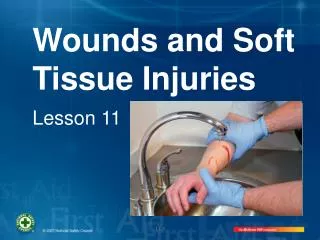
Caring for a Soft Tissue Injury • Preventing Infection • For minor wounds wash with soap and water. • Peroxide and Iodine • Immunization • Control Bleeding • http://www.instructorscorner.org/media/videos/k31.html • Dressings • Occlusive Dressing • Bandages • Pressure • Adhesive Compress • Roller • Elastic Roller • Triangular • http://www.instructorscorner.org/media/videos/k32.html
Caring for Wounds • Care for a Closed Wound • Elevate injury. • Apply cold. • Care for a Open Wound • Put on gloves. • Control bleeding. • Apply a dressing and bandage. • Get victim to hospital. • Prevent infection. • Minimize shock by keeping the victim from getting chilled or overheated. • Get the victim to a hospital. • http://www.instructorscorner.org/media/videos/k29.html • http://www.instructorscorner.org/media/videos/k28.html
Caring for a Burn • Burns can be very dangerous • Heat, chemicals and electricity will cause burns. • Cool the burned are to stop the burning. • Cover the burned area. • Get the victim to a hospital. http://www.instructorscorner.org/media/videos/k30.html
Special Situations • Chemical Burns • Remove the chemicals from the body ASAP. • Call EMS • Electrical Burns • The human body is a good conductor of electricity. • Electricity can make the heart and respiration stop. • Get victim to a hospital.
Summary • Caring for Wounds • Wear gloves. • Control Bleeding and minimize risk of infection. • Get victim to hospital. • Caring for Burns • Heat, chemicals and electricity will cause burns. • Wear gloves, provide initial care, get victim to a hospital.