Download
1 / 9
90 likes | 223 Vues
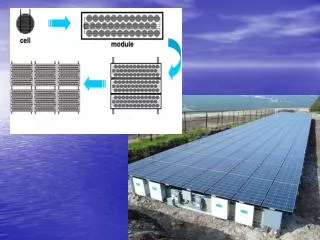
An active photovoltaic (PV) system consists of three basic parts: the collector/harvester, storage, and distribution. More complex configurations may include inverters and charge controllers. PV modules can power appliances directly, charge batteries, or feed energy back to the grid. System size depends on electricity consumption, available space, and economic factors. A typical residential solar setup costs about $8,000 to $12,000 per kWp installed. Investing in solar significantly reduces harmful emissions, making it a vital choice for sustainable living.

E N D
Components Three Basic Parts to an Active PV System: • Collector/Harvestor • Storage • Distribution More complex systems need • Inverter • Charge Controller/Voltage Regulator • Batteries
System Design Types of Systems: -DC Stand Alone -Basic AC/DC Systems -Utility Inter-tied System PV modules are used in three basic ways: • They can power appliances directly eg. water pumps or fans • Charge batteries for storage • Feed energy back to the grid
How Big Should My System Be? System size dependent on: • Electricity consumed • Economics • Orientation of the system • Available Space
Average Household Energy Usage • Average Household Energy Consumption: • 830 kWh/mo • Producing 1,000 kWh of solar electricity reduces emissions by: • 8 lbs Sulfur Dioxide • 5 lbs Nitrogen Oxide • 1,400 lbs Carbon Dioxide
Pricing • Generally, the solar module represents 40-50% of the total installed cost • In 2003, a residential solar system costs about $8,000-$12,000 per kWp installed • A complete "Solar System" includes all the other components required to create a functioning system, whether it be to feed energy in to the grid or to be used in (stand alone) off grid applications. • Systems costs vary when the amount of sunlight expected is taken into account yearly • In a California home, it would cost around $16-$20,000 to satisfy around 25% of that homes energy needs.