Overview of Datacenter Architecture and Challenges in Google and Microsoft Environments
This document provides an in-depth analysis of datacenter architecture, focusing on rack organization, server specifications, and the efficiency of memory and disk usage. It highlights various configurations such as DRAM and disk storage capacities across different scales, from single machines to entire datacenter clusters. The notes also cover typical failures encountered in major datacenters, including overheating, power distribution unit (PDU) failures, and network issues, emphasizing the frequency and impact of these challenges on operational performance.

Overview of Datacenter Architecture and Challenges in Google and Microsoft Environments
E N D
Presentation Transcript
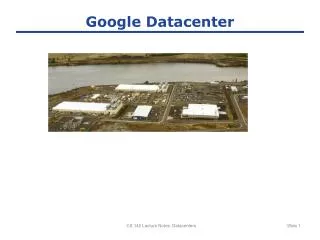
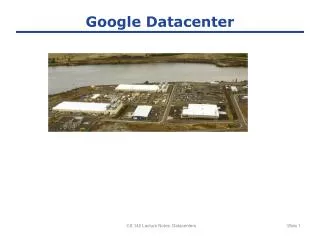
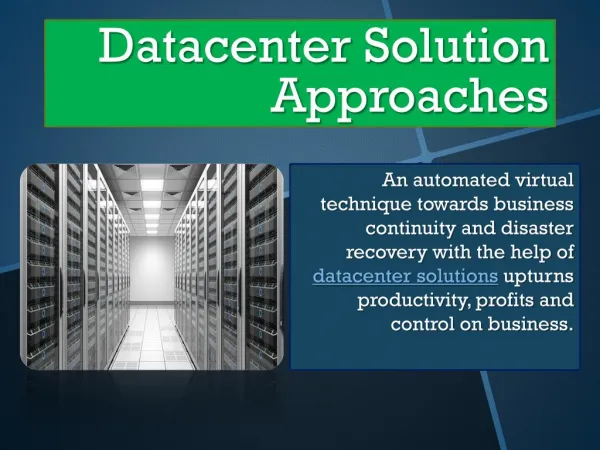
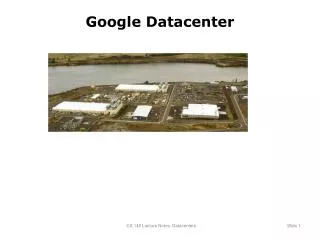
Google Datacenter CS 142 Lecture Notes: Datacenters
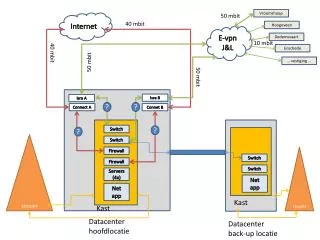
Rack: 50 machines DRAM: 200-800GB @ 300 µs Disk: 100TB @ 10ms Single server: 4-8 cores DRAM: 4-16GB @ 100ns Disk: 2 TB @10ms Datacenter Organization Row/cluster: • 30+ racks • DRAM: 6-24TB @ 500 µs • Disk: 3 PB @ 10ms CS 142 Lecture Notes: Datacenters
Sun Containers CS 142 Lecture Notes: Datacenters
Sun Containers, cont'd CS 142 Lecture Notes: Datacenters
Google Containers CS 142 Lecture Notes: Datacenters
Microsoft Containers CS 142 Lecture Notes: Datacenters
Microsoft Containers, cont'd CS 142 Lecture Notes: Datacenters
Failures are Frequent Typical first year for a new cluster (Jeff Dean, Google): • ~0.5 overheating (power down most machines in <5 mins, ~1-2 days to recover) • ~1 PDU failure (~500-1000 machines suddenly disappear, ~6 hours to come back) • ~1 rack-move (plenty of warning, ~500-1000 machines powered down, ~6 hours) • ~1 network rewiring (rolling ~5% of machines down over 2-day span) • ~20 rack failures (40-80 machines instantly disappear, 1-6 hours to get back) • ~5 racks go wonky (40-80 machines see 50% packet loss) • ~8 network maintenances (4 might cause ~30-minute random connectivity losses) • ~12 router reloads (takes out DNS and external vips for a couple minutes) • ~3 router failures (have to immediately pull traffic for an hour) • ~dozens of minor 30-second blips for DNS • ~1000 individual machine failures • ~thousands of hard drive failures • Slow disks, bad memory, misconfigured machines, flaky machines, etc. • Long distance links: wild dogs, sharks, dead horses, drunken hunters, etc. CS 142 Lecture Notes: Datacenters
How Many Datacenters? • 1-10 datacenter servers/human? • 100,000 servers/datacenter • 80-90% of general-purpose computing in datacenters? RAMCloud