
The Importance of Studying the Ocean: Exploring Marine Science and Its Branches
E N D
Presentation Transcript
Marine Science: • Is the study of living organisms and their relationship to the chemical, physical and geological nature of the ocean. • Involves: • Physical science • Life science • Earth and space science
Marine science consists two branches • Oceanography & Marine Biology
Marine Biology • Study of living organisms in the ocean and the environments in which they live • marine biology student • boston marine biologist
Oceanography is the study of the physical properties of the ocean. • Tides, waves, currents, • temperature, salinity, pressure • Ocean floor geology • Water chemistry • NO FEAR WAVES
The four main branches of oceanography: • Biological oceanography (Marine biology) • Chemical oceanography • Geological oceanography • Physical oceanography • Surf Much?
Branches of Oceanography • Biological oceanography (also called marine biology) studies the diversity of life in the ocean and the ocean’s role as their habitat. (food webs, ecology)
Chemical oceanography studies the chemistry of seawater (salinity)
Geological oceanography concerns itself with the geology of the ocean (seafloor) • kids in caves Bahamas • CAVE DIVING
Physical oceanography is the study of the physics within the marine environment (waves) • Crazy wave
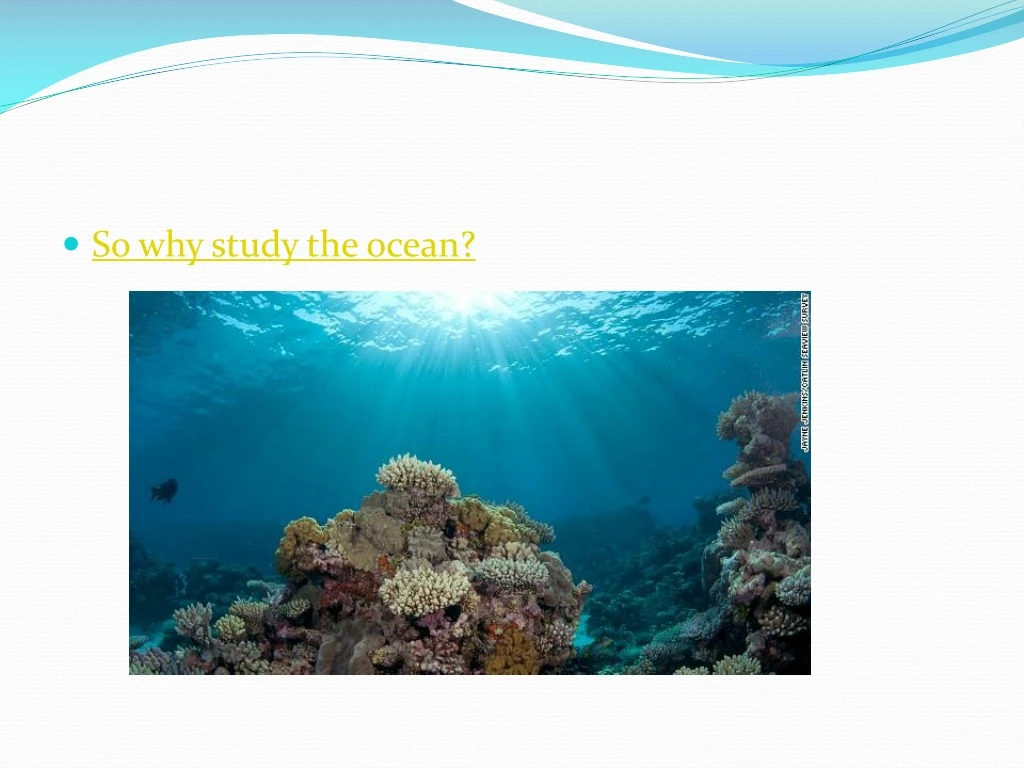
REVIEW: So why study Marine Science • Biodiversity • Natural Resources • Transportation • Climate and Weather • Economy & 70% of our planet is covered by oceans 90% of world’s population lives within 50 miles of the shore Beauty