Download
1 / 4
40 likes | 166 Vues
This article explores the genetics of hermaphrodite and male crosses, focusing on genotype and phenotype ratios of progeny derived from various mating techniques. We discuss how X-complementation works with mutations in different and the same dpy genes, and address the significance of identifying Dpy males even when mutations arise from the same gene. Additionally, we provide essential symbols for genetic crosses, enhancing comprehension of the gametes involved and the resultant progeny in these experimental scenarios.

E N D
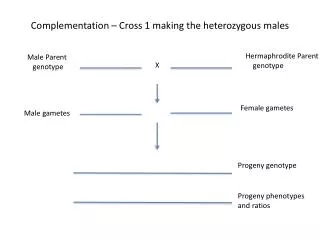
Hermaphrodite Parent genotype Male Parent genotype X Complementation – Cross 1 making the heterozygous males Female gametes Male gametes Progeny genotype Progeny phenotypes and ratios
Hermaphrodite Parent genotype Male Parent genotype X Complementation – mutations in different dpy genes Female gametes Male gametes Progeny genotype Progeny phenotypes and ratios WHY might there be some Dpy hermaphrodites?
Hermaphrodite Parent genotype Male Parent genotype X Complementation – mutations in the same dpy gene Female gametes Male gametes Progeny genotype Progeny phenotypes and ratios Why are we looking for Dpy males when the mutations are in the same gene?
Symbols to Know for Crosses • a//a – a is the allele and // represents the chromatids – there are two for a diploid organism – sometimes written as / • a b//a b – two different genes on the same chromosome • a//a ; b//b – two different genes on different chromosomes • X – symbolizes mating between two different individuals • X - symbolizes a self cross – when the hermaphrodite worms fertilize their own eggs