Download
1 / 21
210 likes | 316 Vues
The Industrial Revolution introduced groundbreaking inventions such as the steam engine, the light bulb, and the Bessemer steel process, transforming industries and society. Figures like Edwin Drake, Thomas Edison, and Henry Ford revolutionized production methods, paving the way for mass manufacturing. While railroads facilitated urban expansion and created new job opportunities, they also revealed the struggles faced by workers, including poor wages and hazardous conditions. Innovations led to increased productivity and affordability of goods yet fostered monopolies, labor unions, and significant social changes.

E N D
Inventions • Edwin Drake: proved that oil could be extracted from the ground through a well, used steam engine to drill hole • Bessemer Steel Process: easier and cheaper way to remove impurities for making steel, made possible mass production of steel • Uses for steel: railroads, barbed wire, farm machinery
Inventions • Thomas Edison: light bulb, phonograph • Samuel Morse: telegraph • George Westinghouse: airbrakes, electricity safer and less expensive • Fredrick Taylor: published The Principles of Scientific Management • Henry Ford: assembly line
Inventions • Christopher Soles: typewriter • Alexander Graham Bell: telephone
Benefits of Electricity • Travel cheap- outward expansion of cities • Manufactures could locate businesses where ever they chose
Benefits of Inventions • Women: new jobs • Workers: realized they were easily replaceable • Increased productivity = cheaper goods • Employ fewer people • Improved standards of living
Central Pacific Railroads Eastward out of Sacramento Employed Chinese immigrants Pd $35 per month; provide own meals Union Pacific Railroads Toward West Employed Irish immigrants b/c white paid more ($40-$60 per month) Railroads
Railroads • Formation of new cities • Began to specialize in one product • George Pullman: built factory for manufacturing sleepers, built a town for employers to live in, under company’s control; hoped it would ensure a positive workplace; refused to lower rent after cutting wages- led to violent strike
Credit Mobilier • Formed by Union Pacific Railroad • Stockholders gave company contract to lay track 2-3 times the actual cost • Pocketed the profits • Donated shares to representatives • Congressional investigation found that investors had taken up $23 million in stocks • Tarnished reputation of Republican party
Railroads • Corruption: charging different people different prices • Granger Laws: establish maximum freight and passenger rates, prohibit discrimination • Munn v Illinois: states won right to regulate railroads for the benefits of farmers and consumers and fed govt right to regulate private industry to serve the public interest • Interstate Commerce Act: reestablished the right of the federal govt to supervise railroad activities and established a five member panel (ICC) • Panic of 1893: railroads having financial problems, taken over by banks, Morgan and Vanderbilt began to seize RR
Big Business • Corporations: company that is recognized by law as existing independently from its owners; people buy stock; most they could lose is amount of stock • Capitalism: economic system in which means of production are privately owned rather than being controlled by govt
Andrew Carnegie • Founded 1st steel plants to use Bessemer process in Pittsburg • Make better products, cheaper • Cut prices to drive competitors out of business • People should be free to make as much money as possible as long as they give it away
Business Strategies • Vertical integration: buying out suppliers; controlling each step • Horizontal integration: buy out competition; monopolize industry • Laissez-faire: (allow to do) market place should not be regulated • Social Darwinism: “natural selection” survival of the fittest; govt should not intervene in business • Monopoly: dominating a particular industry (Rockefeller’s Standard Oil); complete control over industry’s production, wages paid, quality, prices charged
John D. Rockefeller • Used trusts: set of companies that are managed by a small group known as trustees. A method of consolidating competing companies in which participants turn their stock over to a board of trustees • Owned Standard Oil Co.; controlled 90% of refining business • Pd employers low wage; sold oil at extremely low rates; once control of market raised prices
Robber Barons & Captains of Industry • Robber Barons: business leaders who built their fortunes by stealing from the public; drained country of natural resources, employees underpaid, poor working conditions • Captains of Industry: served the nation in a positive way; increasing supply of goods
Sherman Anti-trust Act illegal to form a trust that interfered with free trade between states or with other countries Didn’t define what a trust was, hard to prosecute companies
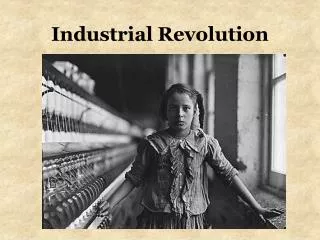
Workers • Hazardous tasks, monotony, no vaca, sick leave, unemployment compensation • Wages so low everyone in family had to work • Child labor: didn’t have to pay as much, most dangerous working conditions • Living conditions: lived in slums, tenements
Labor Unions • Groups of workers joined together to improve conditions (higher wages, shorter hours, better working conditions) • Power from threat of strikes • National Labor Union: passage of 8 hour workday • Noble Order of the Knights of Labor: open to all, used arbitration instead of strikes • American Federation of Labor: skilled workers, Samuel Gompers president, collective bargaining, used strikes, won higher wages, shorter weeks • American Railway Union: Eugene Debs founder
Socialism • Believed rich getting richer, poor getting poorer turned to socialism • Economic and political system based on govt control of business and property and equal distribution of wealth • Communism: extreme form, classless society • Industrial Workers of the World: formed by unskilled workers
Violent Strikes • Great Strike of 1877: B&O Railroad employees striking after 2nd wage cut in 1 month, trains didn’t run for a week, Hayes called in federal troops to stop strike • Haymarket Affair: gathered to protest police brutality; rain lead to crowd leaving; police arrived; bomb thrown @ them; 7 police officers & several workers died b/c of chaos
Violent Strikes • Homestead Strike: Pres of co. planned on cutting wages, led to strike, hired armed guards to protect factory so they could hire scabs (strikebreakers) killed 3 det. 6 workers, Penn National Guard arrived • Pullman Strike: during Depression laid off 3000 employees, cut wages of rest, didn’t cut cost of living, strike b/c failed to restore wages, decrease rent; hired scabs, turned violent, Cleveland sent in troops, Pullman fired most of strikers, rest blacklisted