The Path to Confederation: The Charlottetown and Quebec Conferences of 1864
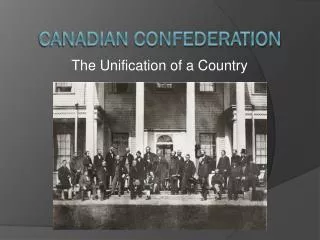
In September 1864, representatives from New Brunswick, Nova Scotia, and Prince Edward Island convened at the Charlottetown Conference to discuss a potential union of the British North American colonies. Canadian leaders like George Brown, John A. Macdonald, and George-Etienne Cartier participated, eventually leading to the Quebec Conference where the Seventy-Two Resolutions were drafted. Despite opposition from figures such as Joseph Howe and A.A. Dorion, by 1866, the majority of colonies, except Newfoundland and PEI, had approved the union. This culminated in the British North America Act, creating the Dominion of Canada on July 1, 1867.

The Path to Confederation: The Charlottetown and Quebec Conferences of 1864
E N D
Presentation Transcript
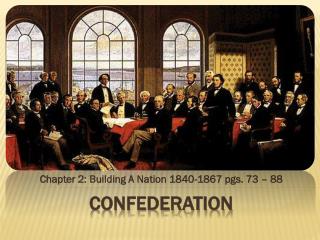
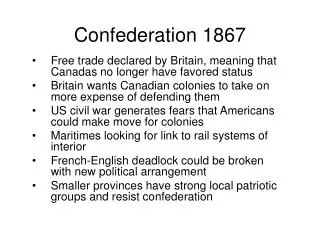
Charlottetown Conference, September 1864 N.B, N.S., and P.E.I. get together to discuss a union Canadian politicians ask to sit in, George Brown, John A. Macdonald, George-Etienne Cartier, Alexander Galt, D’Arcy McGee show up Gave up on maritime union, agreed to meet again to discuss union of all colonies
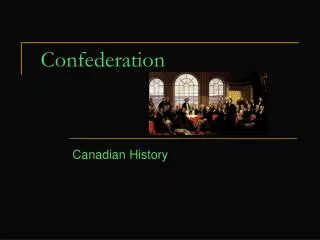
Quebec Conference, October 1864 Delegates from all 6 eastern BNA colonies meet in Quebec Drew up Seventy-two Resolutions, proposals for the union of colonies Delegates took resolutions back to their colonies to be debated
Many opponents to Confederation – Joseph Howe of N.S., A. A. Dorion of Canada East By 1866 Canada, Nova Scotia, and New Brunswick had approved union PEI – railroad wouldn’t benefit them, so few people representatives would be lost in Parliament, no common border with U.S., not worried about defense
Newfoundland – strongly connected to Britain (oldest colony, telegraph cable connected, far from Canada)
London Conference, Winter 1866-67 Representatives of colonies went to England to propose confederation
British Parliament approved, would reduce their responsibilities Some opponents went as well, unable to persuade Parliament against it
British North America Act • Introduced into British Parliament spring 1867, created the Dominion of Canada • Came into effect July 1, 1867 • Modified Seventy-two Resolutions became Canadian Constitution • Foreign policy, high courts still under British, monarch still head of state