The Virginia Company and the Founding of Jamestown: Struggles and Successes in Early Settlement
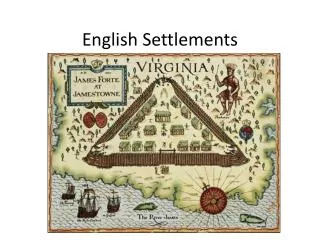
In 1606, the Virginia Company received a charter from King James I to establish settlements in North America. The Jamestown settlement, founded in April 1607, faced numerous hardships, including poor farmland, disease, and a lack of labor. Captain John Smith's leadership helped the colony survive, but struggles continued after his departure. The introduction of tobacco farming by John Rolfe in 1614 began the colony’s economic recovery. By 1619, land ownership expanded, and the first representative government was established, laying the groundwork for future governance.

The Virginia Company and the Founding of Jamestown: Struggles and Successes in Early Settlement
E N D
Presentation Transcript
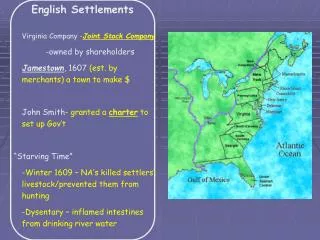
The Virginia Company • 1606 The Virginia Company receives a Charter from King James Ifor land in North America • Charter – right to organize settlements • Joint-Stock Company – investors buy share or stock in a company in exchange for future profits
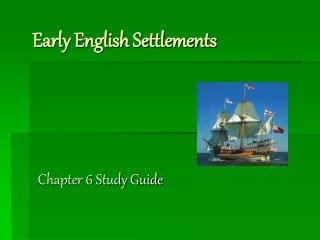
3-1 Jamestown • April 1607 ships enter Chesapeake Bay and establish the settlement of Jamestown • Settlers faced many hardships • Poor farmland (very swampy) • Swarmed by mosquitoes with disease • Many colonists not accustomed to labor • Investors in London expected quick profits so many spent their time looking for gold and silver
3-1 Captain John Smith • Spring 1608 38 of 144 settlers left • Smith forced the settlers to work • Explored the area and traded with Native Americans for corn • 1609 400 new settlers arrived • Fall-1609 Smith returns to England and the colony begins to fail without strong leadership • Spring 1610 only 60 survivors
3-1 Economics • No gold or silver found • John Rolfe – begins planting tobacco and selling his crops in England, Virginia now has a crop that will help them prosper and grow • 1614 – The V. Company allows colonists to rent plots of land • Encourages colonists to work harder • Allows colonists to operate for a profit in a competitive system
3-1 Economics • 1618 – private land ownership expanded • Colonists that can pay their way are granted 100 acres plus additional land for family and slaves over 15 • This was known as a headright
3-1 Representative Government • 1619 – The Virginia Company allows colonists to have some say in how they are governed • 10 towns sent 2 representatives each called burgesses to meet • The assembly had the right to make local laws for the colony • Met for the first time in a church and became known as The House of Burgesses
3-1 New Arrivals in Jamestown • 1619 – women • African American laborers • William Tucker, first African American born in America, he was free • 1660’s was when slavery became recognized by the colony law • 1620’s The Virginia Companyfaced many financial troubles • 1624 King Jamescanceled the charter and made Virginia the first royal English colony in America